
Shipping Stock Momentum Slows Again: Time to Buy or Sell?
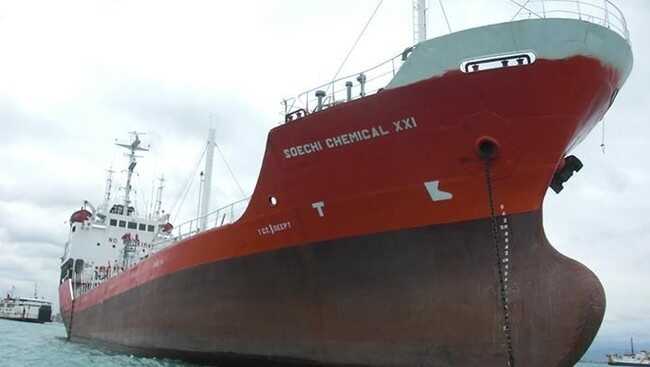
Jakarta, CNBC Indonesia - Shares in shipping and LNG transport companies are currently in a weakening phase after reaching elevated levels.
With this weakening trend, are shipping stocks still attractive for purchase?
The majority of shipping sector stocks are in the red zone, both on a daily basis and over the past week. Pressure is evident across nearly all listed companies.
In the past week, the steepest decline was led by PT Pelayaran Nasional Bina Buana Raya Tbk (BBRM), which fell 11.90%. Similar pressure affected PT Humpuss Maritim Internasional Tbk (HUMI), which dropped 11.45%, and PT Logindo Samudramakmur Tbk (LEAD), which declined 11.11%.
PT Rukun Raharja Tbk (RAJA) also experienced a significant correction of 11.31% over the week, followed by PT GTS Internasional Tbk (GTSI), which fell 9.64%, and PT Mitrabahtera Segara Sejati Tbk (MBSS), which weakened 8.42%.
Meanwhile, relatively limited pressure occurred for PT Soechi Lines Tbk (SOCI), which fell 3.70%, PT Wintermar Offshore Marine Tbk (WINS), which was corrected 3.57%, PT Trans Power Marine Tbk (TPMA), which fell 2.42%, and PT Samudera Indonesia Tbk (SMDR), which weakened 1.99%. PT Buana Lintas Lautan Tbk (BULL) was among those with the smallest correction over the week, falling 1.87%.
On a year-to-date basis, stock performance remains mixed. PT Soechi Lines Tbk (SOCI) recorded the strongest gain of 30.52%, followed by PT Buana Lintas Lautan Tbk (BULL), which rose 25.00%. However, several stocks remain in negative territory since the start of the year, including PT Mitrabahtera Segara Sejati Tbk (MBSS), which has fallen 44.41%, and PT Rukun Raharja Tbk (RAJA), which is down 28.03%.
Interestingly, despite falling share prices in the shipping and LNG-related sectors, the fundamental narrative has not changed.
This reflects short-term profit-taking and anticipation of macroeconomic risks amid considerable uncertainty, such as US President Donald Trump’s tariff policies, MSCI rebalancing, and other factors.
The fundamental story remains intact in this sector.
The global tanker industry is currently in a super-cycle phase. Geopolitical conflicts, including tensions in the Red Sea and sanctions on Russia, have forced changes in shipping routes, making them longer. As a result, ton-mile demand is increasing, with estimated growth of approximately 3% CAGR since 2024.
These conditions are now strengthened by the latest developments in the Middle East. Charter rates for very-large crude carriers (VLCCs) have reportedly surged sharply as risks of major US military action against Iran increase. Beyond geopolitical factors, increasingly concentrated fleet ownership is tightening supply in the market.
Baltic Exchange data shows VLCC revenues on the Middle East-China route have nearly tripled throughout this year to US$151,208 per day, the highest level since 2020. This increase indicates the tanker market is experiencing very tight conditions, with rates driven by a combination of geopolitical risks and fleet constraints.
Previously, super tanker utilisation was projected to reach approximately 92% by 2026.
On another front, new ship supply is relatively limited because global shipyards are prioritising the construction of container and LNG vessels. Under such conditions, any supply disruption or increase in regional risk is immediately reflected in rate increases.
Beyond the crude oil segment, growth is also coming from LNG. Global LNG demand is projected to increase 70% to 80% within the next three to four years, opening additional expansion opportunities for energy shipping industry players.
In Indonesia, this global momentum presents strategic opportunities. The government is reviewing various incentives to boost the domestic shipbuilding industry, including zero percent tariffs on imported ship components to reduce production costs, incentives for new ship construction by local yards, and long-term financing schemes with 15 to 30-year tenors.
Should these policies be realised amid a high-rate cycle, the impact could be significant. Not only would it increase the utilisation of domestic shipyards, but it would also strengthen the supply chain of the national maritime industry and reduce dependence on foreign fleets.
With a combination of the super-cycle, surging VLCC rates, and domestic policy support, the tanker and maritime sector has the potential to enter a longer expansion phase compared to previous cycles.