
Shi Rufei's Mission to Create Prosperity Through Liu Bao Tea
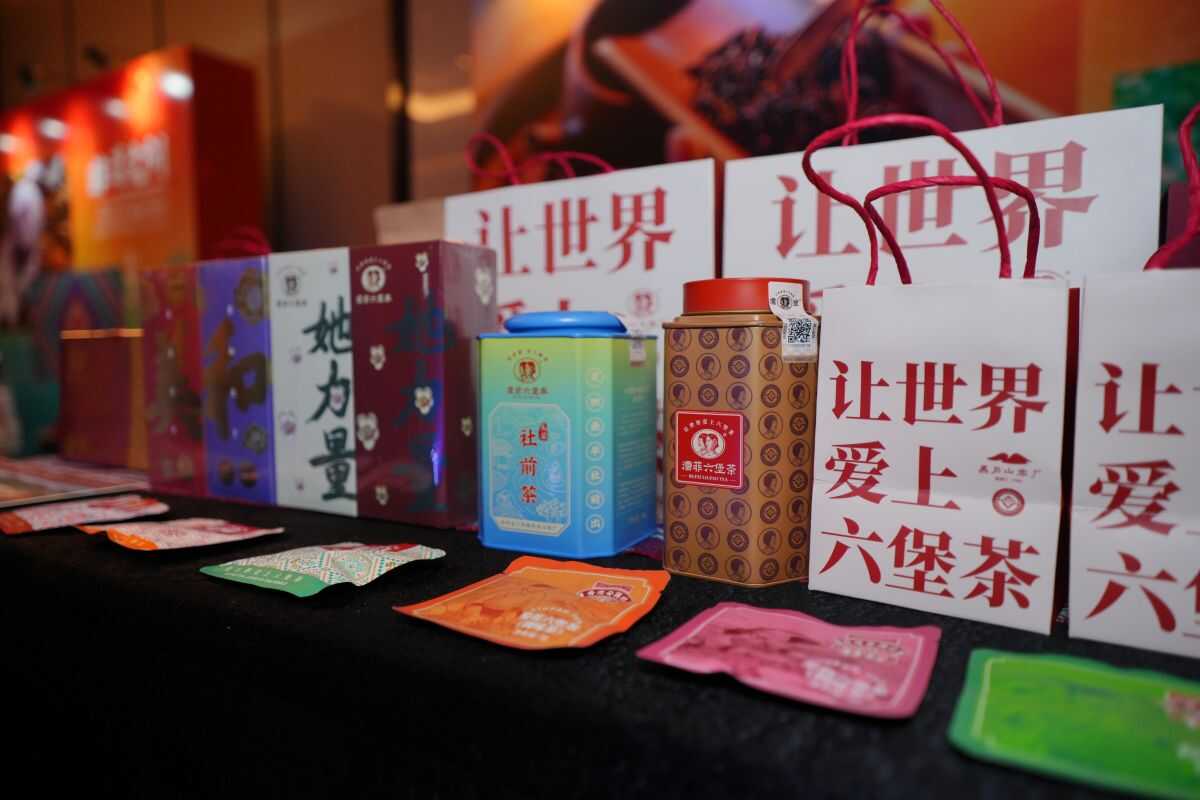
From the misty mountains inland in Guangxi to the global stage, Liu Bao tea is paving a broad path in intangible cultural heritage, industrial revitalisation, and open co-operation along the Ancient Tea Ship Route, which is millennia old,” said Shi Rufei, deputy to the National People’s Congress (NPC) and secretary of the Communist Party at Heishishan Tea Factory in Liubao, Cangwu. Shi spoke with deep emotion as Liu Bao tea from his company debuted in Indonesia this year. In February, at the Happy Chinese Year Carnival 2026 held at the ASEAN Secretariat in Jakarta, Wei Lifang, head of Liu Bao Tea Products, brought the tea to Southeast Asia. Travelling thousands of miles from Guangxi mountains to the exhibition stand in Indonesia, the small tea leaves captivated locals with their gentle and sweet flavour, legendary traditional craftsmanship, and profound cultural heritage. “We showcased around 10 Liu Bao tea varieties together with cultural and creative products related to it in Jakarta, and served guests directly. Many of them placed orders on the spot,” Wei said. Known for its superior quality, Liu Bao tea has received a warm reception abroad and became a cultural bridge connecting China and ASEAN. As a native of the tea-producing region, Shi grew up with tea and understood the importance to local livelihoods. In the past, villagers sold raw tea leaves or processed them themselves using non-standardised methods, which often led to low prices and unstable markets. Expanding market reach became an urgent challenge. Based in the mountainous region, Shi established Heishishan Tea Factory as a hub and pioneered a “company + cooperative + farmer” cooperation model. The factory now records an annual production value of over 40 million yuan, and creates more than 1,800 jobs. Each year, the factory absorbs more than 150,000 kilogrammes of fresh tea leaves, consistently increasing incomes for more than 180 tea-farming households, including 80 widowed women whose husbands migrated for work. Many migrant workers have returned to their home villages, with some families’ annual incomes rising from thousands of yuan to tens of thousands. That once-isolated tea town has grown rapidly and prospered thanks to the tea commodity. From plantation management to passing on traditional skills, and from domestic markets to global expansion, the Liubao tea mountains are turning greener and the road to prosperity is widening. Amidst this development, Shi continues to think about how to use brand effects more effectively to connect and benefit farmers, and how to pass on tea culture to a broader generation. With these questions in mind, Shi strides among the tea plantations, guiding villagers toward better lives and seeking to spread and sustain the aroma of Liu Bao tea. Shi understands that high-quality tea must thrive in mountains and also reach the world. By leveraging the heritage of the Ancient Tea Ship Route and opportunities from the Belt and Road Initiative (BRI), he has brought meticulously processed Liu Bao tea to various international exhibitions, including in Indonesia, France, Switzerland, and other countries. Now, Liu Bao tea has entered the global market and emerged as a flagship industry driving local development — an achievement rooted in Shi Rufei’s years of dedication to the tea mountains and his vision to lead villagers toward prosperity. “We have shifted from merely selling tea leaves and picturesque scenery to selling tea culture,” Shi said. He has promoted integrated development across the Liu Bao tea industry chain, exploring tea-based cultural tourism, study tours, and the health sector to raise the value of the industry. In Tangping Village, where the factory is located, the tea plantations now cover more than 4,000 mu (about 267 hectares), with two registered companies, nine cooperatives, and 17 micro-tea enterprises introduced. The village’s collective economy now generates 472,700 yuan in revenue. From plantation management to passing on traditional skills, and from domestic markets to global expansion, Liubao’s tea mountains grow greener and the road to prosperity widens. Amidst this development, Shi continues to consider how to leverage brand effects more effectively to connect and benefit farmers, and how to pass on tea culture to a broader generation. With these questions in mind, Shi walks among the tea gardens, guiding villagers toward better lives and seeking to spread the aroma of Liu Bao tea further and for longer. Driven by the concept of “intangible cultural heritage plus” and integrated development across agriculture, culture, and tourism, Wuzhou has attracted visitors from across China and abroad, including South Korea, Japan, France and ASEAN countries, to experience deep tea culture. Data from the Wuzhou Tea Industry Development Bureau show that the city’s tea plantations cover 402,700 mu (26,846 hectares), with tea output surpassing 40,000 tonnes in 2025, and its comprehensive production value projected to exceed 30 billion yuan. Meanwhile, the value of the public regional brand remains to be reported.