
Sharing the forest between elephants and humans
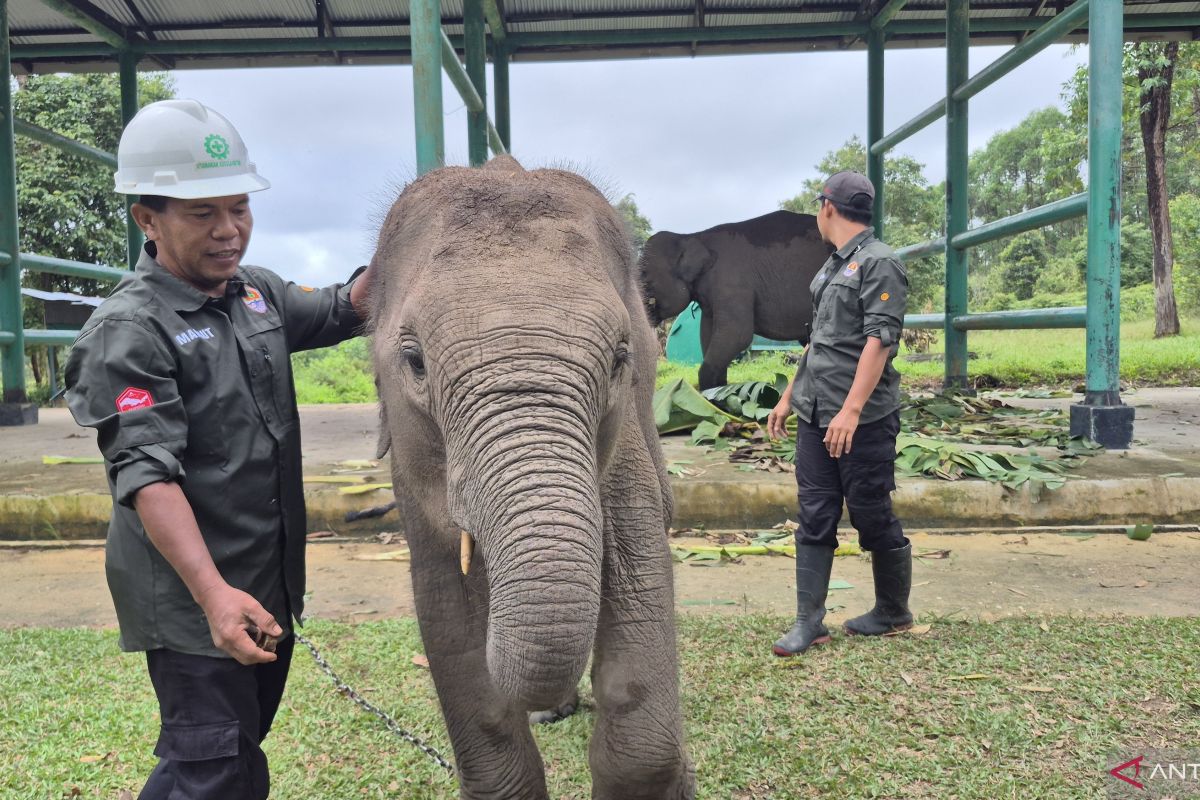
Pekanbaru — A thin mist still hung among the trees as the sun gradually broke through the sky over the plantation forest expanse in Riau. The morning air carried the scent of wet soil, mixed with birdsong from the distance.
In one corner of the area, the heavy footsteps of a young elephant broke the silence. Its body was still small, its ears moved slowly, and occasionally its trunk stretched to touch the ground as if studying the world around it.
Its name was April.
The young male elephant was born on 6 April and is now approximately 32 months old. He grows under the care of his mother, Carmen, a 17-year-old female elephant who is rarely far from his side. Each time April moves too far away, Carmen approaches, watching over him with strong maternal instinct.
It is in this place, in an area known as the Elephant Conservation Unit (UKG), that the lives of elephants unfold alongside human efforts to preserve a species increasingly squeezed from its natural habitat.
The UKG was established as a conservation centre, care facility, and learning space about the importance of maintaining ecosystem balance. For its managers, this place is not merely an enclosure, but a living space for animals that require attention and protection.
Currently, seven elephants are cared for intensively within the area. They consist of various ages, from young elephants like April to senior elephants such as Ika, a female approximately 40 years old who is one of the oldest residents at the location.
For conservation managers, the success of protecting elephant populations depends not on one party alone. It requires collaboration between government, communities, and various organisations that care about the preservation of nature.