
Sharia Capital Market: Substance or Mere Posturing?
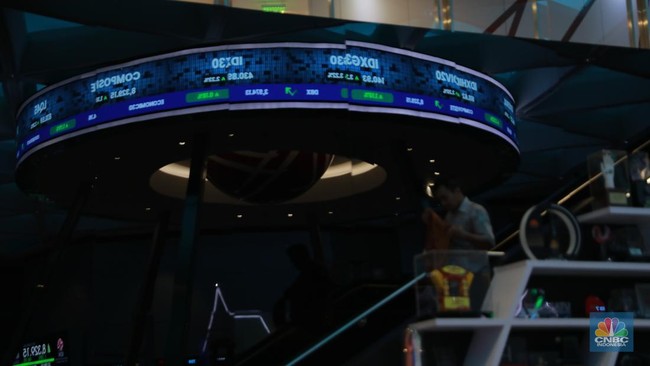
Imagine a music platform with a catalogue of millions of songs from various genres. From this entire catalogue, a special playlist is created containing only songs that meet certain criteria, for example, only Yacht Rock genre songs like those by Toto or Steely Dan, or with a “cleaner” theme. At first glance, this playlist appears different and offers a more curated experience. However, at its core, the songs in it still come from the same system and catalogue. What changes is not the platform or its mechanisms, but merely the selection process for what is allowed to enter. A similar phenomenon can be found in the Sharia capital market. Stocks labelled “Sharia” are essentially not products of an entirely new system, but rather the result of filtering existing stocks in the conventional capital market. This then raises a fundamental question: does this label reflect a substantive change in the system, or is it merely a formality that differentiates without altering the essence? Sharia Stock Screening Mechanism in Indonesia In Indonesia, Sharia stocks are determined through a screening process of stocks already listed on the capital market. These criteria are regulated by the Financial Services Authority, which stipulates that companies must not operate in business sectors contrary to Islamic principles, such as gambling, alcohol, or interest-based financial services. In addition, there are quantitative limits that must be met, one of which relates to the interest-based debt ratio. Companies are still allowed to have interest-bearing debt, as long as it does not exceed a certain limit, namely a maximum of 45% of total assets, which will be tightened to 33% gradually in the future. On the other hand, income derived from non-halal activities is also limited, namely not exceeding 5% of total income. However, these provisions essentially show that the process carried out is screening of existing companies, not the formation of an entirely new system. The same companies can still be categorised as Sharia as long as they meet the threshold, without any fundamental changes in their business models or financial structures. Label Changes, System Remains Although they have undergone a screening process, Sharia stocks are still traded in the same market system as conventional stocks. In Indonesia, all stock transactions, whether Sharia or non-Sharia, take place in one system facilitated by the Indonesia Stock Exchange. The price formation mechanism is still determined by the interaction of supply and demand, while trading activities occur openly and in real-time without any fundamental differences between the two. Within this framework, there is no fundamental change in how the market operates, either in terms of structure or mechanism. Investors can still buy and sell stocks freely, and respond to price movements to gain profits. Thus, the Sharia label does not change the structure or mechanism of the capital market itself, but merely limits the types of stocks that can be selected within the same system. Investor Behaviour That Does Not Change Although the instruments used have been adjusted to Sharia principles, investor behaviour in the capital market does not show any significant change. Activities such as short-term trading and speculation on price movements remain common practices. In many cases, investment decisions are not based on the fundamental performance of the company, but rather on expectations of short-term price fluctuations. This condition is problematic from the perspective of Islamic economics, because the profits obtained often do not come from productive business activities, but from price fluctuations in the market. Investors buy stocks not because they understand the business’s value, but because they hope others will buy at a higher price. In this situation, the basis of the transaction is no longer the company’s value, but expectations of others’ behaviour in the market. Such patterns approach the concept of gharar, which is uncertainty in transactions, where the basis for decision-making becomes uncertain and tends to be speculative. Thus, although there are adjustments to the types of instruments, the market behaviour that forms still reflects characteristics similar to the conventional system, so the changes that occur have not yet touched the substantial aspects of Sharia economics. Between Shariah-Compliant and Shariah-Based This phenomenon shows that the current Sharia capital market is still at the shariah-compliant stage, which focuses on meeting certain criteria and limits to comply with Sharia principles. This approach emphasises compliance aspects, such as screening business sectors and financial ratios, without fundamentally changing the underlying market structure or mechanism. This is also relevant in the context of developing the halal industry, where integration between the financial sector and the real sector becomes key so that halal values do not stop at the label, but are truly realised in the entire economic chain. In contrast, the shariah-based concept demands more fundamental changes, not only in what is avoided, but also in how those values are embodied in the system. This includes a shift towards partnership-based mechanisms, stronger linkages with real economic activities, and an orientation that is not solely focused on profit maximisation. In this context, the Sharia capital market can be understood as an important initial step, but it has not yet fully reflected a Sharia-based economic system.