
Shanghai Remains Open to Foreign SMEs, Including Those from Indonesia
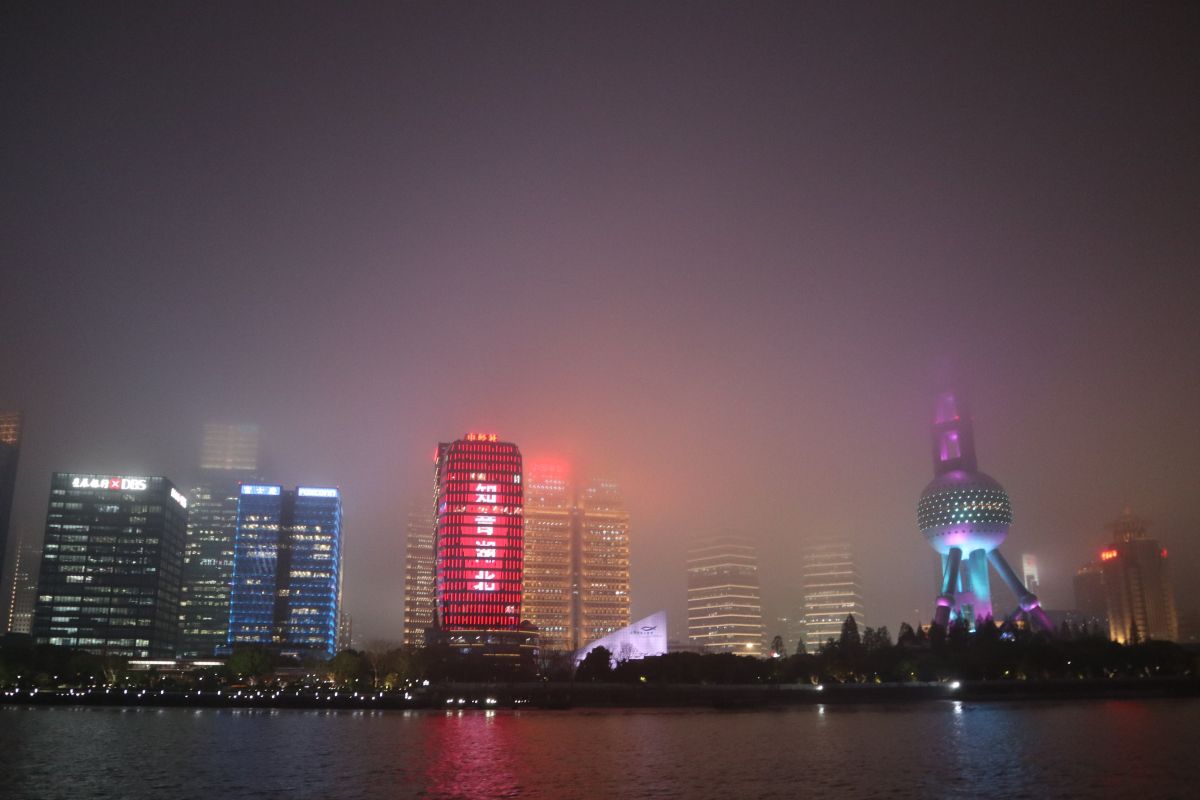
Shanghai (ANTARA) - The Shanghai city government claims it remains open to micro, small, and medium-sized enterprises (MSMEs) from foreign countries, including Indonesia, to enter and conduct business in the metropolitan city.
“Shanghai has continuously provided a favourable climate for the development of small and medium-sized enterprises. We also hope that all types of small and medium-sized enterprises in Shanghai can grow together with Shanghai,” said Director General of the Shanghai Municipal Trade Commission Shen Weihua in Shanghai on Monday (13/4).
Shen Weihua made the statement during a media meeting of the Shanghai city government held by the State Council of China in Shanghai.
Shen mentioned that Shanghai is known to be home to around 68,000 foreign small and medium-sized enterprises by 2025.
Among these foreign small and medium-sized enterprises, 91 percent operate in the agricultural sector, and the other 10 percent are in the manufacturing sector, although Shen noted that in terms of the overall total, the scale and number of companies in the manufacturing sector are also very large.
“Small and medium-sized enterprises choose Shanghai and choose to invest in new businesses in this city because they consider Shanghai’s advantages such as advanced transportation access, ease of financing, complete industrial chains, strong service sectors, a large number of highly educated workers, and an international-standard business environment,” Shen explained.
According to Shen, the Shanghai city government provides a mentoring system for superior MSMEs so that they can even develop into large companies and “go public”. There is also financial support for companies.
“For example, last year banks disbursed loans of 410 billion RMB (approximately Rp1.03 quadrillion) to 10,000 companies; we also lowered corporate loan interest rates to reduce the cost burden on companies,” Shen added.
In the services sector, Shen mentioned that Shanghai has built a city-wide small and medium-sized enterprise service system and established a complaint resolution management mechanism for companies so that common problems that often become obstacles are consulted and resolved.
“We also treat all types of companies equally, including using artificial intelligence (AI), so Shanghai will continue to optimise the business climate for small and medium-sized enterprises, promote the development of small businesses with high-quality services, and warmly welcome various types of companies from around the world to come and invest and establish businesses here,” Shen said.
Integration of MSME Supply Chains
Previously, on 1 April 2026, Minister of Cooperatives and SMEs Maman Abdurrahman in Beijing said he wanted to integrate Indonesian MSMEs into China’s supply chains.
“MSMEs need to be encouraged to enter structured industrial ecosystems through strategic partnerships. Strengthening sector-based clusters and integration into regional production networks will increase business scale, efficiency, and sustainable competitiveness of MSMEs,” Maman said.
Based on data from the Central Statistics Agency, the number of MSMEs in Indonesia reaches 65.5 million business units and contributes 61.9 percent to GDP. MSMEs also absorb more than 119 million workers or around 97 percent of the national workforce.
Meanwhile, based on data from China’s Ministry of Industry and Information Technology, by the end of 2024, the total number of SMEs in China had exceeded 60 million with revenue reaching 81 trillion yuan (approximately 11.2 trillion US dollars) and 600,000 SMEs focused on technological innovation.
From the 600,000 SMEs focused on technological innovation, there are 14,600 “small giant” SME companies that specialise in specific sectors, dominate market shares, and have strong innovation capabilities.
Shanghai is administratively a municipality directly under the central government of China. Shanghai has long been known as a modern international metropolitan city.
In 2025, the city’s GDP reached 5.67 trillion RMB (approximately Rp14.19 quadrillion), while the total value of financial market transactions reached 4.059 trillion RMB (approximately Rp10.16 quadrillion). The total value of foreign trade (exports and imports) in the city reached 4.51 trillion RMB (approximately Rp11.29 quadrillion).
Shanghai Port has maintained its position as the world’s largest container port for 16 consecutive years, handling more than 55.063 million TEUs in 2025. Research and development (R&D) expenditure as a percentage of Shanghai’s GDP reaches around 4.5 percent, with 636 foreign R&D centres.