
Severe Traffic Jam on MBZ Toll Road: Jasa Marga CEO Frankly Reveals the Causes
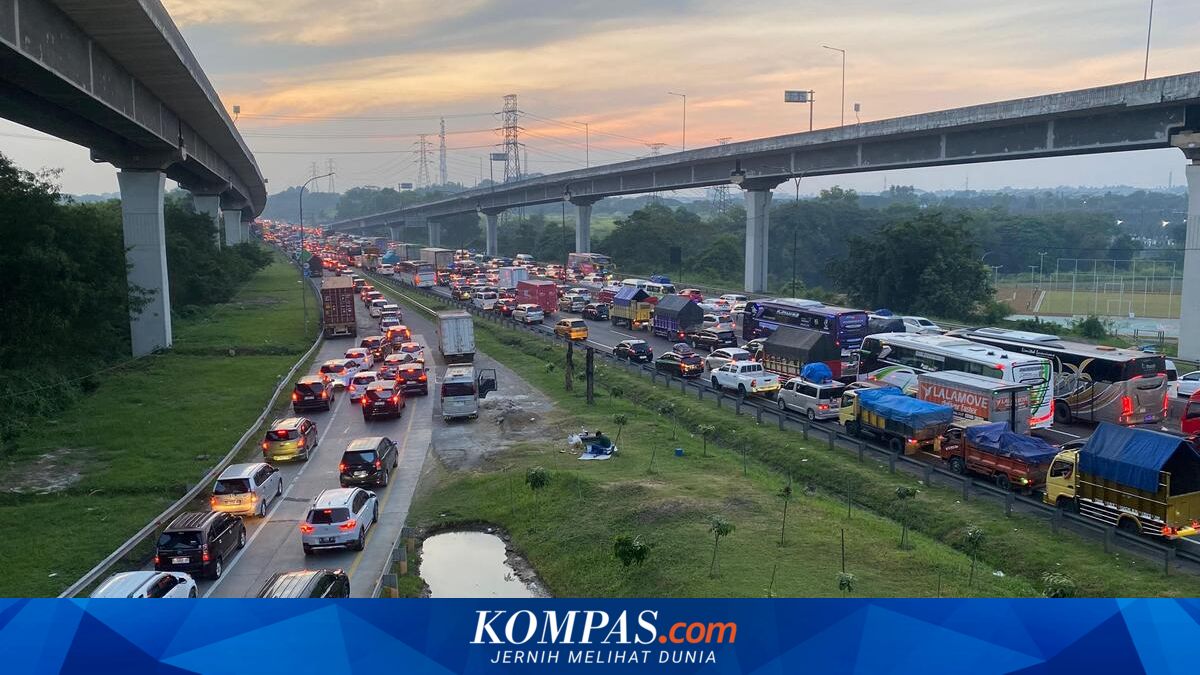
Severe congestion on the Mohammed Bin Zayed (MBZ) elevated toll road during the Eid al-Fitr homecoming traffic in 2026 was triggered by various factors, ranging from non-compliance by road users to limitations in the toll road’s capacity.
PT Jasa Marga (Persero) Tbk President Director Rivan Achmad Purwantono revealed that one of the main causes of the congestion was the imbalance between the number of vehicles and the available road capacity.
“It must be understood how many lanes a vehicle occupies and how many lanes are available on the road. Because the available lanes cannot be increased,” he stated after the Joint Return Traffic Monitoring press conference in Bekasi, West Java, on Wednesday (25/3/2026).
Rivan explained that the MBZ toll road spans 39 kilometres without any exits and was designed from the outset exclusively for Class I vehicles for safety reasons.
Nevertheless, higher-class vehicles, specifically Class II and above, were still found using the route. According to records, about 12% of entering vehicles were from these classes, significantly contributing to accidents.
“Our records show 12% from Class II and above, which accounted for 84% of accident causes,” he said.
In addition, road user behaviour also factored into the congestion, including the tendency to stop on the shoulder or force entry into certain rest areas.
According to him, drivers’ conditions also affected traffic flow. This is because some drivers experienced fatigue to the point of falling asleep while driving.
“The police and our patrols found more than five people asleep while driving and had to wake them up. This means drivers’ physical condition must be maintained,” he stated.
He added that fatigue factors, such as microsleep, were one of the main causes of toll road accidents.
To alleviate the density, various traffic engineering measures were implemented, from one-lane contraflow to expanding it to three lanes. Even sections of the toll road that were not supposed to be used for homecoming traffic were utilised.
“Normally, one-lane contraflow should suffice, but it turned out not to be enough. It had to be extended to three lanes before the flow eased. Even Cipularang, which was not meant for homecoming, had to be used,” he said.
Rivan emphasised that addressing congestion does not solely depend on traffic engineering but also on road users’ compliance and awareness.
Looking ahead, increasing road capacity is one solution that needs to be pursued, including the completion of ongoing infrastructure projects.