
Severe Traffic Congestion Causes Dozens of Travellers to Collapse at Gilimanuk
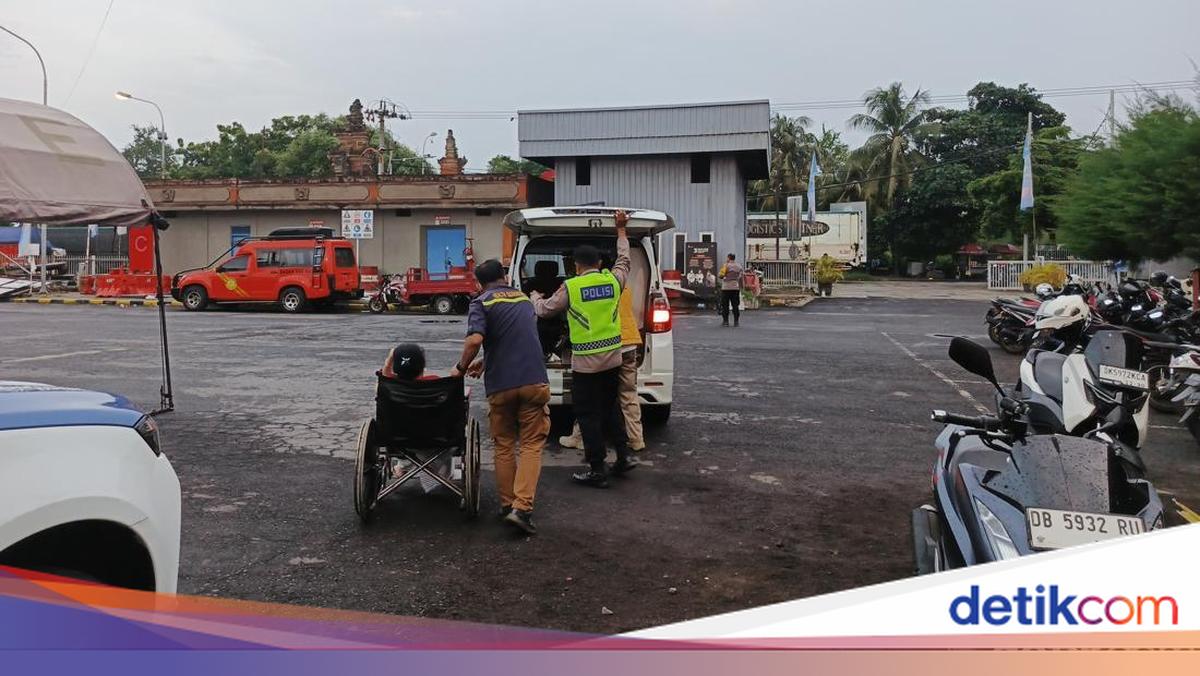
The homecoming traffic flow on the Denpasar-Gilimanuk route this year has been described as one of the worst in history. Severe congestion occurred across a distance of more than 32 kilometres, stretching from Gilimanuk Port to Negara City, Jembrana, on Sunday (15 March 2026).
The conditions left travellers exhausted and unwell. At least 17 travellers were reported to have collapsed due to fatigue and exposure to extreme heat whilst queuing to board ferries on Sunday. They had waited approximately 14 hours without boarding.
Those affected were predominantly motorcyclists who endured dust and intense sun along the main Denpasar-Gilimanuk route. Medical teams from Jembrana Police District’s medical unit had to work overtime providing first aid at congestion points.
The head of Jembrana Police District’s medical unit, Aiptu I Gusti Bagus Adi Sadnyana Putra, confirmed that by Sunday evening the unit had treated dozens of travellers experiencing serious health complications.
“All have been treated and all cases were due to exhaustion. In total, we evacuated 17 people medically,” said Adi when contacted by detikBali on Sunday.
Of the 17 people, 16 were diagnosed with heat syncope, a condition characterised by fainting or sudden dizziness caused by exposure to high temperatures. This condition triggers blood vessel dilation that causes a sharp decrease in blood flow to the brain.
“Sixteen people who experienced heat syncope have been treated and cleared to continue their journey. Meanwhile, one other person suffered vulnus laceratum, or a lacerated wound,” Adi explained.
The traveller with the lacerated wound received medical treatment including wound suturing and appropriate medication.
Not only adults required assistance. A baby also had to be evacuated by Jembrana Police personnel on Saturday evening (14 March 2026). The infant, accompanied by parents, was rushed to a cargo service station after displaying signs of health distress from being stuck in traffic for hours.
“Yesterday we also provided assistance to an exhausted baby. Police officers provided priority escort to navigate through congestion to the nearest health centre so the baby could receive immediate medical attention,” said Adi.
Seeing the queue still extremely long, Jembrana Police urged travellers not to push themselves if their physical condition had deteriorated.
“We appeal to all people conducting homecoming to continually monitor the health condition of family members, especially children and the elderly,” said Adi.
Police also reminded people to seek help immediately if they felt unwell. “If you require medical assistance or it is an emergency, immediately contact police officers at the nearest security post or call the police emergency line 110. This service is free and available 24 hours,” he concluded.
Observations by detikBali at the location showed the cargo parking area, which functions as a buffer zone, appeared completely packed with vehicles. Not only that, vehicles also queued along the main Denpasar-Gilimanuk route. Notably, the end of the queue reportedly reached Negara City, approximately 32 kilometres from the port.
To ease congestion on the main road, officers directed thousands of vehicles into residential alleyways. Most travellers stuck were those who had been queuing since early morning.
One traveller from Banyuwangi, Siti (46), admitted to exhaustion facing this year’s congestion. The woman, affectionately known as Iis, departed Denpasar by private car with her husband on Saturday evening (14 March 2026) after breaking fast.
“I left Denpasar after breaking fast yesterday. And got stuck in traffic at several locations along the Denpasar-Gilimanuk route. From Badung to Tabanan it was already congested,” said Iis when met by detikBali at the port area on Sunday evening.
Iis recounted that she only entered the Hutan Cekik area around 02.00 Wita in the early morning. However, vehicle movement was extremely slow, and Iis only managed to enter the residential area around 12.00 Wita.
“Only at 17.30 Wita did I enter Gilimanuk Port area, where I had to queue again to board the ferry. I ended up having my pre-dawn meal and breaking fast inside the car. My husband stopped fasting due to exhaustion. It was very difficult just to find a toilet along the congested route,” she complained.
According to her, this was the worst homecoming experience Iis had ever experienced. “Usually in previous years when departing after breaking fast, I would already be home in Banyuwangi by 2 o’clock the next morning,” she added.
Similar fate befell Bogie (27), a freelance driver in Kuta who wanted to return home to Jember. He even tried an alternative route via Pupuan, Buleleng, to avoid traffic, but still got stuck at the convergence point of traffic flow.
“I left yesterday at 7 in the evening, went via Pupuan Buleleng and got stuck at the Cekik Gilimanuk junction around 10 o’clock this morning,” said Bogie.
Bogie, who this time used a travel service, said he lost both time and money. The pocket money he had prepared was completely spent just buying food and drink whilst waiting for the queue that never moved.
“My money was all spent just buying food and drinks during this traffic jam. Even at this time (18.00 Wita) I haven’t boarded the ferry yet,” he concluded.
By the time this report was written on Sunday evening, the volume of vehicles at Gilimanuk Port remained heavily congested and moving slowly. Police officers and ASDP (the ferry operator) continued working to accelerate vehicle loading onto ferries to clear the queue stretching tens of kilometres.