
Severe Congestion at Gilimanuk Port: Many Vessels, Limited Berths
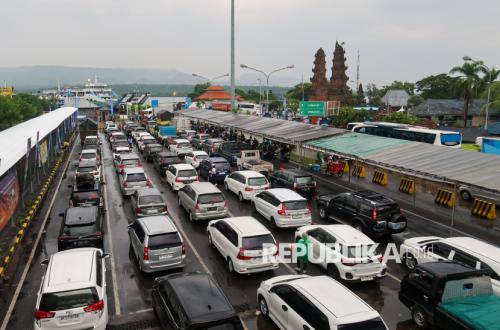
Jakarta — The National Association of River, Lake, and Ferry Transport Operators (Gapasdap) understands the concerns raised by Transport Minister Dudy Purwagandhy regarding the severe congestion occurring on the route to Gilimanuk Port on Monday, 16 March 2026. The congestion reportedly reached approximately 45 kilometres based on aerial monitoring.
The congestion was triggered by a surge in vehicle traffic during the Lebaran exodus period, which coincided with Balinese community mobility ahead of Nyepi celebrations. However, Gapasdap believes that the ferry congestion problem cannot be solved solely through operational vehicle restrictions or temporary traffic management measures.
Gapasdap chairman Khoiri Soetomo explained that restrictive measures through Joint Decree (SKB) represent only a short-term solution and do not address the root cause. According to him, the main problem lies in the imbalance between the growth of the vessel fleet and the berth capacity of ferry terminals.
“If berths do not increase, the road to the port will always become a car park,” Khoiri said in Jakarta on Tuesday, 17 March 2026. He noted that the number of vessels continuously grows to serve public mobility needs and national logistics, but is not matched by berth development as docking points.
This situation has caused berths to become bottlenecks, resulting in vessels and vehicles having to wait long periods for their turn to dock. Therefore, according to Khoiri, Gapasdap is urging the government to begin formulating a clear and sustainable national roadmap for ferry terminal development.
He stated that Gapasdap proposes phased development with a minimum target of one new berth pair annually on major national ferry routes. In this way, Khoiri said, the ferry system’s capacity can increase in line with growing vehicle mobility and national logistics requirements.