
Seven Middle East Updates: Iran Threatens US Companies, NATO Giant Warns Israel
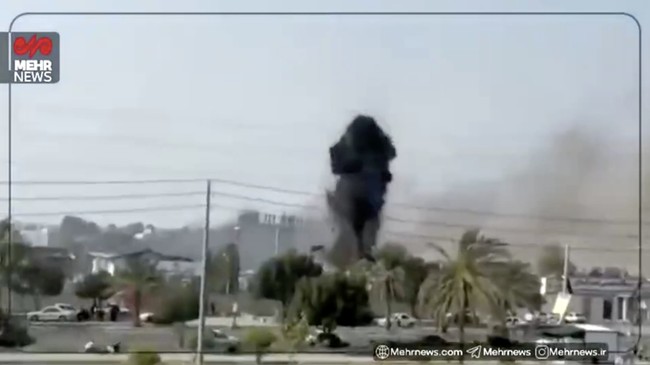
Armed conflict in the Middle East has intensified with a series of air strikes, threats of economic sabotage, and high-level political uncertainty involving global powers. This escalation has targeted not only government centres and military facilities, but also vital energy infrastructure that threatens the stability of global oil supplies.
The following are recent developments regarding the war in the Middle East, shocking statements from Donald Trump regarding Iran’s new leadership, and threats against American companies.
Trump Discusses Khamenei
United States President Donald Trump issued a startling statement regarding the unclear leadership situation in Tehran. Trump admitted he was uncertain whether Iran’s new Supreme Leader, Mojtaba Khamenei, was still alive or had died amid the ongoing conflict.
“We don’t know whether he’s dead or not,” Trump told reporters at the White House.
This uncertainty has placed Washington in a difficult position for determining diplomatic steps. Trump added that the United States was currently unclear about whom they should negotiate with in the Tehran government.
Iran’s Revolutionary Guard Threatens US Companies
The security of American citizens and corporations in the region is now in grave danger following direct threats from Iranian military forces. Iran’s Revolutionary Guard has officially threatened to target American-owned companies operating throughout the Middle East region.
“Employees of American companies are urged to immediately leave the area. These regions will soon become targets of the Islamic Revolutionary Guards Corps,” stated the Revolutionary Guard’s official statement via the Sepah News website.
Hotel Attack in Baghdad and UAE Oil Fields
Physical tensions escalated on Monday (17/03/2026) when a projectile struck the roof of a hotel in Baghdad’s Green Zone, Iraq, a secure diplomatic area where the US Embassy is located. The Iraqi Ministry of Interior confirmed the incident but stated there were no casualties or major damage from the projectile that hit the building.
Elsewhere, an unmanned drone attack caused a major fire at a major oil field owned by the United Arab Emirates (UAE). Authorities in Abu Dhabi confirmed they were dealing with a fire at Shah oil field following the attack, which occurred amid a series of Iranian drone and missile strikes across the Gulf region.
Oil Export Disruptions and Hormuz Strait Crisis
UAE’s state-owned energy giant, ADNOC, has reportedly halted the process of loading oil into storage tanks at the Fujairah facility. This step was taken following repeated attacks targeting energy installations at the strategic port, which is positioned at the entrance to the Strait of Hormuz.
Regarding this vital shipping route, Donald Trump urged American allies to join efforts to secure the Strait of Hormuz after Iran closed the passage. Trump called for greater enthusiasm from other nations, although European powers have so far refused the NATO mission to reopen the waterway.
“I believe France and Britain will eventually get involved, though perhaps with some reluctance,” said Trump.
NATO Giant Warns Israel
At the northern border, the Hezbollah group stated it had targeted Israeli military forces and vehicles in three Lebanese border towns. This attack was a response to Israel’s military announcement that it had launched limited ground operations in the Lebanese region.
However, this Israeli military action drew sharp criticism from its Western allies. German Chancellor Friedrich Merz warned that Israeli ground attacks on Lebanon would be a grave mistake that would worsen an already tense humanitarian situation.
“We urge our Israeli friends: Do not take this path, it will be a mistake,” Merz said firmly.
Humanitarian Crisis and Damage in Jerusalem
The humanitarian impact in Lebanon is increasingly dire with reports from authorities stating that over one million people have registered as refugees since the war began on 2 March. Lebanon’s Ministry of Health also reported that the death toll from Israeli attacks has risen to 886 people.
Meanwhile, remnants of fighting have begun contaminating sacred sites in Jerusalem. Israeli police reported finding missile fragments and interceptors in the Old City of Jerusalem, including near the Al-Aqsa Mosque and the Church of the Holy Sepulchre.
“During the latest barrage of missiles fired from Iran towards Jerusalem, several interceptions occurred over the city,” Israeli police stated.
Iranian-Aligned Iraqi Militia General Dies
In Iraq, the powerful armed group Kataib Hezbollah announced the death of their senior security commander, Abu Ali al-Askari. Al-Askari, who was also the group’s main spokesperson, died with no further details provided regarding the cause of his death.
Additionally, two drones reportedly targeted the Majnoon oil field in southern Iraq, with one drone hitting a telecommunications tower. Iraqi petroleum ministry spokesman Saheb Bazoun confirmed the attack but assured that no fatal damage occurred.
“Majnoon oil field was targeted by two drones, one hit a telecommunications tower,” Bazoun explained.
In western Iraq, an attack near the Syrian border killed at least four fighters from the Hashed al-Shaabi paramilitary coalition. Officials from the Popular Mobilisation Forces (PMF) immediately blamed the United States for responsibility for the attack that targeted a checkpoint.