
Seven Latest Impacts of Iran War on the World: Oil Prices and Fuel Restrictions
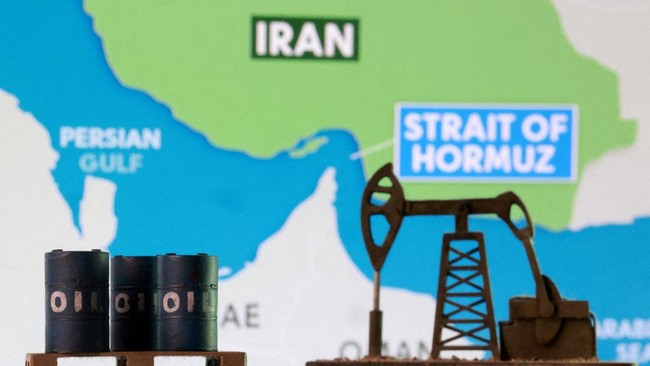
Jakarta, CNBC Indonesia – The war between the United States and Israel versus Iran continues to trigger global economic turmoil. Although fighting is ongoing, US President Donald Trump stated that the war is “nearly over”, which immediately sparked changes in global energy and financial markets.
The following are the main economic impacts from the war, as reported by AFP on Tuesday (10 March 2026).
- Oil Prices Fall
Global oil prices spiked sharply to breach US$119 per barrel on Monday. However, in Tuesday’s update, oil prices eventually fell following Trump’s statement suggesting the conflict could end soon.
Brent contracts had touched US$119.50 per barrel before falling to around US$92.45. Meanwhile, West Texas Intermediate (WTI) crude also dropped to around US$88.65 per barrel.
The decline occurred because the market began to anticipate that global energy supply disruptions would not last long.
- US Stock Market Strengthens
Trump’s comments also triggered a rally in the American stock market. Major indices on Wall Street reversed to strengthen after previously weakening due to geopolitical tensions.
The Dow Jones Industrial Average closed up approximately 0.5% to level 47,740.80. Although earlier, the index had moved fluctuate throughout the trading day.
- US to Lift Oil Sanctions
Trump announced plans to lift certain sanctions on oil due to market turbulence. This is believed to relate to oil exports from Russia.
“We are also lifting sanctions on certain oil to lower prices,” Trump told reporters.
- Asian Markets Recover
Stock markets in South Korea and Japan rose sharply in early Tuesday trading. South Korea’s benchmark index Kospi recovered more than 5% and Tokyo’s Nikkei 225 surged more than 3% before declining slightly again.
- G7 Countries Ready to Release Oil Reserves
Developed industrial nations in the G7 group have begun discussing emergency measures to stabilise the energy market.
However, France’s finance official stated that releasing strategic oil reserves is not yet necessary for now, although the option remains under consideration if the energy crisis worsens.
G7 energy ministers are also scheduled to hold follow-up meetings to discuss the conflict’s impact on global energy supplies.
- Transport and Trade Disrupted
The conflict also triggered disruptions to international logistics and transport routes, particularly around the Strait of Hormuz, a passage through which approximately 20% of global oil supplies flow.
French President Emmanuel Macron even stated that Western allies are preparing a mission to secure the shipping route.
In the aviation sector, European airlines such as Lufthansa and Air France have extended flight cancellations to several destinations in the Middle East.
Meanwhile, global shipping company MSC halted some export shipments from the Gulf region due to increased security risks.
- Many Countries Restrict Fuel Prices
Several countries have begun implementing emergency policies to prevent energy price spikes domestically. The governments of Croatia, Hungary, South Korea and Thailand have imposed fuel price restrictions.
Meanwhile, China has requested several major oil refineries to hold back diesel and petrol exports. On the other hand, the giant Dangote Refinery in Nigeria has pledged to prioritise supplies for the domestic market to prevent fuel shortages.
In Japan, authorities are also reported to have requested national oil reserves be prepared for release if the energy crisis further worsens.