
Seven Digital Risks If Children Are Not Protected by PP Tunas
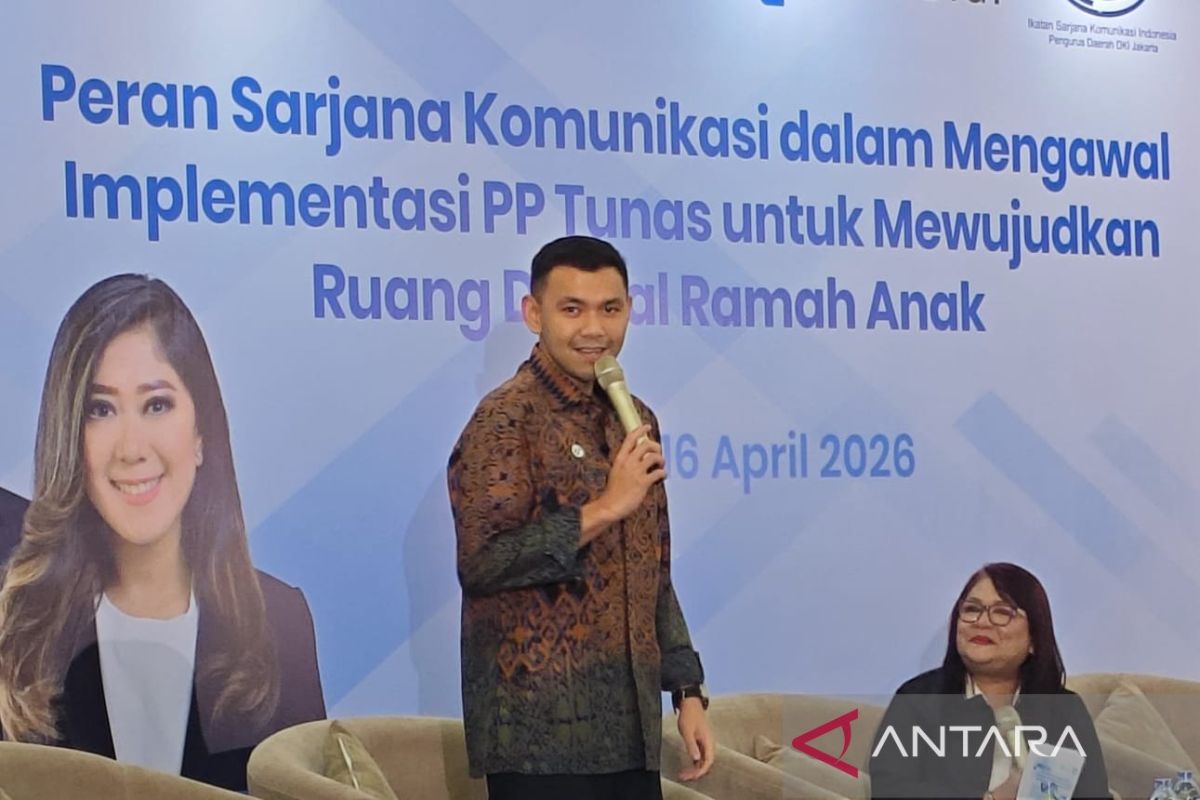
Jakarta (ANTARA) - Alfreno Kautsar Ramadhan, Special Staff to the Minister of Communication and Digital Affairs for Youth and Startups, stressed that PP Tunas does not aim to restrict children’s access to the digital space but rather to protect Indonesian children from the negative impacts of high-risk platforms.
“We have never sought to limit innovation or children’s access to the digital space. This (PP Tunas) is a step to prevent children from digital risks,” Alfreno said during a discussion held in South Jakarta on Thursday.
He explained that PP Tunas, or Government Regulation (PP) Number 17 of 2025 on the Governance of Electronic Systems in Child Protection, was drafted as a protective measure to ensure children can enter the digital space in a safer and more prepared condition.
“If they (children) indeed want to enter the digital world, we must set it accordingly. The Ministry must be present to determine that if children want to enter the digital space, at minimum we secure it. So what we delay for children is access to high-risk digital platforms,” Alfreno stated.
Alfreno cited the negative impact of high-risk digital platforms, such as the case of a child stabbing in Malaysia influenced by the Roblox game.
Furthermore, Alfreno outlined seven digital risk factors that underpin the issuance of the PP Tunas regulation.
The first risk is contact risk, or the risk of interacting with strangers in the digital space, such as cyberbullying, scams, child exploitation, and other criminal acts.
The second risk is content risk, namely exposure to negative content like violence, profanity, sexual harassment, and other materials deemed inappropriate for children’s age.
The third risk is commercial risk, which involves consumerist impulses due to in-app purchase features that children do not fully understand.
Next is privacy risk, or the risk of misuse of personal data, as children are considered not yet to understand the importance of data protection.
“The risk (of gadget exposure) is addiction. What happens then? Mental illness. Mental illness leads to what? They become stressed, depressed due to addiction, and if they throw tantrums, they might end up doing things we don’t want to happen,” Alfreno said.
In addition, there is psychological risk related to mental health issues and critical thinking abilities, as well as physiological risk in the form of physical impacts such as early vision impairment from prolonged screen staring.
“PP Tunas is to delay children’s access to the digital space because the Minister and President (Prabowo Subianto) are paying attention to children who could be exposed to these seven digital risk factors,” he said.