
Set to Replace Subsidised LPG with CNG: Is Indonesia Following Global Trends or Taking a Risk?
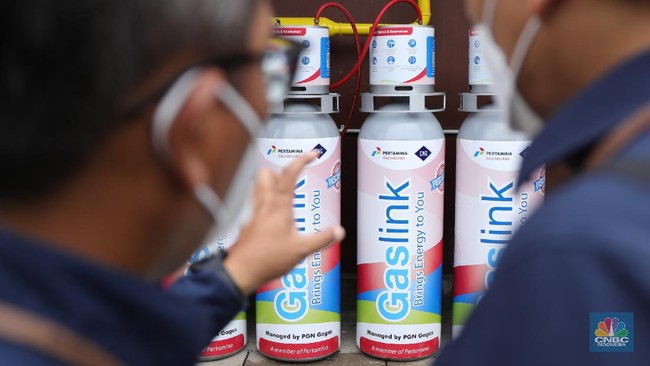
The Indonesian government is beginning to consider Compressed Natural Gas (CNG) as an alternative household energy source to replace subsidised 3kg LPG. This move comes amid Indonesia’s high dependence on LPG imports.
The plan also aligns with global trends. Several countries such as Brazil, India, Pakistan, and others have already widely utilised CNG, both for vehicles and other energy needs.
In some countries, CNG usage has developed rapidly because it is considered cheaper, more efficient, and utilises abundant domestic gas resources.
Indonesia Prepares 3kg CNG Cylinders to Replace Subsidised LPG
The government is studying the development of 3kg Compressed Natural Gas (CNG) cylinders as an alternative to subsidised LPG. This step is aimed at reducing Indonesia’s dependence on LPG imports, which have long burdened the country’s foreign exchange reserves.
Minister of Energy and Mineral Resources Bahlil Lahadalia stated that the government is still conducting trials and developing technology for 3kg CNG cylinders. Previously, CNG has been used in 12kg and 20kg cylinders for hotels and restaurants and has been deemed quite efficient.
Based on government studies, CNG prices could be around 30% cheaper than LPG because the raw materials are abundantly available domestically and distribution costs are lower. However, the government is still refining the distribution and usage concepts for 3kg CNG for the general public.
Europe Already More Advanced in Using CNG
CNG usage in Europe has developed far more advanced compared to many other countries that are just starting to develop this technology.
CNG development in Europe is also driven by policies to reduce carbon emissions from the European Commission.
CNG vehicles are considered capable of meeting strict emission standards while offering lower operating costs, even up to 40% savings compared to diesel vehicles. In addition to being more environmentally friendly, CNG is also regarded as safe and suitable for public transportation in major cities.
India Prioritises CNG Amid Energy Crisis
India has made CNG one of its main national energy priorities amid global LNG supply disruptions due to conflicts in the Middle East.
India consumes around 191 million standard cubic metres of gas per day, with nearly half of its needs coming from imports. When many gas supplies from the Middle East were affected, the government immediately redirected gas distribution from non-priority sectors to household and transportation needs.
The government also asked oil refineries to increase domestic LPG production by around 10% by diverting some raw materials from the petrochemical sector.
On the other hand, India is also accelerating the household transition from LPG to PNG, which is considered more stable for long-term cooking needs.
Pakistan Once a Country with Major CNG Usage
Pakistan has long been known as one of the countries with the largest CNG usage in the world. CNG is widely used for private vehicles, public transportation, and the industrial sector because it is cheaper than oil fuels.
However, recently Pakistan has faced a severe gas crisis. Declining domestic gas supplies, LNG disruptions, and low distribution pressure have led the government to halt gas supplies to several CNG stations and industrial sectors in various regions.
Industry players assess that the crisis occurred due to weak energy management and high dependence on LNG imports. The Pakistan CNG Association even urged the government to allow the CNG sector to import gas independently.
According to them, this step could generate revenue of up to Rs 82 billion for the government while saving investments of around Rs 450 billion that have already been invested in Pakistan’s CNG sector.
Bangladesh Uses CNG to Reduce Pollution and Fuel Imports
Bangladesh has made CNG one of the main vehicle fuels since the late 1990s. The government promotes CNG usage to reduce air pollution, curb oil fuel imports, and utilise large domestic gas reserves.
CNG usage in Bangladesh has grown rapidly and is said to have improved air quality in major cities like Dhaka. The government has also opened significant opportunities for the private sector to build fuelling stations, vehicle conversion workshops, and other supporting infrastructure.
CNG development in Bangladesh was initially carried out through Petrobangla projects with funding support from the World Bank. Since 2003-2004, the growth of CNG vehicles and stations has increased sharply thanks to government policy support.
In addition to helping improve the country’s balance of payments through reduced fuel imports, CNG usage is also considered effective in reducing urban environmental pollution.
Argentina Becomes One of the Pioneers in CNG Vehicles
In Argentina, CNG has been used massively as a transportation fuel since 1984 through a programme to reduce liquid fuel consumption.
The Argentine government actively promotes CNG usage through various incentives:
designating natural gas development as a national interest,
appointing state-owned companies to run the programme,
capping CNG prices at around 45% of petrol prices,
providing special loans for vehicle owners undergoing conversion,
simplifying regulations for building CNG fuelling stations.
These steps have led to rapid CNG development, especially in the public transportation and private vehicle sectors.
In addition to being a large market for CNG vehicles, Argentina is also known as an important player in global natural gas technology. Local companies like Aspro and Galileo Technologies are part of the development of global CNG compressors and distribution technology.
To this day, lower operating costs and environmental regulations remain the main drivers of CNG market growth in the country.
CNG Market Development and Conversion in Brazil
Brazil is projected to become one of the CNG vehicle markets