
Sensational! 30,000 Tonnes of Gold Discovered in Banten – Looted by Foreigners
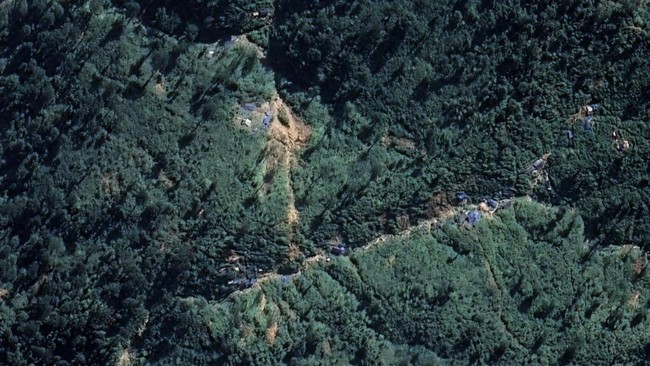
Gold is often a favourite investment instrument due to its promising prospects. Its price movements, which tend to be stable, enable this precious metal to provide more predictable returns over the long term. During uncertain economic conditions, such as conflicts or wars, interest in gold typically rises. This is because gold is viewed as a safe haven asset that can protect wealth from inflationary pressures. In the past, history records a major gold discovery in an area near Jakarta. The Cikotok region in Banten is said to have produced a total of 30,000 tonnes of gold. This find not only brought a windfall but also became a crucial milestone that opened a new era in the national gold mining industry. Initially, the colonial government had long heard rumours of a gold source area south of Batavia (now Jakarta) named Cikotok, located in the Banten administrative region. If calculated, Cikotok is quite close to the centre of Batavia. Only 200 km away. This news clearly astonished people because it would be highly profitable. Therefore, to avoid it being dismissed as fantasy, the government conducted geological research led by Dutch researcher W.F.F. Oppenoorth. Since 1919, Oppenoorth and his team set off from Sukabumi to traverse Java’s forests to the point considered the gold source. The survey was accompanied by road and tunnel openings in case gold mining could be carried out. In short, Oppenoorth’s research bore fruit. It turned out to be true; the Cikotok area contained an extremely abundant gold source. However, mining was not easy to undertake. The government had to clear forests and open many new tunnels. In 1928, a total of 25 tunnels were successfully built. These cut through steep hills, highlands, and narrow valleys. “Approximately 25 tunnels have now been built, only some of which have a depth of no more than 135 metres,” wrote the Sumatra-bode daily (2 March 1928). The costs incurred were not insignificant. Records show the government spent 80,000 guilders, equivalent to billions of rupiah, per year. However, the expenditure proved commensurate with the results obtained. Finally, in March 1928, the long-circulating gold rumours were uncovered. In Cikotok, 30,000 tonnes of gold hidden underground were successfully found. “To date, 30,000 tonnes of gold have been found from Cikotok,” wrote Sumatra-bode. Indonesia’s Treasure Falls into Foreign Hands Since that discovery, it practically caused a sensation across Indonesia because the government would reap abundant profits. Afterwards, the colonial government granted operational rights to NV Mijnbouw Maatschappij Zuid Bantam. From there, gold mining was conducted on a massive scale. The mine transportation routes were no longer just accessed from Sukabumi. According to the de Indische Courant daily (25 July 1939), the colonial government built new access from Rangkasbitung and Pelabuhan Ratu. Additionally, a factory with a capacity of 20 tonnes per day was built. However, the factory could not accommodate all the gold exploitation results because there was so much of it. Even during operations, the labourers often found gold of varying weights. “During operations, gold of various weights is often found. The highest reaches 126 grams,” wrote de Indische Courant (25 July 1939). By 1933, gold mining had already recorded good results. There were 400 km² of mining area in Cikotok. Gold could be obtained by digging just 50 metres. Even the government could obtain much larger gold quantities. “The amount of gold revealed from exploration totals more than 61,000 tonnes of gold valued at 3.68 billion guilders,” wrote de Locomotief (29 March 1933). Nevertheless, the abundance of gold only benefited one party, namely the colonial government. They became even richer. Meanwhile, the indigenous population received no benefits or welfare from the gold mining, even though the colonial government had promised prosperity for the natives. In short, the Cikotok gold source became the largest gold mine ever owned by the colonial government, continuing into the Republic of Indonesia government. In the independence era, the Cikotok gold mine was taken over by NV Perusahaan Pembangunan Pertambangan and then continued by PT Aneka Tambang in 1974. The history of the Cikotok gold mine had to end in 2005 because its gold content was depleted. Although depleted, the glory of the Cikotok gold mine was continued by a larger gold mine, namely Freeport in Papua.