
Senior Professor of UIN Jakarta Urges Public to Exercise Discretion in Responding to Controversy over Religious Minister's Zakat Statement
A controversy developing in public discourse regarding the Religious Minister’s statement on zakat requires a measured, proportional, and clear-minded response.
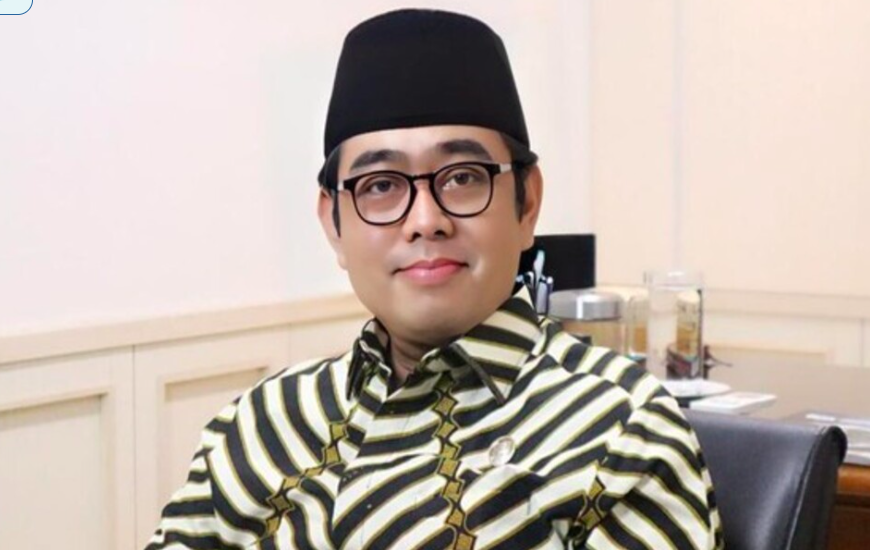
Professor Ahmad Tholabi Kharlie, Senior Professor at UIN Syarif Hidayatullah Jakarta, has called upon the public to avoid drawing hasty negative conclusions and to prioritise the principle of tabayun in understanding information.
In his view, the dynamics that have unfolded are largely triggered by public misunderstanding of the context of statements circulating in digital spaces. He observes that in this era of rapid information dissemination, statements extracted from their full context frequently provoke misinterpretation and heighten tension in public discourse.
“In Islamic tradition, tabayun is a fundamentally important principle of ethics. It serves as a mechanism for maintaining clarity of information and preventing premature conclusions,” he stated.
Professor Tholabi, who also serves as Vice-Rector of UIN Syarif Hidayatullah Jakarta, emphasised that the status of zakat in Islam is unambiguous and has remained constant throughout the history of Islamic jurisprudence.
He explained that the Qur’an consistently positions zakat as a primary obligation of Muslims, always alongside the commandment to pray. From a normative perspective, zakat holds the status of qath’i (categorical) as both a pillar of Islam and an individual obligation (fardhu ’ain).
“Consequently, both theologically and juridically, there is no room for debate regarding the obligation of zakat in Islam,” he affirmed.
According to him, the Religious Minister’s renewed affirmation that zakat remains a pillar of Islam actually demonstrates a commitment to maintaining clarity regarding zakat’s normative position in Islamic teaching.
Professor Tholabi observes that the substance of the ideas put forward by the Religious Minister is situated within a framework of strengthening the broader Islamic philanthropic ecosystem in a more integrated manner.
He views efforts to optimise waqf (religious endowments), infaq (voluntary charitable donations), and sadaqah (alms) as a relevant strategy for expanding instruments of economic empowerment for the Muslim community, particularly in the context of national Islamic economic development.
“From the perspective of maqashid al-shariah (objectives of Islamic law), strengthening all instruments of Islamic philanthropy represents a strategic step towards increasing social welfare and reducing economic inequality,” he explained.
In his view, zakat remains the foundation of individual obligation, whilst other philanthropic instruments function as levers for long-term social development.
Furthermore, Professor Tholabi cautioned that the controversy unfolding in public discourse should not escalate into counterproductive conflict, particularly as Ramadan approaches—a period that represents an opportunity to strengthen spirituality and social solidarity.
He called upon the public to maintain a commitment to husnuzan (positive assumptions), maturity, and proportionality in responding to differing perspectives in public discourse.
“What matters most is how the energy of the Muslim community remains directed towards strengthening collective welfare, rather than towards controversy that only widens social distance,” he concluded.