
Senior Academics at Padjadjaran University Issue Statement on Middle East Conflict
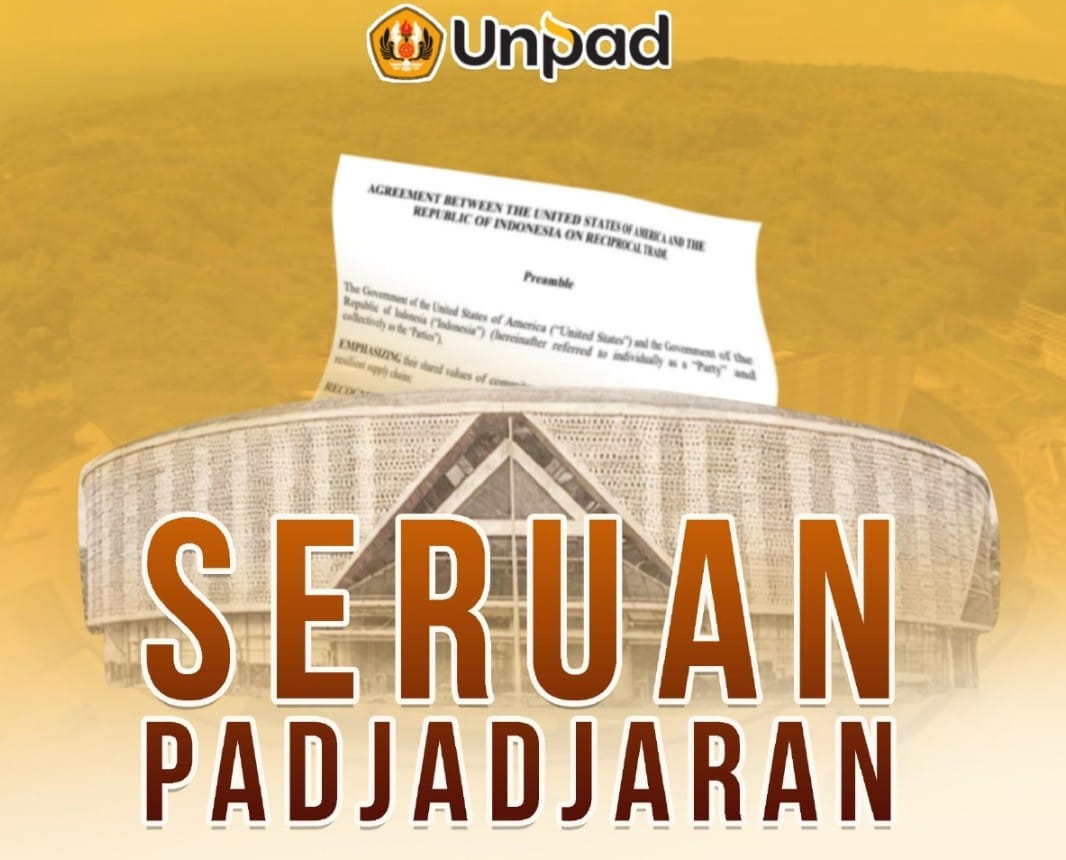
Senior professors and academics from Padjadjaran University (Unpad) in Bandung have issued the “Padjadjaran Statement” regarding Indonesia’s position in diplomacy and free and active foreign policy, which is currently facing a severe test.
This comes as various developments unfold, including President Prabowo Subianto’s decision to join the Board of Peace (BoP), the signing of an Agreement on Reciprocal Trade (ART) whose substance is viewed as detrimental to Indonesia, and military aggression against Iran conducted by Israel with American assistance.
The Dean of the Council of Professors, Atwar Bajari, stated that the Preamble of the 1945 Constitution places Indonesia in a firm position regarding the principles of foreign policy. Whilst free and active means Indonesia is free to determine its diplomatic position and steps according to national interests, it does not mean refraining from taking a stance when clear violations of humanity or injustice occur.
“Active foreign policy requires consistent alignment with humanitarian values and protection of human dignity and the restoration of justice. We, the senior professors and academics of Unpad, are raising many points,” he explained.
These points, according to Atwar, include strong condemnation of the military aggression carried out by Israel, with American assistance, against Iran. An attack on a sovereign nation constitutes an extreme escalation that violates international law, threatens regional stability, and increases the risk of wider regional conflict.
“If such practices are allowed, then the international order based on law will lose its moral and juridical legitimacy,” he stated.
Atwar further conveyed another point expressing deep condolences for the deaths of Iranian leaders and other civilians. This tragedy is not only a loss for the Iranian nation but also sets a dangerous precedent in international relations practice, where political assassinations of heads of state or national leaders are normalised as instruments of foreign policy.
“The appeal to the Indonesian government to take a firm and consistent stance on the principles of free and active foreign policy and the mandate of the 1945 Constitution to participate in establishing world order based on independence, lasting peace, and social justice. Therefore, the President needs to immediately conduct a comprehensive review of membership in the BoP,” he said.
Atwar also called for the Indonesian parliament to conduct critical analysis of the widespread impact of the ART and Indonesia’s membership in the BoP, and an appeal to the United Nations and the international community to immediately cease all forms of military aggression and pressure all parties to return to the path of diplomacy and resolution in accordance with the principles of international law.
Meanwhile, the Rector of the Indonesian Education University (UPI), Didi Sukyadi, also stated that the Indonesian government should position itself as a party capable of helping to cool the situation to ease tensions and prevent the conflict from spreading to other regions. Didi believed the impact of the conflict would certainly be felt by the Indonesian nation, particularly regarding fuel oil supplies that are trapped in the Strait of Hormuz.
“Something must be done to address this problem both by the government and relevant companies. Indeed, the impact on global life today cannot be overlooked or ignored. In my view, this condition will influence all our lives,” he emphasised.
Didi also informed that as of now there is no information about UPI students in the Middle East region or area. “Because indeed the majority of our cooperation, if we send students, they have not yet reached the Middle East, but only ASEAN countries, and if there are any students then of course in other countries in small numbers. As for the Middle East, UPI happens to have no student exchange or cooperation,” he concluded.