
Seizing the Strait of Hormuz: Arab Ruler Becomes Iran's Wealthiest Person
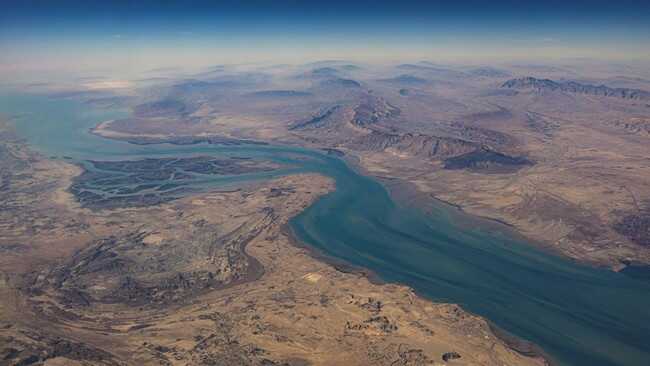
The Strait of Hormuz is a narrow waterway, about 33 kilometres wide, but its significance is vast. It serves as the main conduit linking the oil-rich Persian Gulf to global markets, with millions of barrels of oil passing through each day. Any disruption in this route could trigger global energy price fluctuations. Currently, the Strait’s regional influence spans three countries: the northern part is controlled by Iran, while the southern side borders Oman and the United Arab Emirates. If the route were ever fully closed, the consequences would be wide-ranging, affecting both producers and energy consumers worldwide.
Long before becoming a modern geopolitical hotspot, the Strait of Hormuz was under the control of a legendary ruler, Shapur II of the Sasanian Empire. The Sasanian Empire is now part of modern Iran. Shapur II ascended to the throne in 309 CE and is regarded as one of the youngest kings in world history; some accounts even claim he was crowned shortly after birth.
Under his leadership, the Sasanian Empire grew into a major power in the Arab world and Western Asia. Citing the 2023 work Iran shahr and the Downfall of the Sassanid Dynasty, Shapur II expanded the empire to include Mesopotamia, Armenia, and the entire Persian Gulf shoreline through a combination of military strategy and diplomacy.
One of his notable legacies is the naming of the Strait of Hormuz, named after his mother, Ifra Hormizd, as a mark of homage. His territorial expansion also directly boosted imperial wealth, as conquered populations were moved to work in mining and infrastructure projects, forming a cornerstone of national riches. Additionally, control over the Persian Gulf, the Strait of Hormuz, and the Gulf of Oman gave him influence over strategic ports and allowed the imposition of taxation on exported-imported commodities such as silk, carpets, precious metals, and spices. The empire also controlled parts of the Silk Road, a vital trade route connecting Western Asia to China.
With vast economic power and a feudal system centered on the king, Shapur II is regarded as one of the most influential and wealthiest figures in ancient Arab world history. He died in 379 CE after roughly seven decades on the throne, making him one of the longest-serving rulers in the history of the Middle East.
The Sasaniyah Empire later collapsed in 651 CE and was supplanted by Islamic powers that would form the foundations of modern Iran’s history.