
Seizing opportunities to revive Majalengka's traditional clay tile industry
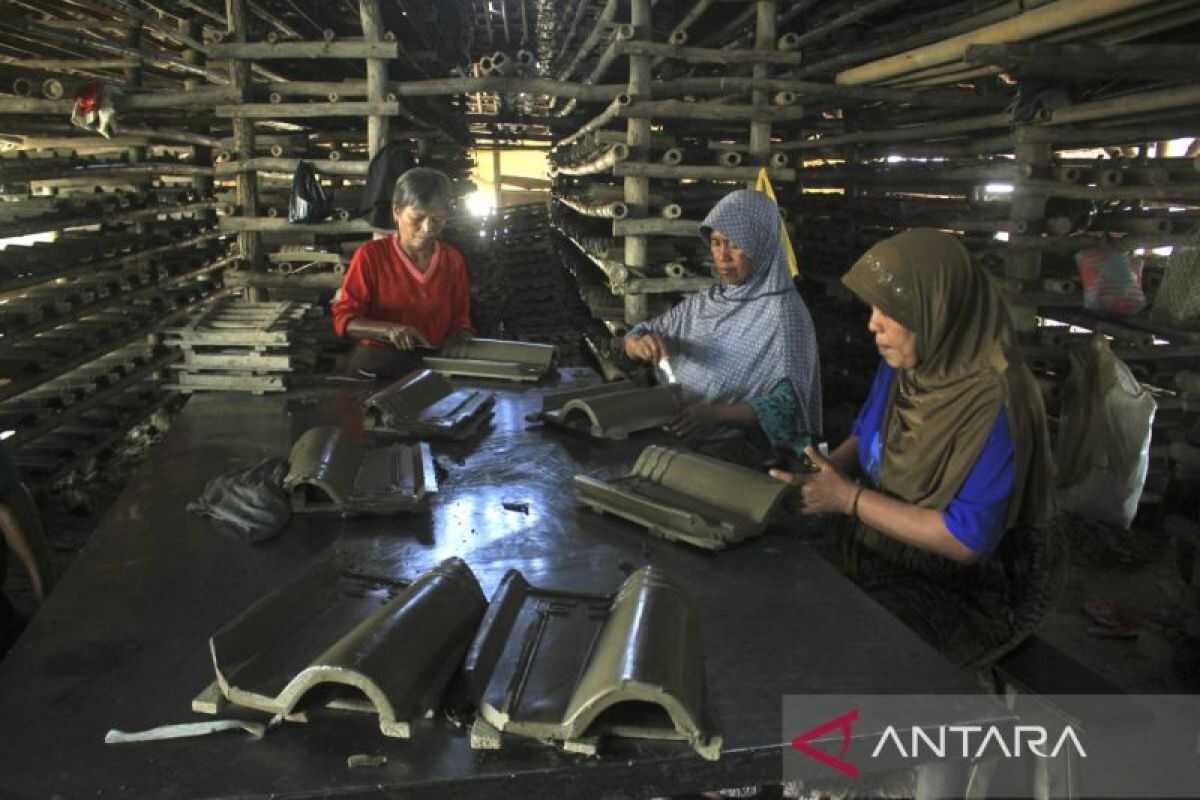
Majalengka (Majalengka News) - Between bamboo racks stocked with roof tiles, three female workers sit close together at a table. Their nimble fingers deftly tidy the edges of wet clay, scraping away mould remnants with practiced motions.
Several newly formed tiles are lined up on a metal table. One by one they are tidied, given a thin glaze to smooth the surface, before being moved to the drying rack at the back of the room.
Afterwards, the clay moulds are prepared for drying until firing.
The atmosphere in the production room looks busy. Short conversations among workers are often heard. Occasionally, someone passes by carrying wet tiles towards the bamboo rack at the back of the room.
The working rhythm has become a daily sight at the Jatiwangi tile centre, Majalengka Regency, West Java.
The momentum of the tile industry
Amid the hubbub, Syamsul Maarif stands watching the process. He is the owner of one of the traditional tile factories still operating in the Jatiwangi area.
In his facility, tiles are consistently produced. The tiles appear sturdy with their natural red colour, a type commonly used on houses across various regions of Java.
According to Syamsul, tile production activity in the Jatiwangi area continues to operate up to the present. Although the number of factories is no longer as many as before, several craftsmen remain in business.
“Now the condition of tile factories in Jatiwangi is still quite busy. There are still many making them,” he told Majalengka News at the end of February 2026.
In his factory, production activity almost runs every day. Workers arrive from the morning, preparing raw materials, before entering the shaping stage.
In one day, the factory can produce around 1,800 to 2,000 ready-made tiles.
That amount, he said, is calculated from tiles that have gone through all production stages until ready for sale.
“Every day there is production activity, from Monday to Saturday,” he said.
The tile making process begins with clay taken from the surrounding area of Jatiwangi. The clay is mixed with additives, then ground into a dough, and then placed into machines or moulds to shape the tiles.