
Seeking Divine Grace from a Temporary Mosque
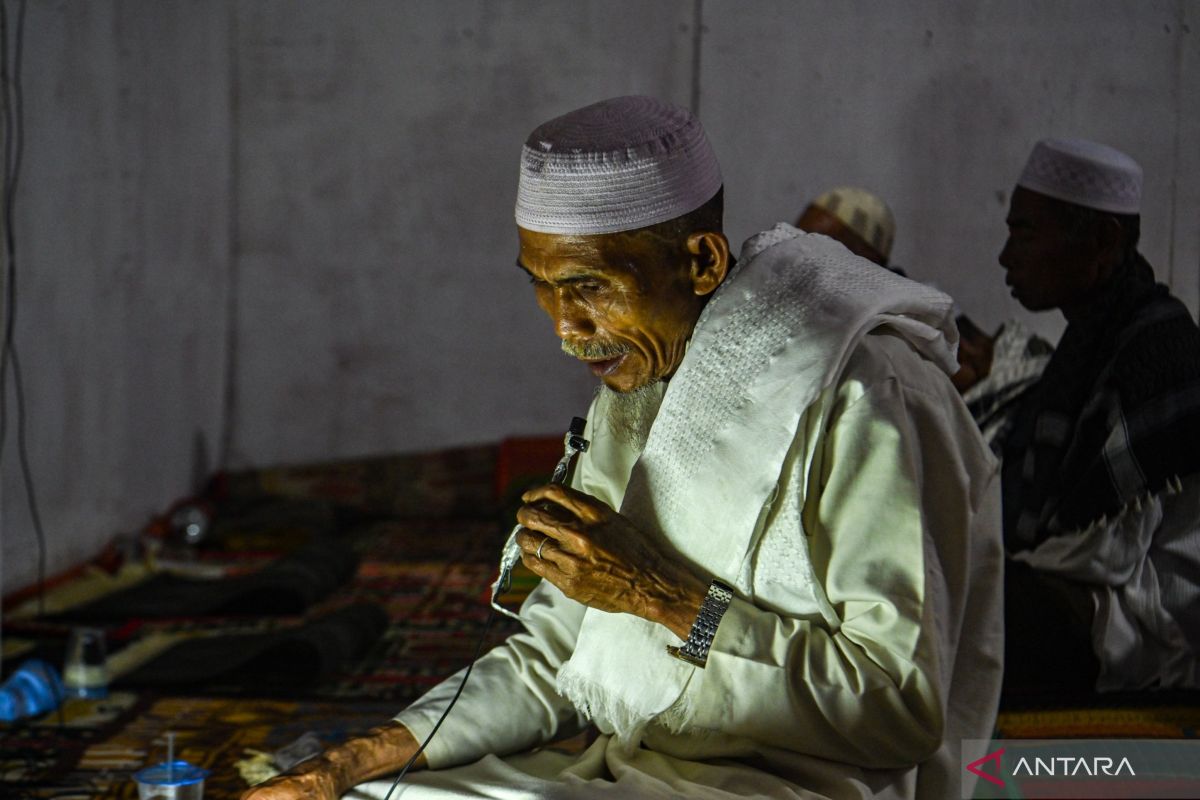
Gayo Lues — Sali took his place at the front to lead the religious study session. His calm voice flowed through the loudspeaker with deliberately enhanced echo, evoking the recitation of the imam at Masjidil Haram in Makkah. From that simple space, he guided the congregation into the evening with devotion.
This routine has become an inseparable part of the life of Sali, the mosque imam and respected community leader in Desa Tetingi, Pantan Cuaca District, Gayo Lues Regency, Aceh. That evening, the mountain air grew increasingly cold, seeping through the gaps in the wooden walls of the temporary mosque standing amid the residential settlement.
From within the building, the 62-year-old man recited the holy verses of the Quran throughout the night during Ramadhan. His voice mingled with the roar of the river current, a flow that has never truly left the residents’ memory since the flash flood struck the village on 26 November 2025.
The memory transported Sali back to months earlier, when he still stood in the robust and spacious Al-Muhsinin Mosque. That mosque had been the centre of the community’s life, a place of worship and social gathering. However, in a single night, the building was swept away by the fierce current from the mountain headwaters along with dozens of residents’ homes.
The disaster left deep wounds, but provided Sali no room to dwell in sadness for long. One day after the calamity, he and the residents began to again call the adhan from whatever structures were available. From a simple shelter to the eventual establishment of a temporary mosque, he ensured worship continued.
The change in worship space brought a different atmosphere. Whereas Ramadhan previously took place in spacious surroundings, the congregation now gathered in a cramped space with limited facilities. This constraint paradoxically brought forth a quieter and more profoundly meaningful serenity.
For Sali, this Ramadhan became an opportunity to strengthen faith. He interpreted the holy month not merely as a time to abstain from food and drink, but also as a chance to fortify conviction, especially amid the trial they had recently endured.
This belief gradually took root among the community. Night after night, congregants arrived after breaking their fast. They sat cross-legged on thin mats, pulled their sarongs close, and bowed their heads in prayer. Faces worn from a day of struggle to meet their needs gradually transformed into expressions of peace.
As the last ten nights of Ramadhan approached, the atmosphere in the temporary mosque grew increasingly vibrant. Sali led a series of lengthy devotional services, beginning with the Isha prayer, 23 rakaat of Tarawih and Witir prayers, Quranic recitation, and Tahajud prayer near dawn. Some residents chose to stay for Itikaf, making the most of their time in the humble space.