
Securing Justice at Sea
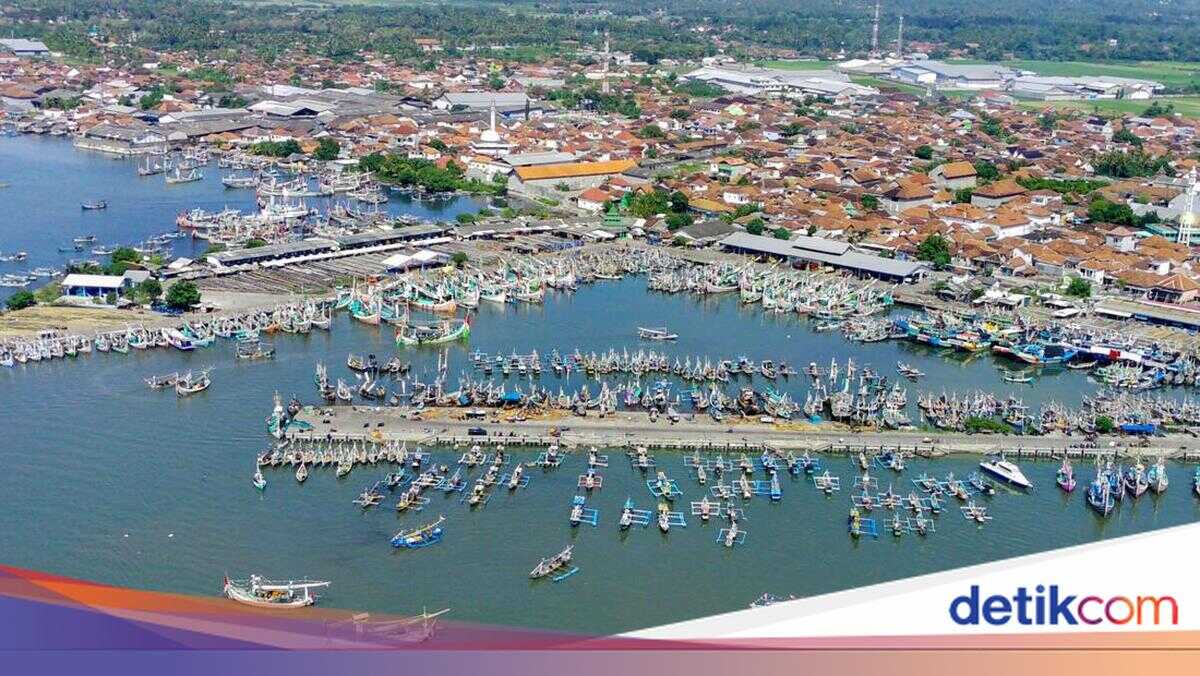
The sea has long been an inseparable part of Indonesia’s identity. With maritime waters covering two-thirds of the nation’s sovereign territory, Indonesia is not only an archipelago but also a maritime nation.
In recent years, the narrative surrounding the blue economy has strengthened considerably. This represents a development paradigm that positions the sea as a source of economic growth whilst simultaneously preserving its ecological sustainability.
However, amidst this narrative, there exists one frequently overlooked aspect: how the state can ensure fiscal justice in the utilisation of maritime space.
The utilisation of Indonesia’s maritime space is increasingly expansive and complex. Oil and gas platforms, floating terminals, specialised ports, offshore aquaculture zones, and exclusive offshore resorts have become commonplace in today’s maritime landscape.
These activities generate significant economic value. Yet the question arises: have all these activities provided fair fiscal contributions to the state? Furthermore, do such contributions reflect the ecological costs arising from maritime space utilisation?
Within the blue economy framework, growth cannot stand alone but must proceed in tandem with conservation, restoration, and resource sustainability. This means that every form of maritime space utilisation must be assessed not only for profit potential but also for its impact on coastal ecosystems, biodiversity, and environmental carrying capacity.
At this juncture, fiscal policy—including Land and Building Tax (PBB)—acquires strategic relevance.
The PBB, long associated with land and buildings on terra firma, has actually been conceptualised to encompass maritime areas. From a tax law perspective, the definition of “land” includes the surface of territorial maritime waters that are utilised permanently, as affirmed in Law Number 12 of 1985 concerning PBB, as amended by Law Number 12 of 1994. Thus, normatively, maritime space is not an area free from fiscal obligations.
Furthermore, the government, through Finance Ministry Regulation Number 186/PMK.03/2019, later amended by PMK Number 234/PMK.03/2022, has established a framework for classifying tax objects and procedures for determining Taxable Land and Building Values (NJOP) for PBB in certain sectors.
Under this regulation, offshore objects such as submarine pipelines, fish farming, industrial-scale fisheries, and floating storage and terminal facilities can be subject to PBB through an economic value approach.
However, field reality demonstrates that PBB collection over maritime areas remains limited. Many maritime economic objects have not yet entered the tax base, owing to data limitations, the absence of adaptive valuation methods, or insufficient integration between fiscal policy and marine spatial planning. Yet from a blue economy perspective, the absence of fiscal instruments risks incentivising exploitation without internalisation of environmental costs.
In many cases, maritime economic activities carry ecological consequences including pollution, coral reef degradation, or pressure on fish stocks. The principle of fiscal justice demands that every form of earth space utilisation, whether on land or sea, must provide equivalent contribution to the state, including as a mechanism to offset ecological impacts.
The primary challenge lies in determining NJOP values that are relevant to maritime space characteristics. Unlike land, the sea lacks a clear market price. Therefore, income approach and cost approach methodologies must be developed to assess maritime objects more proportionally.
Environmental risk dimensions and ecological sensitivity of regions should be considered in valuation formulae, so that PBB becomes ecologically aligned rather than neutral, and consistent with sustainability principles.
Here, PBB can transform from a mere collection instrument into a governance tool. Rates and object classifications can be designed to provide policy signals encouraging sustainable aquaculture practices and discouraging destructive utilisation. In other words, fiscal policy can become an engine of the blue economy rather than merely following it.
Strategic steps can begin with developing a national database of maritime PBB objects integrated with marine zoning data, coupled with active involvement of coastal local governments in identifying and reporting tax objects as a form of tax base expansion. Transparency and accountability in deploying maritime sector PBB revenues are also crucial, so that coastal communities directly benefit, for instance through ecosystem rehabilitation or strengthening of local economies.
The time has come for Indonesia not merely to regulate the sea in conservation or economic dimensions, but also in sustainable fiscal dimensions. The state must be present in a balanced manner—protecting, facilitating, and managing the maritime industry simultaneously.
Maritime PBB, if optimised and aligned with blue economy principles, can become the foundation of what might properly be called justice, ensuring that the sea becomes not only a source of private profit but also a source of sustainable public benefit across generations.