
Second Peak of Lebaran Return Traffic Predicted for 29 March
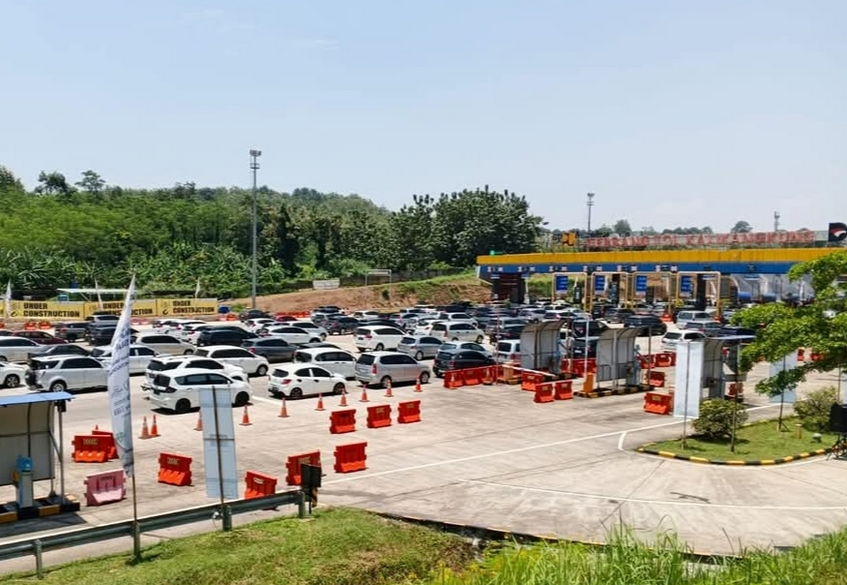
Vehicles returning after Lebaran surged again in several areas of Central Java on Thursday (26/3), despite the official closure of Operation Ketupat 2026. Traffic still fills national, provincial, and district/city roads up to the Trans-Java Toll Road and is predicted to continue increasing until the second return traffic peak on Sunday (29/3).
Monitoring by Media Indonesia on Thursday (26/3) showed traffic density still occurring on various main routes in Central Java. Congestion even emerged at several points due to obstacles such as intersections, railway crossings, and the impact of flooding disasters.
On the national road along the Pantura route in Central Java, the return flow was delayed not only by flooding in the Brebes area but also by increased community activities ahead of Lebaran Ketupat or Syawalan celebrations in several regions like Jepara, Demak, Kendal, and Pekalongan. This condition made vehicles able to proceed only at a crawl.
Heavy rain battering the Pantura area further slowed the journey of return vehicles from the east or Semarang towards the west to the Jabodetabek region. Drivers’ visibility was impaired by the heavy rain and dark sky conditions, so vehicles could not travel at high speeds.
“We continue to maintain readiness for smooth traffic on the Pantura route and alternative routes, in addition to special security at several tourist destinations which can become congestion knots,” said the Head of Pekalongan Police Resort, AKB Rachmad C Yusuf.
According to Rachmad C Yusuf, the traffic density occurred due to an increase in return vehicle volume since the morning as well as preparations for the Lebaran Ketupat celebration scheduled for Saturday (28/3). “Heavy rain also prevents vehicles from moving quickly,” he added.
Vehicle density was also observed at several Trans-Java Toll Road gates. Return vehicles from Solo to Semarang were seen queuing at the Banyumanik Toll Gate in Semarang, while vehicles from Semarang to Cikampek had to queue at the Kalikangkung Toll Gate even though a national one-way system had been implemented up to the Cikatama Toll Gate.
Based on data at the Kalikangkung Toll Gate in Semarang, the number of vehicles passing since Thursday morning (26/3) averaged 3,000 units per hour. The highest surge occurred between 09:00–10:00 WIB with 3,209 units, then increased again between 10:00–11:00 WIB to 3,552 units, causing long queues in front of the toll gate.
To anticipate increasingly long queues, officers carried out cone and barrier arrangements to maintain vehicle order when entering the toll gate. Additional toll booths were also implemented to reduce potential congestion.
“Since morning, vehicle volume on the toll road has continued to increase; since early morning, we have been on full alert to smooth the flow of vehicles towards Jabodetabek,” said the Head of Security Post (Pos Pam) at Kalikangkung Toll Gate, AKP Dimas Arief Wicaksono, on Thursday (26/3).
He added that until late afternoon, the number of return vehicles continued to rise. To maintain smooth traffic, a local one-way scheme was also applied from the Salatiga Toll Gate to the Banyumanik Toll Gate, as well as an open-close system at rest areas.