
"Sebujang Gayo": Traditional Sarong-Wearing Trend Among Gayo Lues Menfolk
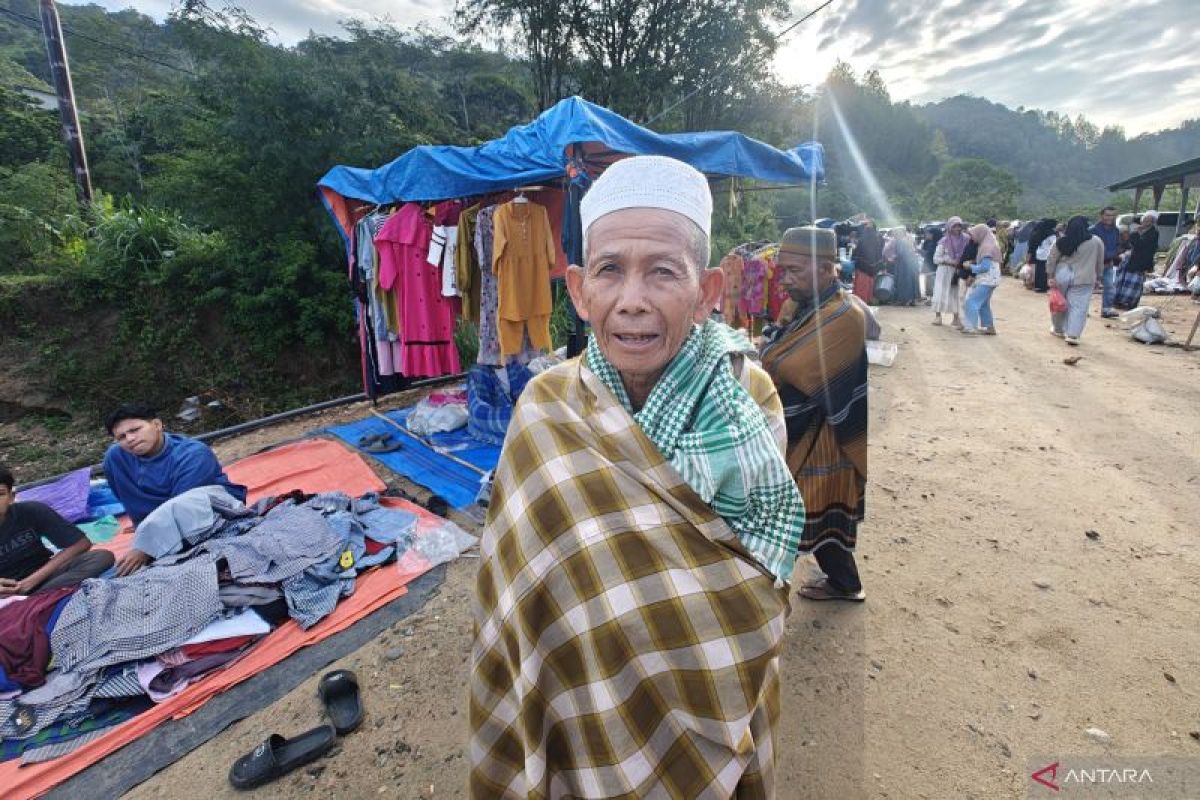
Blangkejeren, Gayo Lues — The practice of wearing sarongs amongst men in Gayo Lues District, Aceh, serves not merely as protection from cold highland air, but also reflects customary values and respect, a trend known as “Sebujang Gayo”.
Agusen Village Head Ramadhan, speaking during a Lebaran bazaar organised for disaster survivors in his village on Wednesday, stated that sarong-wearing amongst men has become an entrenched habit in the daily lives of the Gayo people.
The weather in the highland region, which tends towards coldness, represents a key reason why residents continue wearing sarongs, even whilst wearing thick jackets.
This practice is equally prevalent among men in Agusen Village, located at an altitude of 1,089 metres above sea level, situated within the same natural terrain as the Leuser hills.
“Because of the cold weather, people wear sarongs. It’s already a habit,” he said.
However, he emphasised that sarong-wearing is not solely related to natural factors, but also carries social and cultural significance.
The term “Sebujang Gayo” refers to a mode of male dress employing sarongs as a form of respect towards others, whilst simultaneously maintaining propriety.
In the local community’s view, the sarong symbolises covering of the body in accordance with Islamic principles, reflecting values of civility and religiosity.
Hamidi, a local resident and community figure, added that maintaining modesty through sarong-wearing has become almost obligatory for men who have reached puberty or are married.
Beyond sarong-wearing, the Gayo community also possesses other traditional garments such as Kerawang Gayo, worn during customary activities and cultural performances, including saman dance performances.
“This clothing practice continues to be maintained as part of the cultural identity of the Gayo Lues community,” he said whilst putting on a newly purchased sarong.
The Lebaran bazaar functions similarly to a weekly morning market where people sell various goods outside traditional markets, commonly found in many villages throughout Gayo Lues. However, this activity had temporarily ceased due to disasters that severed road access to villages.
The market has now resumed following the reopening of roads and bridges, which have been repaired and cleared of debris from the disasters, including in Agusen Village.
In the lead-up to Lebaran Idul Fitri, clothing items such as sarongs and peci caps, along with dried cakes, are most sought after by residents and disaster survivors in Agusen Village.
Agusen Village was among areas significantly impacted by flash floods and landslides in late November 2025. The village comprises 279 families, all of whom became disaster victims.
Of these, 155 household heads currently occupy temporary housing (huntara) because their homes were damaged, destroyed, or swept away by the powerful currents. The remainder have chosen to remain and repair their original homes using materials salvaged from the floods.