
Seagrass as a Pillar of Indonesia's National Climate Future
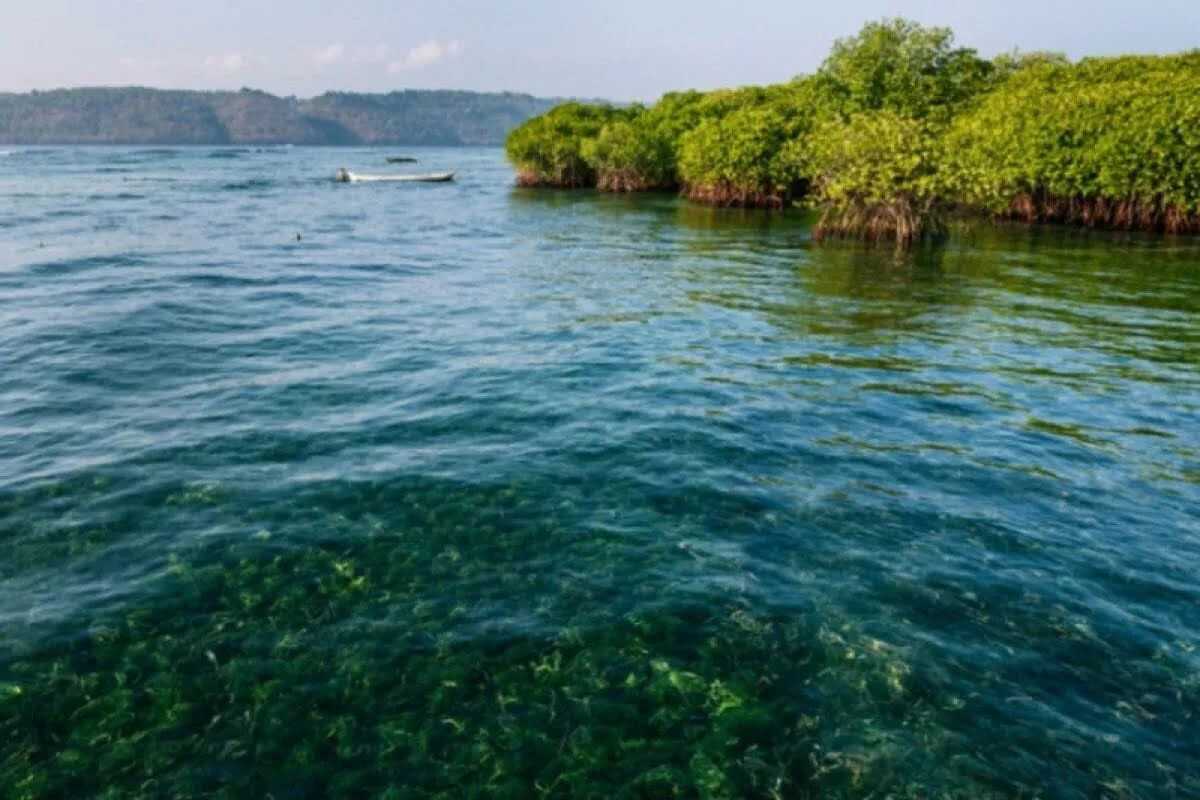
Jakarta (ANTARA) - Amid ongoing debates about the climate crisis, attention has largely focused on tropical forests, industrial sector emissions, and motor vehicles on roads. It is rare that we look to the shallow sea floor, where seagrass meadows grow. Yet there lies a substantial carbon stock for Indonesia’s future.
Seagrass, or seagrass, is a flowering plant that lives entirely in shallow marine waters. Seagrass is not algae, nor is it a worthless weed. It forms extensive beds that quietly absorb and store carbon in its biomass and the sediment beneath it.
Data from researchers at the National Research and Innovation Agency (BRIN) indicate that Indonesia’s seagrass carbon stock potential ranges from 0.26 to 0.55 gigatonnes CO2e. These figures are not merely scientific statistics; they also illustrate the tangible scale of coastal ecosystems’ contribution to climate change mitigation.
For comparison, Indonesia’s total greenhouse gas emissions in 2019 reached 1.84 gigatonnes CO2e, according to the Ministry of Environment and Forestry. This means the carbon stored in seagrass beds could be equivalent to around a quarter to nearly a third of the nation’s annual emissions.
If we are serious about cutting emissions, then protecting ecosystems that naturally store carbon is wiser than letting them degrade and later seeking expensive technological solutions.
Blue carbon: Seagrass is included in the blue carbon category, alongside mangroves and salt marshes. The term blue carbon refers to the carbon absorbed and stored by coastal and marine ecosystems. In an archipelagic country like Indonesia, blue carbon should be a strategic pillar of climate policy.
However, the reality of our climate policy to date remains biased. The great attention has been paid to the forestry and energy sectors, while the maritime sector often remains at the periphery of discourse. It is as if climate solutions can only grow on land.
Geographically, Indonesia is a maritime nation. Its sea area is even larger than its land area. To ignore blue carbon is to ignore the nation’s ecological identity.
Seagrass stores carbon not only in its leaves and stems, but primarily in sediments accumulated over decades to centuries. When this ecosystem is disturbed, the stored carbon can be released back into the atmosphere.
Coastal reclamation, pollution, and sedimentation caused by upstream river damage pose real threats to seagrass beds today. These activities not only alter the landscape but also risk reversing seagrass function from a carbon sink to a source of emissions.
Rising sea surface temperatures due to global climate change also place additional pressure on seagrass. Seagrass requires light and relatively stable water conditions. When temperatures rise and water quality declines, the resilience of this ecosystem weakens.
Ironically, amid these threats, data on seagrass extent and condition in the country are still not well mapped. Discrepancies in seagrass area estimates indicate inventories are not yet robust. Without precise data, policy will operate under uncertainty.
Indeed, in the national climate pledge or Nationally Determined Contribution (NDC), the ocean sector is starting to be accounted for. Here, sustained research on seagrass is crucial.