
Scientists Explain Why T. rex Had Small Arms
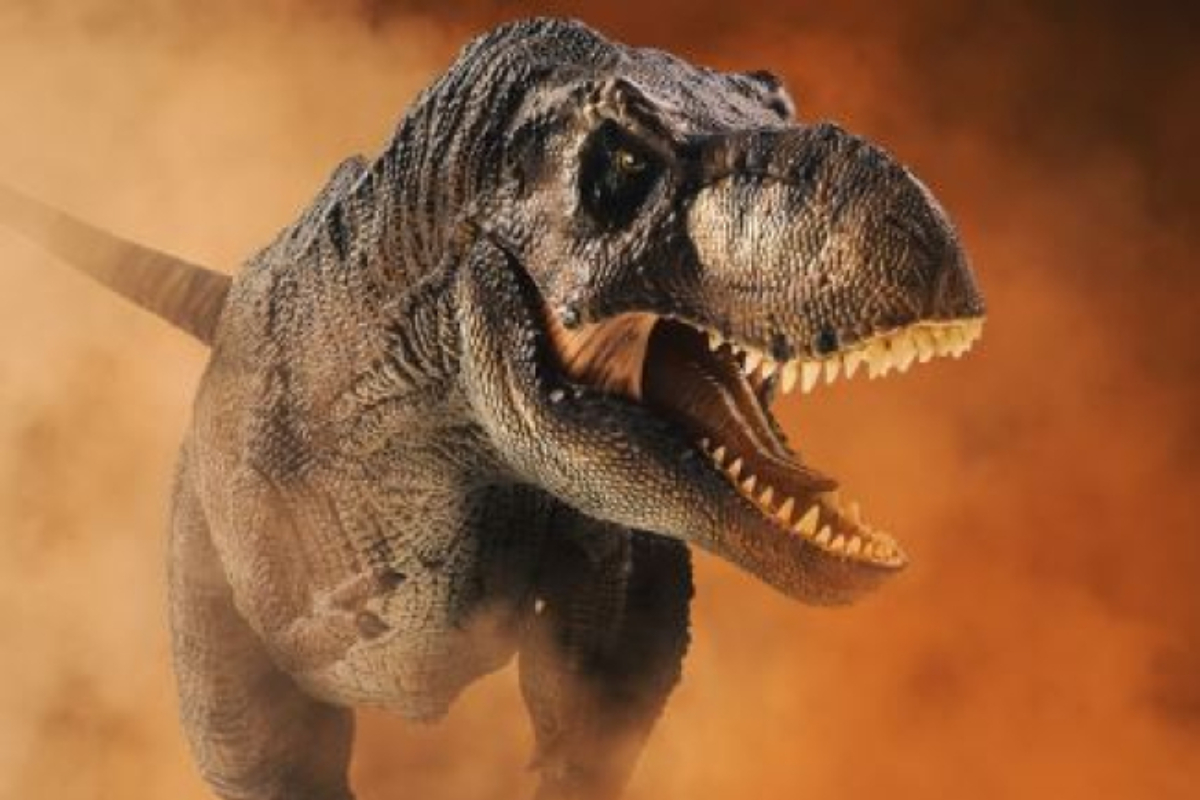
Tyrannosaurus rex, or T. rex, is known as one of the most fearsome predators to have ever lived on Earth. This giant dinosaur measured around 12 metres in length and had a bite force three times stronger than that of a modern lion. Yet, despite its massive size, T. rex’s small arms have puzzled scientists for decades.
Researchers now believe they have finally uncovered the answer to this mystery.
A study published in the journal Proceedings of the Royal Society B suggests the T. rex’s small arms were an evolutionary compromise. The predatory dinosaur evolved to have an extremely powerful skull and jaw, leading to less emphasis on other body parts, including the arms.
“T. rex relied almost entirely on its head for everything,” said Charlie Roger Scherer, the lead author of the study.
According to Scherer, T. rex’s hunting style differed from other predators that used claws or attacks from multiple directions. It is believed to have attacked prey directly with its powerful head and jaws.
“Everything was approached with the head first, so the head was the primary point of contact with prey. This was the most effective way to bring down prey compared to using claws,” he explained.
Scientists explain that evolution typically focuses on perfecting one key survival ability. For T. rex, this was bite strength.
With a large skull and incredibly strong jaws, T. rex could crush bones in a single bite. As a result, large arms were not necessary for hunting or fighting prey.
The Natural History Museum in London states that T. rex had one of the strongest bites in the history of land animals. Its bite pressure was sufficient to easily crush bones.
This likely made large arms a lower priority in T. rex’s evolution.
Although small relative to its body size, researchers stress that T. rex’s arms were not useless. They retained strong muscles and were capable of lifting considerable weight, though their exact purpose remains unknown.
Previous theories suggested the small arms might have been used for rising from a prone position, holding prey at close range, or during mating. However, no conclusive evidence supports any of these theories.
The latest study further supports the hypothesis that T. rex evolved to be a hunter almost entirely dependent on its head and jaw strength.
Despite T. rex being one of the world’s most famous dinosaurs, many aspects of its life remain a mystery to scientists, from hunting methods and social behaviour to the function of its small arms.
This recent research indicates that T. rex’s body shape was the result of highly specific evolution: sacrificing arm size to create a predator with an exceptional bite force.
In other words, for T. rex, a massive jaw was far more important than large arms.