
Scientists Engineer Bacteria to 'Eat' Tumours from Within
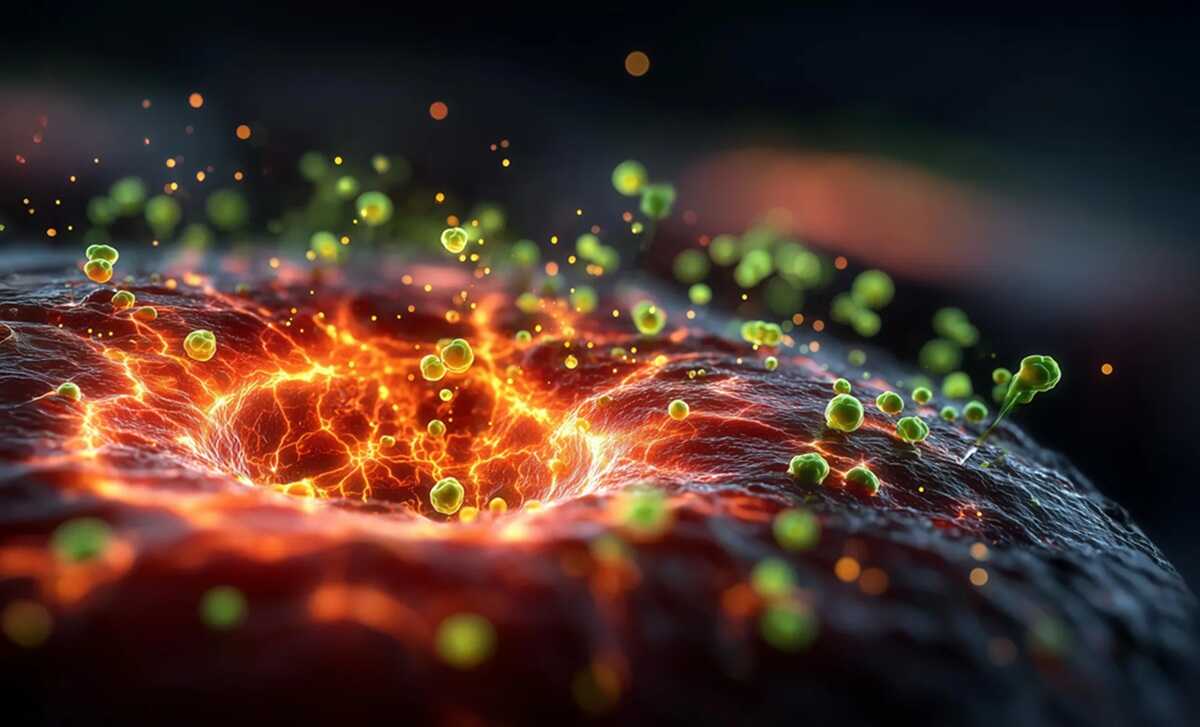
Scientists at the University of Waterloo are developing a revolutionary method to combat cancer, using genetically engineered bacteria to consume tumours from within. This strategy leverages microbes that naturally thrive in oxygen-deprived environments, making the dense core of tumours an ideal target.
The core of this approach is Clostridium sporogenes, a soil bacterium that can only survive in the absence of oxygen. Because the dense core of tumours consists of dead cells and lacks oxygen, this area becomes a perfect breeding ground for the microbe.
“The bacterial spores enter the tumour, find a nutrient-rich, oxygen-free environment that these organisms love, and then start consuming the nutrients and growing,” said Dr. Marc Aucoin, a professor of chemical engineering at Waterloo. “So, we are now colonizing that central space, and the bacteria are essentially cleaning out the tumour.”
However, a major challenge arises when the bacteria spread to the outer edges of the tumour, which are exposed to oxygen, causing them to die before the cancer is completely eradicated. To overcome this, the research team inserted a gene from a related bacterium that is more tolerant to oxygen.
To ensure safety for patients, the team had to ensure that this “oxygen-resistant” feature is inactive when the bacteria are in the oxygen-rich bloodstream. They used a natural bacterial communication process called quorum sensing.
This system works like an automatic switch. The bacteria release chemical signals that amplify as their numbers increase. Only when the number of bacteria inside the tumour is large enough does the signal reach a level that turns on the oxygen-resistant gene.
“Using synthetic biology, we built something that is analogous to an electrical circuit, but instead of wires, we use pieces of DNA,” explained Dr. Brian Ingalls, a professor of applied mathematics. “Each part has its own job. If assembled correctly, they form a system that works in a predictable way.”
In initial tests, the team successfully programmed the bacteria to produce a green fluorescent protein to confirm that the system is active at the desired time. The next step is to combine this control system into a single bacterium for testing in pre-clinical trials.
This research is the result of a cross-disciplinary collaboration, ranging from engineering and mathematics to life sciences. The project, initially spearheaded by PhD student Bahram Zargar, has now evolved into a strategic partnership between the university and the Center for Research on Environmental Microbiology (CREM Co Labs) in Toronto to transform this laboratory discovery into a real medical solution for cancer patients. (Science Daily/Z-2)
The biotechnology company Colossal Biosciences announced the birth of three genetically engineered puppies, hailed as the revival of the woolly mammoth, which went extinct 10,000 years ago.
Towana Looney, a woman from Alabama, made history as the recipient of a genetically engineered pig kidney transplant with the longest survival time to date.
However, in addition to providing various benefits, the application of biotechnology also has negative impacts. What are they? Here is the explanation.
IN addition to the field of agriculture, biotechnology is also widely used in the fields of animal husbandry, environment, and forensics. There are cloning techniques, bioremediation, and DNA fingerprinting.
Modern biotechnology in agriculture is carried out by applying genetic engineering techniques, which involve manipulating the gene structure of an organism.
Copyright @ 2026 Media Group - mediaindonesia. All Rights Reserved