
Scientists Discover New Box Jellyfish Species in Singapore, Deadly Warning
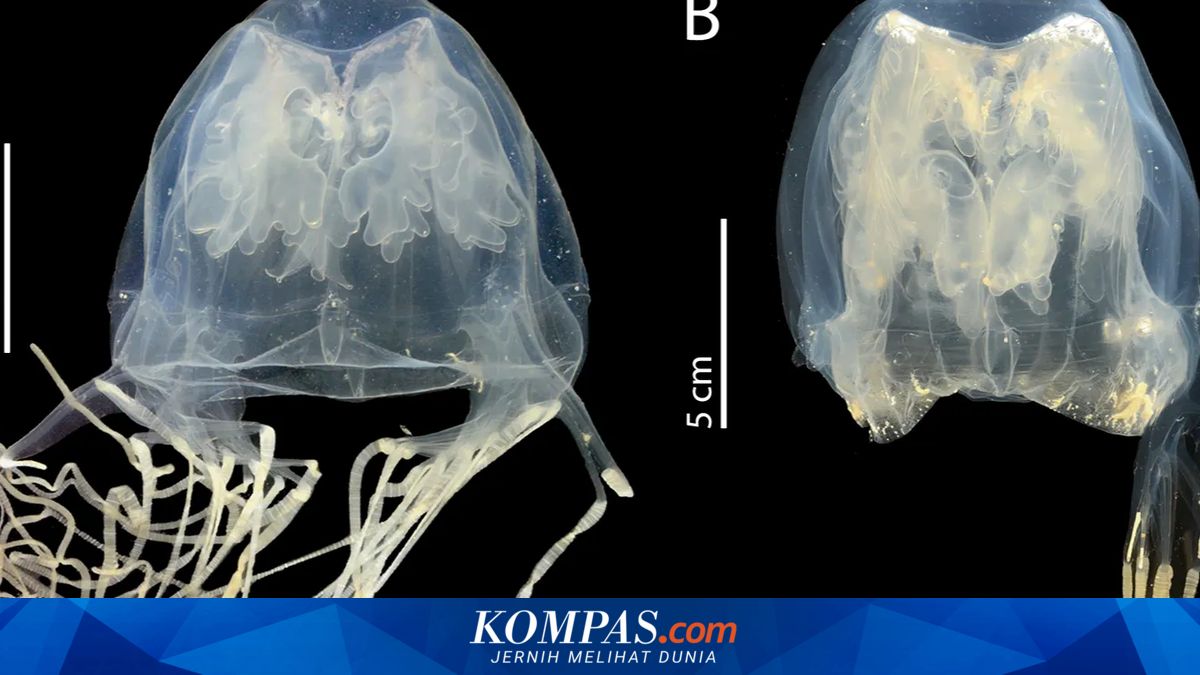
An international team of researchers has identified a new species of box jellyfish in Singapore’s waters, highly venomous and potentially lethal. The new species was described from several specimens found roaming near an island formerly known as Pulau Blakang Mati (now Sentosa Island) in 2020 and 2021. The name was deliberately taken from the island’s old Malay name meaning ‘Death Island’, rather than using ‘Sentosa’, which means ‘peace and tranquility’. This ominous-sounding naming seems fitting given the danger posed by this microscopic creature.
Chironex blakangmati is one of four box jellyfish species in the genus Chironex known worldwide, all of which are highly venomous. Its sting, delivered via specialised cells on its tentacles (nematocysts), is powerful enough to cause death in humans. Unlike many other jellyfish that merely drift passively with currents, box jellyfish of the genus Chironex have strong muscles and complex eyes. This ability enables them to actively detect prey and swim directly toward their target.
Previously, scientists had mistaken C. blakangmati for another box jellyfish species named Chironex yamaguchii. However, the latest report published in the Raffles Bulletin of Zoology refutes that notion after demonstrating significant genetic and morphological differences. ‘C. blakangmati looks very similar to Chironex yamaguchii — the species I first encountered in Okinawa during my master’s studies there,’ said one of the study’s authors, Cheryl Ames, Applied Marine Biology Professor at Tohoku University, Japan, and affiliated researcher at the Smithsonian National Museum of Natural History, Washington, D.C., as quoted by Live Science. ‘However, we realised that the two are indeed different. I even re-examined old samples of C. yamaguchii that I still keep in Okinawa to aid the comparison!’ Ames added in a formal statement.
From the anatomical dissections, researchers found that the new species lacks the branched canals at the bottom of its bell-shaped body. Such canals are typically found in C. yamaguchii and two other Chironex species, namely C. fleckeri and C. indrasaksajiae. Specifically, these canals lie within the perradial lappets, folds that reinforce the jellyfish’s propulsion muscles when swimming.