
Scientists Can Now Study Dolphin Genetics Without Physical Contact
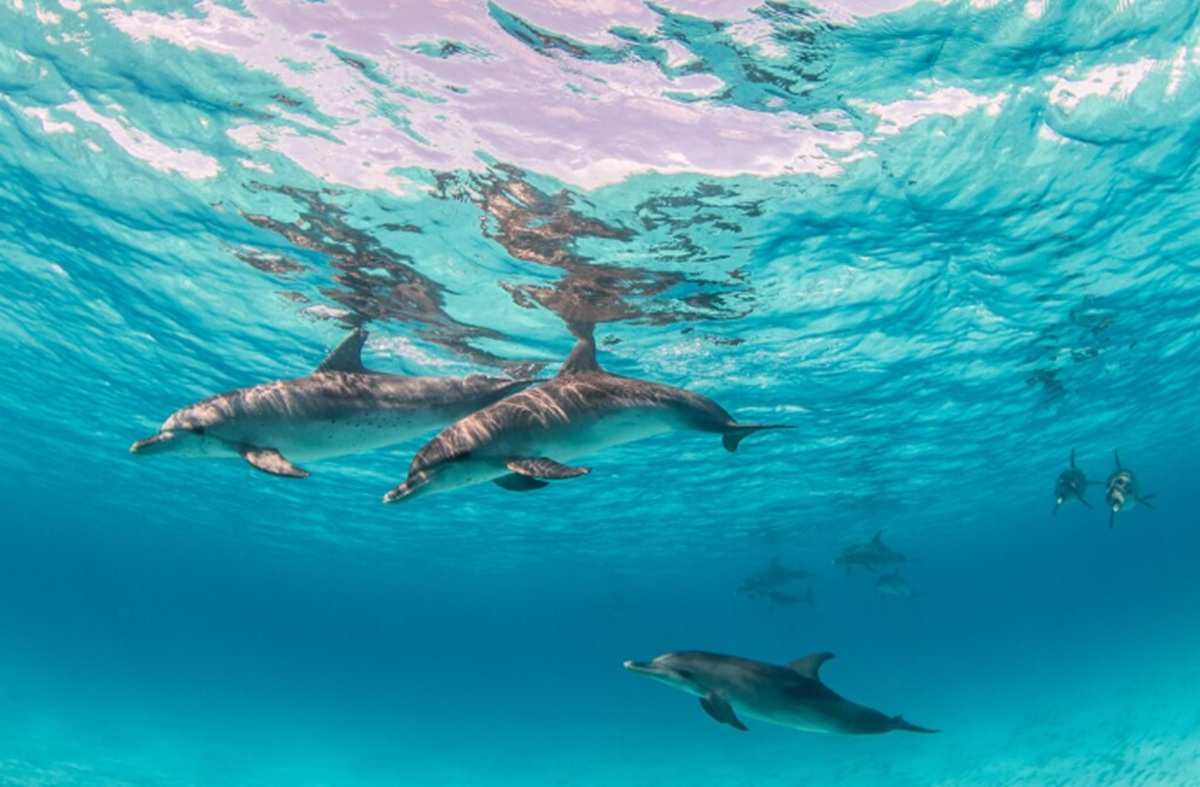
Sea may appear calm, but the water holds hidden traces of marine life. While swimming, dolphins continually shed skin cells, mucus, and DNA fragments. This biological trace is known as environmental DNA or eDNA. A recent study published in Frontiers in Marine Science reveals that seawater samples can now be used to map the genetic diversity of an entire dolphin population accurately, without any contact with the animals. Historically, studying dolphin genetics has been challenging. Yet high genetic variation is an important indicator for measuring population resilience to disease and habitat change. Traditionally, scientists have had to approach these mammals from boats and shoot biopsy darts to sample skin and blubber. The process requires high expertise, calm sea conditions, weeks of work, and often yields only a small number of samples. The study was conducted near Santa Catalina Island at the end of 2021. The research team collected 126 seawater samples, each of volume two litres, within ten metres of a pod of four dolphin species. In the laboratory, the water was filtered to extract and amplify mitochondrial DNA regions that vary between individuals. “Here we show that repeated eDNA sampling can be used to estimate the genetic diversity of dolphins living in large groups and with very large populations,” said Dr. Frederick Archer of NOAA/NMFS Southwest Fisheries Science Center. “This is important because genetic diversity, as a measure of outcome, can be used as a proxy for population size and how ready a population is to respond to environmental changes.” Laboratory results showed a high level of concordance with existing biological data. The long-beaked common dolphin displayed the greatest genetic diversity. Meanwhile, bottlenose dolphins and Risso’s dolphins showed lower variation due to smaller population sizes. Uniquely, Risso’s dolphin DNA was found in many samples even as researchers were tracking other species. The researchers speculate that their rough social behaviour and frequent bite marks left by teeth cause this species to shed more skin cells into the water. Although effective, the eDNA method still faces challenges from currents mixing with traces of past genetics. Scientists therefore recommend control samples be taken before the dolphin pod arrives at the site. Nevertheless, the main advantages of eDNA lie in its simplicity, cost-effectiveness, animal-friendly nature, and the ability to repeat sampling as often as possible compared with conventional biopsy methods. “It would be excellent to start an eDNA monitoring programme as soon as possible that was previously not feasible. For example, we will be able to see how species composition in a very small area changes over the year, including rarer species that are seldom detected in visual surveys,” Archer said. “This could provide us with a great deal of information about habitat use and may also enable us to observe how environmental changes and anthropogenic impacts such as pollution or underwater noise affect species distributions.”