
Scientists Begin Using DNA as Material for Nano Robots
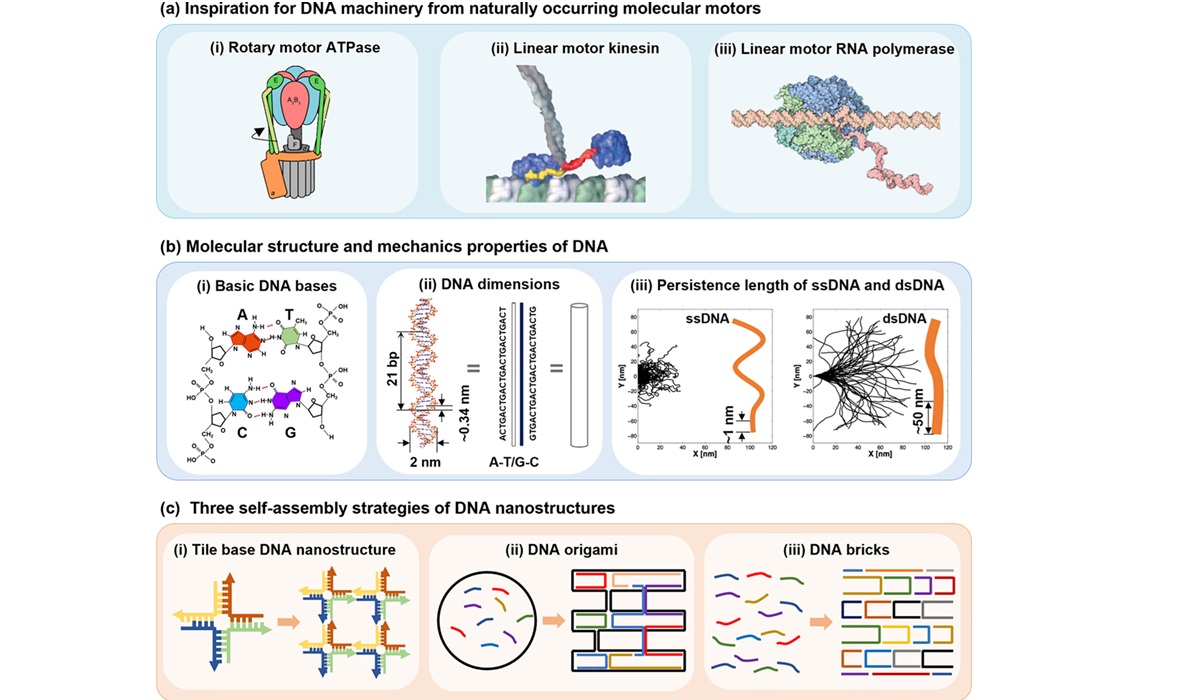
For a long time, DNA has been widely known as the molecule that carries genetic information. However, scientists are now viewing DNA in a very different way, as a building material for robots. In laboratories around the world, researchers have successfully folded DNA into moving components capable of gripping, bending, and responding to external signals.
This concept, which sounds futuristic, is now transforming into a real engineering challenge. The big question is no longer whether DNA can form machines, but whether those machines can be controlled and mass-produced for medical and manufacturing needs.
A research team from Peking University (PKU), including engineer Lifeng Zhou, argues that DNA already behaves like hardware at the molecular scale. Using the “DNA Origami” method, short strands are used to fold long strands into specific structures.
The rigid double-stranded sections serve as the main structure, while single strands provide flexibility for hinges and joints. Since 2015, this design has created nano-scale joints that can swing like doors or extend like sliders.
The healthcare sector is the main driver of this technology because the human body is already accustomed to operating with molecules, so DNA is not considered a foreign object by the immune system.
Several remarkable achievements have been recorded:
Beyond medicine, DNA structures serve as precision templates for placing nano particles with sub-nanometre accuracy, an important step in developing future molecular optical and electronic devices.
Although promising, the biggest challenges arise at the microscopic scale. Constant molecular movement, known as Brownian motion, makes these small components easily wobble and lose shape. Additionally, the cost of production and the speed of the molecular file read-write process are still too expensive for everyday use.
To bring this technology into the real world, researchers are turning to E. coli bacterial fermentation processes to produce long DNA strands on a large scale in a cheap and efficient manner.
“Future robots will not only be made from metal and plastic,” the research team writes in a study published in the journal SmartBot.
The transition from laboratory experiments to a reliable engineering discipline now depends on creating more robust designs and smarter control systems. If successful, DNA robots will soon emerge from the laboratory to perform complex tasks inside the human body.