
Schools as Recovery Spaces
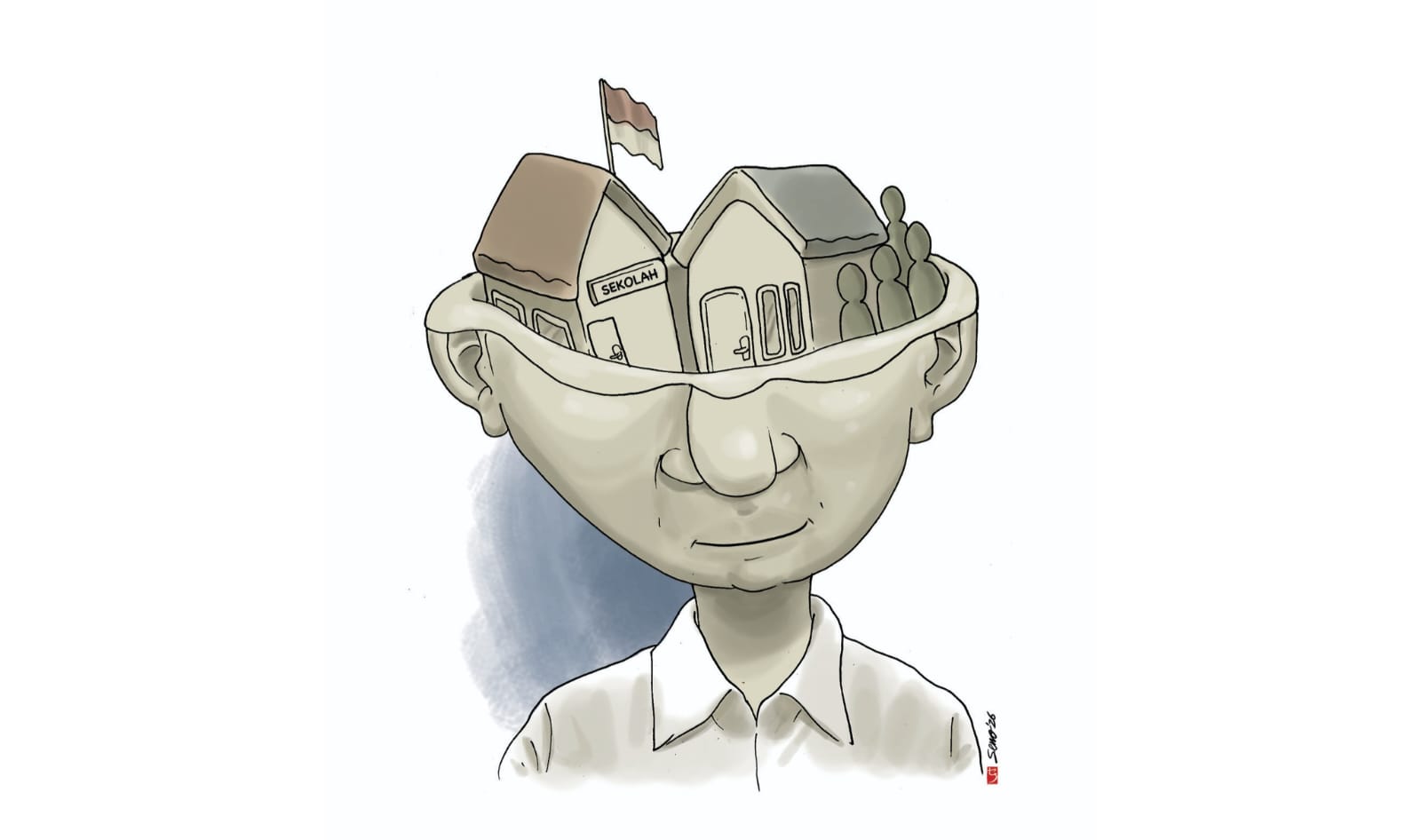
How can education continue when flooding claims classrooms, facilities, and even a sense of safety? Floods represent a natural disaster accounting for 62.86% of total disasters in Indonesia in December 2025 (BNPB). These disasters not only damage infrastructure and disrupt community economic activity, but also significantly impact educational continuity. Schools are inundated with muddy water deposits, learning facilities are damaged, and students’ psychological conditions are shaken, all presenting challenges for post-disaster educational recovery.
In this context, post-disaster learning can be analogised as a coin with two complementary sides. On one side, learning restores schools’ function as formal educational institutions. On the other, schools become spaces for mental and emotional recovery for disaster-affected students. These two roles cannot be separated because academic recovery without psychosocial recovery risks producing meaningless learning processes. What then does ideal education in emergency situations look like?
HOLISTIC POST-DISASTER EDUCATION
Post-disaster education cannot be implemented through normal learning approaches. Various studies on post-disaster education must be oriented towards students’ holistic needs. Schools are positioned as safe spaces providing comfort, stability, and hope for affected students.
Widyastono (2012) mentions three holistic principles: the individual’s relationship with the environment, responsibility for maintaining harmony with nature, and respect for human values. These principles have strong relevance in post-disaster education because they support comprehensive student recovery, whether from social, emotional, or moral aspects.
LITERACY AS PSYCHOSOCIAL SUPPORT
These holistic principles are not mere discourse. Their concrete manifestation can be witnessed in post-disaster educational recovery reflected in collaboration between the Ministry of Basic and Secondary Education (Kemendikdasmen) and the Language Centre in implementing psychosocial support for children affected by floods in Aceh, North Sumatra, and West Sumatra on 13-16 December. Reading activities, storytelling, and play became media to help children express feelings and rebuild a sense of safety (Kemendikdasmen, 2025).
This finding aligns with a study by Cay and Demiroglari (2025) emphasising the importance of integrating mental health interventions into school systems, such as counselling services, play-based therapy, relaxation techniques, and peer support programmes, as part of a sustainable educational recovery strategy.
All these strategies require flexibility in the education system. This flexibility provides teachers with leeway to adjust learning to students’ actual conditions and their surrounding environment. Formative assessment, attitude observation, and learning reflection become more relevant than summative evaluation oriented purely towards grades. Success in post-disaster learning is measured by students’ mental and emotional readiness to resume learning, not merely academic achievement.
POST-DISASTER LEARNING PRACTICE AT SMP SUKMA BANGSA BIREUEN
This flexible principle has been practised at SMP Sukma Bangsa Bireuen. Although the school was not directly affected by flooding, the learning process was adjusted to students’ conditions, given that some students experienced direct and indirect impacts from the disaster. This situation required the school to adopt a more sensitive and adaptive approach to the diversity of student experiences, particularly in psychological and emotional aspects.
At the end of the semester, the school adjusted assessment implementation by replacing conventional summative assessment with portfolio-based evaluation. Besides assessment adjustments, the school also leveraged the end-of-semester momentum through class meetings designed not only as learning closure activities but also as vehicles for recovering students’ motivation, self-confidence, and sense of togetherness.
Previously, the school also conducted art therapy through painting activities as part of psychosocial support efforts. This activity provided visual space for students to channel emotions—proving that simple yet contextual approaches can support their psychological recovery.
SAFEGUARDING TEACHER WELLBEING
Amid focus on student recovery, we often overlook the main actor behind the learning process itself: teachers. Post-disaster, teachers are not only required to teach but also to become psychological companions, patient listeners, and keepers of hope in the classroom. This double burden is certainly heavy, particularly if teachers are themselves disaster victims who have experienced material losses and similar trauma.
At SMP Sukma Bangsa Bireuen, teachers were strengthened through experience-sharing forums and collaborative learning design—safe spaces that relieve emotional burdens whilst providing mutual support. Educational recovery requires resilient teachers; psychosocial support and inter-teacher collaboration are essential for them to create a healing learning environment.
TOWARDS DISASTER-RESILIENT SCHOOLS
Post-disaster learning ultimately reaffirms education’s essence as a process of humanising human beings. It is not merely about overcoming curriculum delays but about how schools can be present as an oasis amid crisis—a place where students and teachers hand in hand recover and rise again. The humanistic, flexible, and collaborative approach pursued by government, communities, and schools proves that recovery is possible.
However, much work remains ahead.