
Schedule of Freight Transport Restrictions During Lebaran 2026, Effective 13–29 March
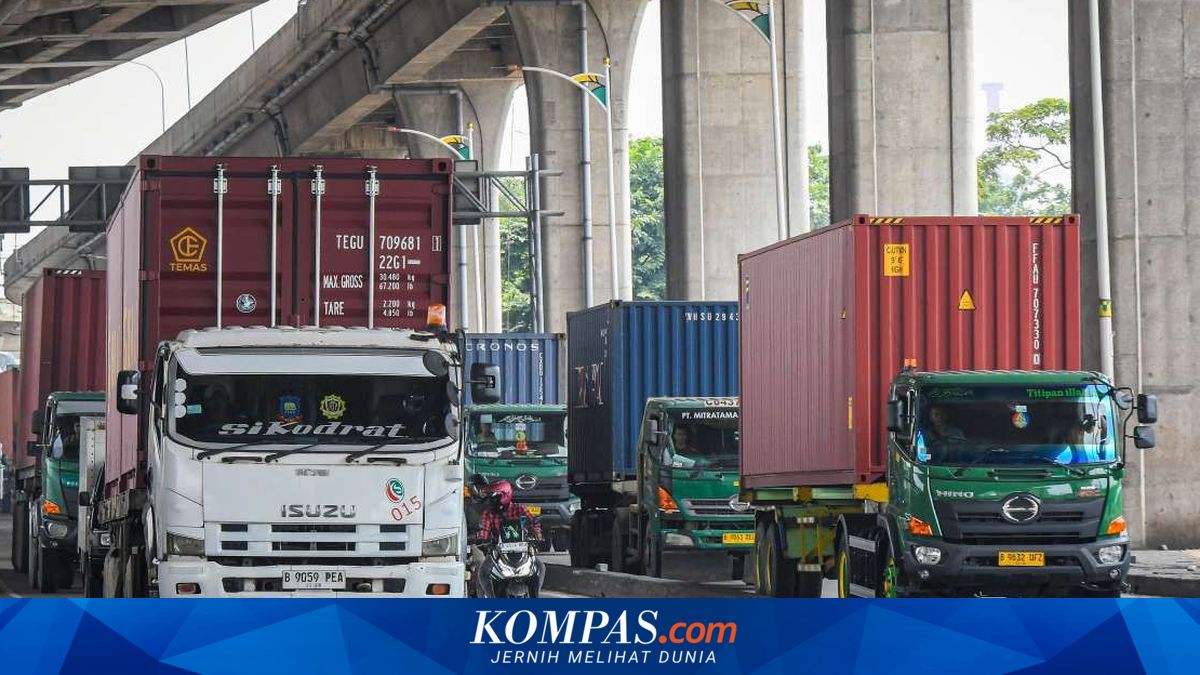
The Indonesian government is reintroducing restrictions on freight transport operations during the Lebaran exodus and return period in 2026. This policy is set out in a Joint Ministerial Decision (SKB) issued by the Ministry of Transportation, the National Police Traffic Corps (Korlantas Polri), and the Ministry of Public Works.
The regulations are detailed in Joint Ministerial Decision No. KP-DRJD 854 of 2026; HK.201/1/21/DJPL/2026; Kep/43/II/2026; and 20/KPTS/Db/2026. The document was signed by the Director General of Land Transportation Aan Suhanan, the Director General of Sea Transportation Muhammad Masyhud, the Director General of Road Infrastructure Roy Rizali Anwar, and the Chief of the National Police Traffic Corps Irjen Pol Agus Suryonugroho.
“Just as with last year’s Lebaran transport or the recent year-end period, a surge in population movement is predicted. To ensure smooth traffic flow and improve road safety, regulations on logistics vehicles are necessary,” said Aan in Jakarta on Wednesday (11 February).
Under these regulations, freight transport restrictions will apply continuously from 13 March 2026 at 12.00 local time until 29 March 2026 at 24.00 local time. The policy applies to both toll roads and non-toll (arterial) roads across various regions of Indonesia that serve as major exodus routes.
The operational restrictions apply to several types of freight vehicles, particularly those with three or more axles. However, goods distribution may still be carried out using two-axle vehicles, except for material transport such as soil, sand, stone, iron, cement, and wood.
The government also grants exemptions for certain freight vehicles that may continue operating even with three or more axles. These include vehicles transporting essential commodities such as foodstuffs, medicines, medical equipment, fuel and petroleum products, and livestock.
However, these vehicles must meet several requirements, including not being overloaded and not exceeding vehicle dimensions. Additionally, vehicles must carry a bill of lading issued by the goods owner, which must contain details of the goods type, delivery destination, and the owner’s name and address.
The freight transport restrictions are applied to several strategic road sections across Indonesia, including both toll roads and arterial roads. Affected toll road sections include Jakarta–Cikampek, Jakarta–Tangerang–Merak, Cikampek–Palimanan, Semarang–Solo–Ngawi, and Surabaya–Gempol–Pandaan–Malang. On non-toll roads, restrictions apply to various major inter-provincial routes such as Jakarta–Cirebon, Bandung–Nagreg–Tasikmalaya, Solo–Yogyakarta, the Java Pantura route, and Sumatra cross-island routes.
The government hopes this policy will help maintain smooth traffic flow during the Lebaran exodus and return period. Violations of these regulations will be subject to sanctions in accordance with applicable legislation.