
SBM ITB Discusses Technology Adoption and People Analytics as Key to Business Optimisation
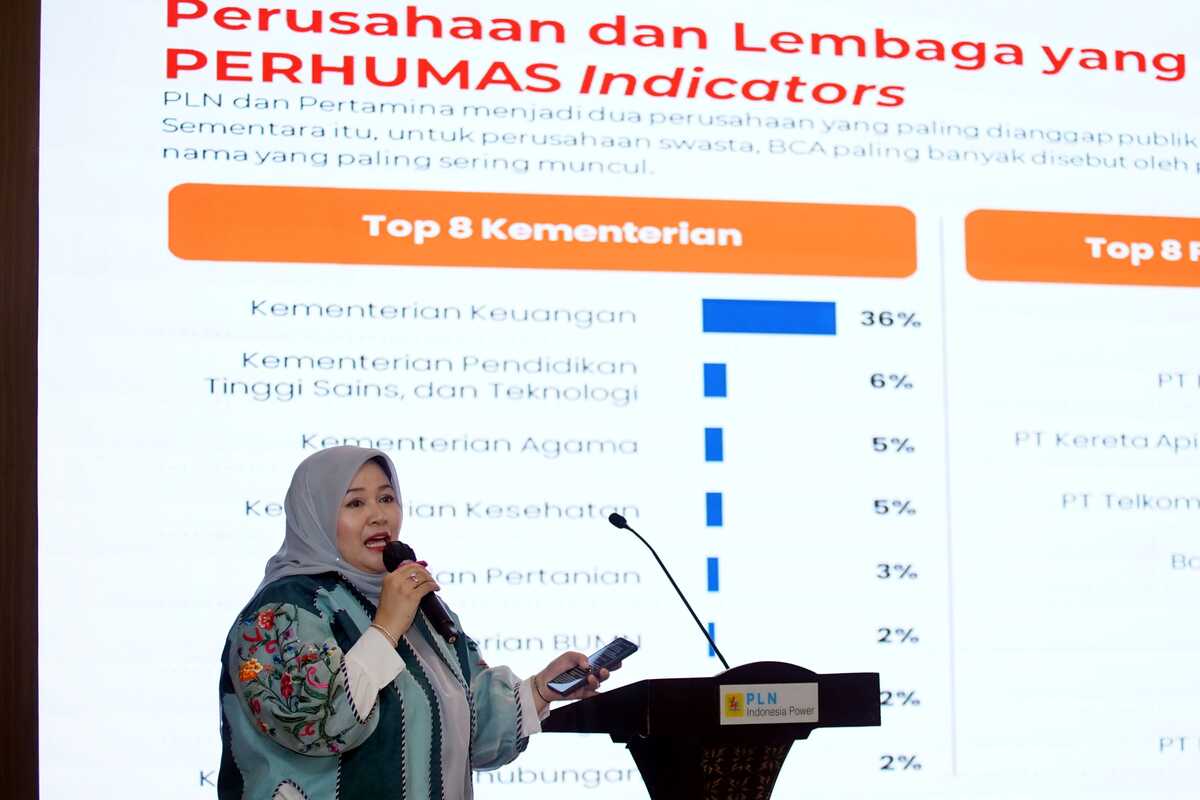
The School of Business and Management at the Bandung Institute of Technology (SBM ITB) held its fifth HCM Talks forum to discuss the strategic role of technology adoption and people analytics in driving business optimisation and organisational streamlining. The forum emphasised the importance of a data-driven approach to objectively assess organisational situations, whilst avoiding subjectivity and fragmented insights in decision-making.
Under the main theme “Navigating the Future of Human Capital: Business and Organisational Streamlining through Lean HR and People Analytics”, the event featured Jemy V. Confido, Senior Vice President of Group Corporate Transformation at Indonesia Telecommunication & Digital Research Institute (ITDRI), and N. Nurlela Arif, Director of Communication and Public Relations at the Bandung Institute of Technology.
Jemy presented evidence that the world’s most profitable companies, such as NVIDIA, Alphabet and Microsoft, place operational excellence at the foundation of people and data management. “Tools such as CRM and various digital platforms will only have value if accompanied by operational excellence, so that data can be converted into quality business decisions,” he stated.
Jemy also highlighted the risks of alpha and beta errors in talent management, where individuals in strategic positions may not be in the right roles. Although assessment tools are important, without understanding the context and condition of talent, organisations risk experiencing recruitment mismatches, demotivation, and unhealthy work environments. To address these challenges, a data-driven talent engine is essential, featuring data-driven decision-making, process automation, talent cost efficiency and business alignment, whilst maintaining strong personal data protection.
“Through user dashboards, leaders can quickly map capabilities distributed across the entire organisation. This approach transforms previously manual, subjective and fragmented processes into faster, more objective and integrated ones,” he emphasised.
Nurlela subsequently discussed how data-driven insights can be translated into effective strategies through communication and trust-building approaches. “Data is essential for decision-making. However, without trust, those decisions will be questioned and the transformation process will proceed more slowly,” she noted.
According to Nurlela, in the context of public trust as a key factor in successful transformation and business streamlining, three main elements require attention from leaders: legitimacy (clarity of mandate), efficacy (belief that transformation has good intentions and objectives), and trust as a bridge between the two.
The role of an organisation’s spokesperson, which can fundamentally be performed by anyone in the organisation, either formally or informally, is crucial. Communication effectiveness is influenced by the likability, attractiveness, credibility and congruence of the individual delivering the message. “For example, Indonesia’s current Finance Minister, Purbaya, is a public figure widely liked by the public because he meets these criteria. He is able to appear persuasive and reassuring, and is therefore trusted as a credible leader by the public,” she explained.
Closing the discussion, the panellists agreed that communication is the foundation for building trust. Trust serves as the bridge between legitimacy and policy effectiveness, enabling organisational transformation and streamlining to proceed successfully and sustainably.