
Saving the Heart
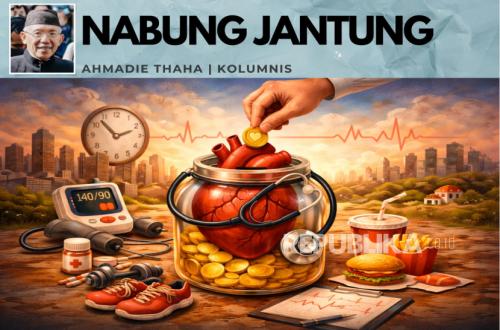
Amid a civilisation so proud of its medical technology, modern humans are harbouring an irony that is nearly tragic: we are becoming ever more adept at treating, but not more serious about preventing. That is the fundamental tone expressed by Dr Sadiya S Khan, a cardiologist and epidemiologist from Northwestern University, in her latest article in Time, which feels like both a scientific report and a moral reprimand. She opens with a fact that leaves no room for evasion: more than 900,000 Americans die from cardiovascular disease in a single year — a number surpassing the combined deaths from cancer and accidents. Indonesia’s 2023 Health Survey (SKI) indicates that among heart patients, the 25–34 age group numbers 140,206 people, topping the rankings. That figure is not merely a statistic. It is like an alarm that keeps ringing, but we choose to hit the “snooze” button. Yet, if history is any witness, the last hundred years have been the golden age of medicine. We have stents to open blocked blood vessels, defibrillators to restart stopped hearts. We also have medications that can lower cholesterol and blood pressure with pharmaceutical precision that is almost magical. We know the importance of sleep, diet, and exercise. We know everything. And that is precisely the problem: we know, but we do not act. A 2025 study led by Dr Sadiya Khan presents a finding that is almost embarrassing: more than 99% of people who suffer heart attacks, strokes, or heart failure already had at least one risk factor long before the event occurred. She cites examples of conditions already present in us that risk leading to heart attacks later, such as hypertension, high cholesterol, diabetes, chronic kidney disease, and tobacco use or smoking. In other words, heart disease is not a sudden disaster. It is an invitation we send ourselves, years in advance, by “nurturing” those risk conditions. At this point, the narrative of “suddenly having a heart attack” becomes like a convenient myth. We use this term to comfort ourselves from the reality that the body has actually been signalling for a long time; we just do not want to read it. And today’s science has gone even further. Through the Prevent equation — a risk calculator developed with the American Heart Association — scientists can now estimate a person’s likelihood of developing heart disease. Its predictions are not just for the present, but for spans of 10 to 30 years ahead. That means our future health is no longer a mystery. It has become a kind of “scientific prophecy” that can be accessed, calculated, and even intervened in. You can use the Prevent equation right now online, by providing initial data to input into the application. But humans, it seems, remain loyal to one old habit: procrastination. For those who enjoy tinkering with programming code, you can install the application using the Prevent source code available in a GitHub repository. There is also a Python version, run via the console command: pip install pyprevent. Returning to the heart issue: we are unique creatures. We can plan for retirement from age 25, calculate compound interest, buy layer upon layer of insurance. But for our own bodies, we act like tenants who know the lease is expiring, yet still damage the house without any repair plan. Even more ironic, the main risk factors for heart disease operate in a nearly “polite” manner. They do not shout. Hypertension does not always cause headaches. High cholesterol does not always produce pain. Surging blood sugar does not always feel dramatic to the body. Everything proceeds slowly, neatly, silently — like termites working behind the walls, until one day the house collapses without warning. Then we say: “How could this happen?”