
Saudi Arabia's 'New Ka'bah' Project Halted Amid Financial Review
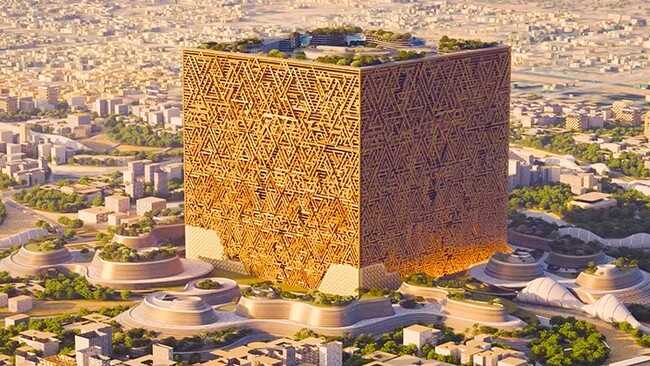
Saudi Arabia has suspended construction of its most ambitious development project in the capital Riyadh, The Mukaab, as of 28 January 2026.
The halt of the so-called ‘new Ka’bah’ construction has been initiated to conduct a comprehensive review of spending priorities and the financial viability of flagship projects within the Vision 2030 transformation agenda.
The Mukaab represents one of the iconic projects long promoted as a futuristic symbol of Vision 2030, the Crown Prince Mohammed bin Salman’s ambitious programme to diversify the Saudi economy away from oil dependence.
However, the project now joins the growing list of megaprojects being scaled back or postponed, as the Public Investment Fund (PIF), which manages approximately US$925 billion in assets, moves to control costs and prioritise expenditure.
Environmental Concerns
The megaproject has also drawn scrutiny regarding potential environmental impacts. Amid the grand ambitions of transformation through Vision 2030, the massive project is viewed as presenting serious sustainability challenges.
In its current form, The Mukaab is considered difficult to align with the government’s green development vision. A project of this scale risks increasing resource consumption, carbon emissions, and damaging natural habitats in the surrounding area.
By contrast, the Saudi Green Initiative, which forms the core of Riyadh’s sustainability agenda, targets the development of green spaces in urban areas.
However, The Mukaab is instead designed as a massive enclosed structure requiring year-round cooling and lighting systems.
Yasser Elsheshtawy, a non-resident researcher at the Arab Gulf States Institute and professor at Columbia University, noted that the building’s enormous scale would also require massive water supplies, despite the region being water-scarce.
Construction processes are estimated to generate significant waste volumes, whilst material distribution and building operations could increase carbon emissions.
The Mukaab was previously designed as a 400-metre by 400-metre metal cube containing a dome with the world’s largest artificial intelligence-based screen system.
Visitors were planned to view this display from a tiered structure resembling a ziggurat, standing more than 300 metres tall within the building.
The Mukaab’s design also attracted social media criticism upon its unveiling due to its similarity to the Ka’bah, the sacred structure at the centre of Masjidil Haram in Mecca, Islam’s holiest site.