
Saudi Arabia Shifts Course, Opts for Syria Over Israel in Fiber Optic Project
Saudi Arabia is planning to replace Israel with Syria as the transit country for a fiber optic cable project designed to connect the kingdom to Greece via the Mediterranean Sea. Two regional officials familiar with the project stated that Riyadh’s push to connect through Syria underscores a shift in regional alignments as they seek to strengthen Damascus’ position while potentially isolating Israel.
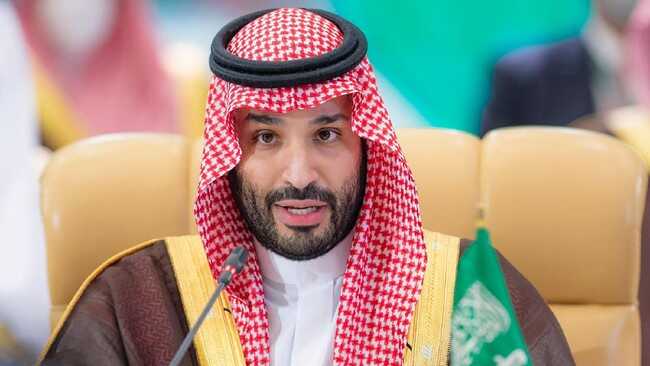
This move comes amid rising political tensions in the region. Saudi Crown Prince Mohammed bin Salman (MBS) has openly accused Israel of genocide in Gaza, where more than 72,000 Palestinians have been killed.
In addition, Riyadh is also embroiled in a dispute with the United Arab Emirates (UAE). The UAE is now Israel’s closest Arab partner on a range of issues, from Yemen to Sudan to the Red Sea.
US-based underwater fiber optic cable consultant, Julian Rawle, confirmed the change in direction for this strategic project. He explained that there were previously a number of projects planned to pass through Saudi Arabia, Jordan, and Israel, but that the dynamics have now changed with the evolving political situation.
“There were a number of projects planned to go through Saudi Arabia, Jordan, and Israel - this was one of them,” said Julian Rawle, quoted by Middle East Monitor, Thursday (26/2/2026).
“Saudi Arabia’s request to transit through Syria is new. People are looking for additional land routes between the Indian Ocean and the Mediterranean. Syria is another option, if people are comfortable with the evolving political situation there,” he added.
Although a presentation by Greek power provider, PPC, in November 2025 did not show Syria as part of the East to Med Data Corridor (EMC) network, another regional official said that Saudi Arabia’s vision goes beyond just data. Saudi Arabia also envisions a high-voltage direct current (HVDC) power cable project with Greece that would pass through Israel, and prefers the Syrian route.
A Western official familiar with Riyadh’s investment drive revealed that for the Saudi government, Damascus is at the heart of a new regional connectivity. This ambition includes the construction of physical and digital infrastructure that places Syria as a key transit point in the Middle East.
“For Saudi Arabia, Damascus is at the heart of regional connectivity. The Saudis want highways, cables, and railways to pass through Syria,” said the Western official.
As a concrete manifestation of this commitment, Saudi Telecom (STC) announced in February an investment of US$800 million (Rp 13.44 trillion) in Syrian telecommunications infrastructure. The kingdom’s state news agency said the plan aims to connect Syria regionally and internationally through a fiber optic network spanning more than 4,500 kilometers.
Gulf expert at the Baker Institute at Rice University, Kristian Coates Ulrichsen, said that this effort is part of a strategy to reintegrate Syria into the regional fold. He said that the project shows a significant shift in Riyadh’s attitude compared to 2022 when normalization talks with Israel were at their peak.
“Projects like this are consistent with Saudi efforts to reintegrate Syria into the regional circle and minimize any real relationship with Israel. 2022 was the peak of normalization talks between Saudi Arabia and Israel. This is an indication of a shift in Riyadh’s attitude,” said Kristian Coates Ulrichsen.
Greece is currently positioning itself as a hub for energy, real estate, and artificial intelligence (AI) between Europe and the Middle East. While Athens has close ties with Israel as an ally against Turkey, this route shift by Saudi Arabia could present new challenges in the diplomatic relationship between Greece and Israel if the country is indeed left out of the new route.
The EMC project is a joint partnership between STC, Greek power provider PPC, Greek telecommunications company, and satellite application company TTSA. So far, Greek and Saudi banks have signed agreements to finance 60% of the project, and supply contracts have been signed with Alcatel Submarine Networks for the construction of two underwater and land data cables.