
Saudi Arabia Imposes Ban on Poultry and Egg Imports; Indonesian Agriculture Ministry Responds
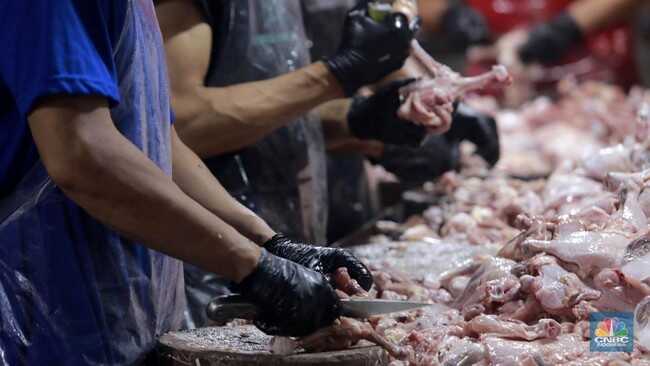
Jakarta – The Ministry of Agriculture (Kementan) has stated that the import restriction policy on poultry and eggs imposed by Saudi Arabia’s Food and Drug Authority (SFDA) is a precautionary sanitary measure commonly applied in international trade of livestock products.
Indonesia remains on the list of countries subject to poultry import restrictions by Saudi Arabia. This policy is not new but rather part of long-standing sanitary measures that have been periodically updated to reflect developments in global poultry diseases, particularly following the increase in avian influenza cases in the mid-2000s.
Indonesia was added to Saudi Arabia’s temporary ban list in 2004 following the outbreak of global avian influenza. The policy forms part of a dynamic animal health risk management mechanism that is periodically reviewed by the destination country’s authorities.
From an economic perspective, the impact of this policy on Indonesia’s domestic poultry industry is considered limited. Indonesia’s poultry product exports to Saudi Arabia remain relatively small, whilst the domestic market remains the primary support for production. Nevertheless, the government has seized this opportunity to strengthen the credibility of its animal health systems and export readiness.
Agung Suganda, Director General of Livestock and Animal Health at Kementan, stated that the government is using the dynamics of sanitary restrictions as an opportunity to strengthen Indonesia’s position in global livestock product trade.
“Strengthening animal health systems is the foundation of international market trust. Therefore, we ensure biosecurity, disease surveillance, and the implementation of zoning and compartmentalisation operate consistently as national standards,” Agung told CNBC Indonesia on Friday, 27 February 2026.
He said the government continues to push for market access through veterinary diplomacy and strengthening downstream processing activities.
“Our approach is not only to open markets, but to ensure Indonesian livestock products meet internationally recognised standards. Processed products represent a strategic pathway and evidence of the national industry’s readiness,” he said.
Indonesia is recorded as ASEAN’s largest poultry producer, with a population of approximately 3.9 billion birds. National production capacity is considered to have exceeded domestic requirements, opening opportunities for exporting poultry products and derivatives.
Hendra Wibawa, Director of Animal Health at Kementan, stated that restrictions by partner countries represent a regular mechanism in sanitary-based trade.
“Sanitary restrictions by partner countries are generally risk-based and form part of a precautionary mechanism. The government continues to strengthen biosecurity, surveillance, and disease data transparency to ensure our national animal health system meets international standards,” Hendra said.
Meanwhile, Makmun, Director of Downstream Processing of Livestock Products at Kementan, explained that the process of accessing Saudi Arabia’s poultry market is currently at the stage of negotiating technical requirements. “Exports of poultry products to Saudi Arabia remain in the technical requirement negotiation stage,” Makmun said.
He noted that fresh poultry products such as carcasses and eggs have not yet received market access approval. “For carcasses and eggs, or fresh and frozen products, approval has not yet been granted,” he said.
However, progress has been made on processed poultry products. “The requirements that have been approved are processed chicken products that have undergone heat treatment at temperatures capable of killing the highly pathogenic avian influenza (HPAI) virus,” he said.
Data shows that exports of processed chicken meat products (HS 16023290) to Saudi Arabia in 2023 totalled 19 tonnes valued at approximately US$294,654. Additionally, exports of other processed chicken-based products (HS 210390) have continued to increase, reaching over US$132 million in 2024.
In 2025, Indonesia also obtained approval to export heat-treated retort sterilised poultry products or commercially sterilised products such as semur ayam, opor ayam, and rendang ayam for Indonesian hajj pilgrims.
To ensure international standards remain met, Kementan continues to implement multi-layered biosecurity strengthening at poultry production centres, enhanced disease surveillance, risk-based vaccination, and strict control of poultry and poultry product movement.
The veterinary health certification system is also aligned with World Animal Health Organisation (WOAH) standards, including enhanced traceability, facility audits, and verification of export-oriented business units.
The government has affirmed it will continue technical communications with Saudi Arabian authorities to gain clarity on requirements, strengthen veterinary cooperation, and explore opportunities for gradual market access recovery, particularly through processed products that have met sanitary requirements.
Poultry Not a Primary Export Commodity to Saudi Arabia
Toto Dirgantoro, Secretary General of the Indonesian Export Associations Federation (GPEI), noted that Indonesia’s export value to Saudi Arabia in 2025 reached approximately US$3.65 billion based on international trade data updated in early 2026.
GPEI data shows the five primary export commodities from Indonesia to Saudi Arabia remain dominated by non-livestock sectors. The top position is held by mineral fuels, oils and distillation products (petroleum products) valued at approximately US$2.59 billion.
Following this are salt, sulphur, earth and stone, including cement, valued at US$532.84 million; plastics and plastic articles at approximately US$230.34 million; organic chemicals at approximately US$204.52 million; and miscellaneous chemical products at approximately US$43.83 million.
Other commodities exported by Indonesia to Saudi Arabia but with smaller values include fruits, leather and leather products, rubber, machinery and equipment, and wood and furniture products.
Based on these records, poultry and egg products are not among priority export commodities.