
Satellite Imagery Reveals China Covertly Supports Iran's War Against US-Israel
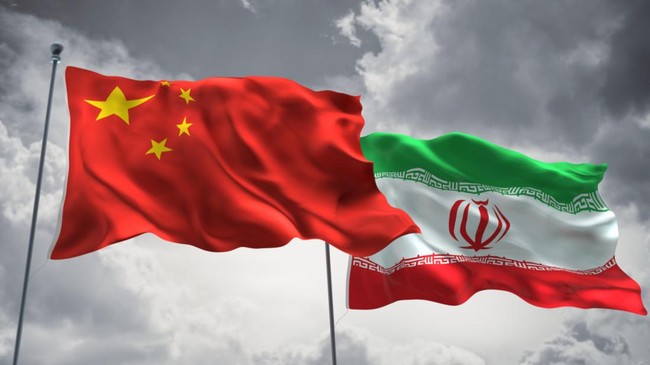
Two cargo vessels belonging to Iran’s state shipping company have reportedly departed from a chemical storage port in China bound for Teheran, carrying cargo suspected to be rocket fuel components, amid Iran’s military conflict with the United States and Israel in the Middle East.
Based on analysis of ship tracking data, satellite imagery, and sanctions records reported by the Washington Post on Monday, this activity signals the continuation of strategic material supplies amid escalating military tensions in the Middle East. The vessels, identified as Shabdis and Barzin, recently completed loading at Gaolan Port in Zhuhai on China’s southeastern coast.
The facility is known as a major industrial chemical handling centre, including sodium perchlorate, a key precursor used in the production of solid rocket fuel. As of yesterday, both vessels were monitored in the South China Sea region.
The Barzin was reported anchoring off the coast of Malaysia en route to Bandar Abbas Port, whilst the Shabdis continued sailing towards Chabahar Port with an estimated arrival on 16 March. Both destination ports are Iran’s major naval facility locations along the Strait of Hormuz.
Experts monitoring this activity believe the cargo constitutes sensitive material required by Iran to strengthen its weaponry. Isaac Kardon, a senior researcher at the Carnegie Endowment for International Peace, provided his assessment of the shipment’s consistency.
“Given the track record, the most plausible explanation is that they are loading the same commodities that they have been shipping back and forth for over a year,” Kardon told Iran International.
Kardon assessed that China actually possesses full authority to prevent the departure of these vessels through various bureaucratic mechanisms. However, the absence of action from Beijing is viewed as a significant political signal amid direct military confrontation between the United States and Iran.
“China could detain these vessels at the port, impose administrative delays, create customs detentions—any number of bureaucratic tools—but they have not,” he stated.
This shipping activity has drawn attention because both vessels are operated by the Islamic Republic of Iran Shipping Lines (IRISL), an entity that has been sanctioned by the United States, United Kingdom, and European Union. Since the start of the year, at least dozens of other IRISL vessels have been recorded visiting Gaolan Port, with cargo data showing most departed fully loaded towards Iran’s main container terminals.
This step is also viewed as a rapid response by Teheran following recent US and Israeli air strikes targeting Iran’s military infrastructure. Damage to these domestic facilities is believed to have triggered Iran’s urgency in securing foreign supplies to restore its combat capabilities.
“Teheran’s need for new propellant precursors has just shifted from urgent to existential,” Kardon concluded.
As background, the United States previously imposed sanctions targeting sodium perchlorate transfers from China to Iran worth millions of dollars, or approximately $10 million USD (199.76 billion rupiahs). Washington has accused this material of being used to produce ammonium perchlorate, a core component in ballistic missile fuel.