
Sarimukti Waste-to-Energy Project Accelerated, Six Regions Ready to Supply Waste
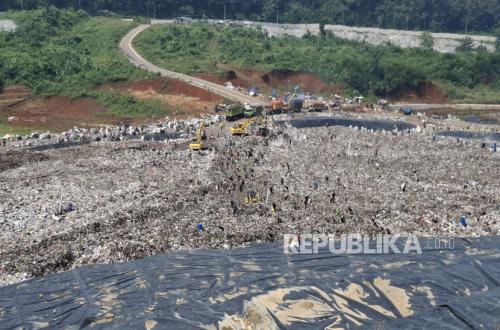
The waste-to-energy (PSEL) project in Sarimukti, West Bandung Regency, West Java, is being accelerated following agreements between the central and regional governments. Six regions in West Java are prepared to supply thousands of tonnes of waste daily as raw material.
This agreement involves the Ministry of Environment and Forestry, the West Java Provincial Government, as well as the governments of regencies and cities in the greater Bandung area and surrounding regions. The project represents one of the steps to reduce the waste burden while generating energy.
Head of the Regional Waste Management Unit of the West Java Environment Agency, Arief Perdana, stated that the Sarimukti PSEL project is already included in the national plan. “It has been agreed that in accordance with Presidential Regulation No. 109 of 2025, PSEL development will also be carried out in Sarimukti,” said Arief on Wednesday (8/4/2026).
The West Java Provincial Government has been tasked with preparing land of around 25 to 26 hectares adjacent to the current Sarimukti landfill site. The process for borrowing and using the forest area is being expedited following instructions from the President.
“We will request a letter from the Governor to the Minister of Forestry for immediate issuance of approval for borrowing the forest area; we are already in the process. The requirement is around 25 or nearly 26 hectares,” said Arief.
In addition to land, waste supply has been assured from six regions, namely Bandung City, Cimahi City, Bandung Regency, West Bandung Regency, Cianjur Regency, and Purwakarta Regency. The total waste requirement exceeds 3,400 tonnes per day.
The West Java Provincial Government also faces challenges in providing water for PSEL operations. The water requirement is estimated at around 1,000 cubic metres per day, while water sources near the location are still limited.
“We are still trying to study our task regarding water because PSEL indeed requires a lot of water, around 1,000 cubic metres per day. Meanwhile, the existing conditions in Sarimukti are limited; the river has a small flow rate and will not be sufficient, so there must be a study on the water source,” said Arief.
For construction, local governments are awaiting confirmation from the central government. The project is planned to be financed by PT Danantara along with its partners, so it does not burden the regional budget.
“In terms of financing, it is clear that construction will be covered directly by Danantara and its partners, so we do not have to spend. But there is still a process, so my estimate is perhaps by the end of 2026 or early 2027 (construction will begin),” said Arief.
The Sarimukti PSEL is expected to become a medium-term solution to address waste issues in the greater Bandung area while promoting the utilisation of energy from waste.