
SAR stresses importance of whistle, torch and mirror for sea and forest safety
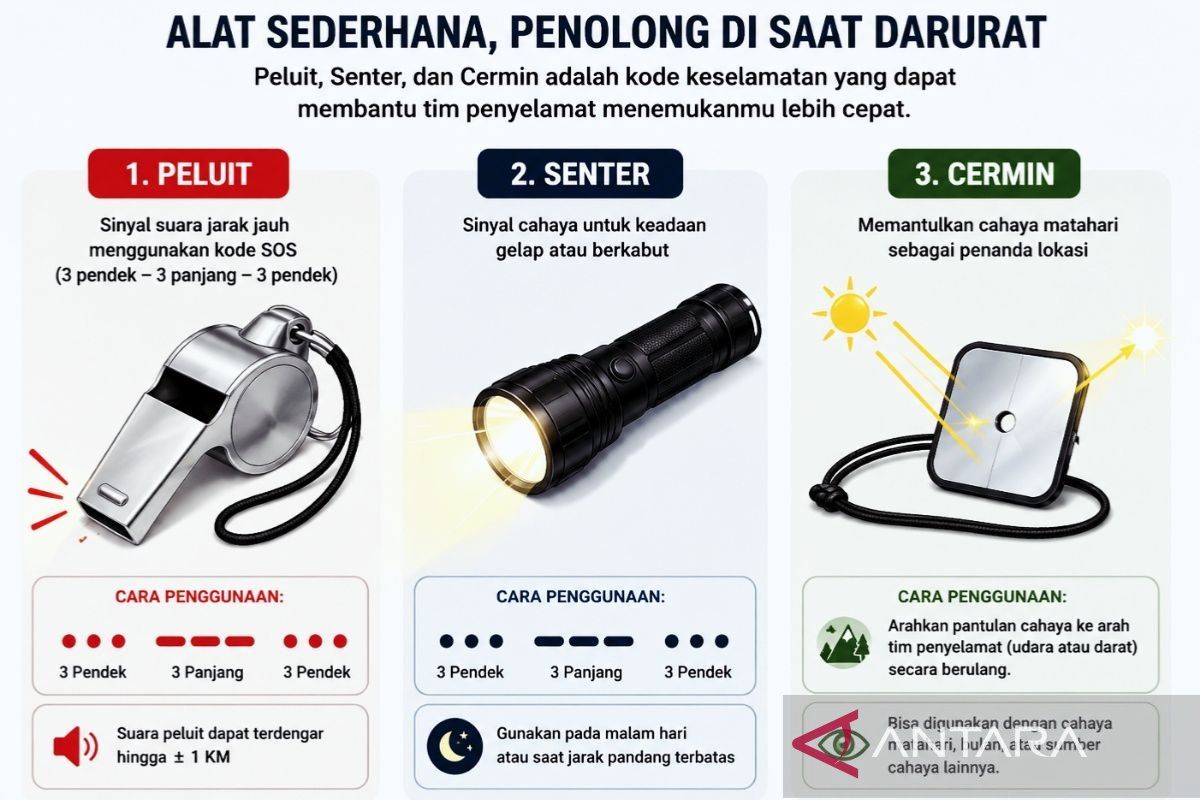
Natuna Search and Rescue (SAR) in Riau Islands Province has reminded the public to carry basic safety equipment such as whistles, torches, and mirrors when engaging in activities at sea or in forests. Head of Natuna SAR Abdul Rahman, speaking on Sunday from Natuna, stated that natural conditions in the area can change unexpectedly, requiring the public to prepare adequately before outdoor activities, especially at sea and in forested areas. He explained that these simple items play a crucial role in aiding search and rescue operations during emergencies. “Whistles, torches, and mirrors can serve as emergency communication tools when someone is in distress or lost,” he said. He explained that in emergencies, danger signals can be sent via whistle or light to help rescuers locate victims faster or indicate someone is in urgent need of assistance. Whistles use audible signals. For emergency signals, the standard is three short blasts, three long blasts, followed by three short blasts again. This pattern allows rescuers and nearby individuals to recognise that someone is in distress and requires help. Torches and mirrors are used for visual emergency signals. Torchlight is useful at night or in foggy conditions, while mirrors reflect sunlight, moonlight, or other light sources towards the surroundings or sky to mark location. “Shouting for help is not very effective, as it typically only carries about 50 metres and can be drowned out by waves or wind. Additionally, using a whistle requires less physical effort,” he said. In addition to these basic items, the public is advised to carry other safety equipment, such as life jackets and communication radios when at sea. He also stressed the importance of informing family or relatives of travel plans before setting out, whether by sea or entering forested areas. This information is crucial for rescuers, as it helps determine the last known location and the search area. “Ensure equipment is in good condition and avoid solo activities. Preparedness before departure is vital to minimise risks during emergencies,” Abdul Rahman said.