
Santri Asceticism and the MBG Programme
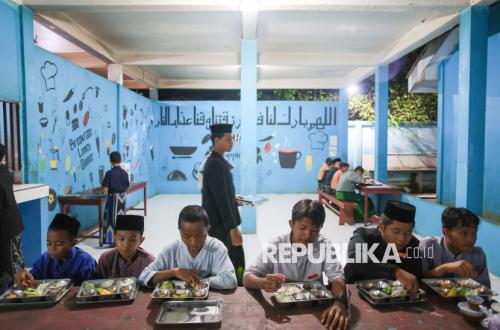
There is a question slowly emerging in pesantren circles: will the Free Nutritious Meals Programme (MBG) erode santri traditions of asceticism? This question is not simple. In pesantren history, seeking knowledge has never been understood merely as reading books, memorising verses, or sitting in classrooms. Pursuing knowledge also means self-education.
Santri are encouraged to purify intentions, respect teachers, maintain manners, reduce sleep, increase prayer, and in certain traditions, undergo riyadhah fasting. Some santri are accustomed to fasting on Mondays and Thursdays. Others follow the fast of Prophet Daud: fasting one day, breaking the fast the next. Of course, while observing days forbidden for fasting, such as Eid al-Fitr, Eid al-Adha, and the days of tashriq. In the old pesantren imagination, hunger is not merely an empty stomach. Hunger can be a path to subduing desires.
In the world of wayang, the practice of tapa brata is known. In classical stories, someone seeking higher knowledge must first undergo prihatin practices. Even kung fu films once broadcast on national television often depicted the same: great knowledge does not fall into the hands of the pampered. Knowledge comes to those who can restrain themselves.
Then came MBG
This programme brings new reasoning: children who study must have sufficient nutrition. The state sees that many Indonesian children arrive at school not fully prepared physically. Some skip breakfast. Some eat minimally. Some have parents who work hard, but their income is not yet sufficient to provide nutritious food daily.
In that context, MBG certainly has noble aims. The National Nutrition Agency states that this programme reaches students, including santri in pesantren and non-formal education institutions, as part of the state’s commitment to equitable nutrition fulfilment. The Ministry of Religious Affairs also views MBG as needed for pesantren and religious education units, even opening opportunities for large pesantren to independently manage Nutrition Fulfilment Service Units.
However, this is where clarity is needed. MBG should not be read as an opponent to tirakat. Conversely, tirakat should not be used as an excuse to let santri suffer nutritional deficiencies.
In Sufi studies, tirakat is not the art of weakening the body. Tirakat is the art of controlling desires. What is fought is not rice, eggs, fish, vegetables, or fruit. What is fought is gluttony, laziness, luxury, wastefulness, and human dependence on pleasures.
Thus, nutritious food is not a threat to santri spiritual practices. A healthy body is actually the vehicle for knowledge and worship. Santri with adequate nutrition will be stronger in studying, easier to concentrate, more enduring in following pesantren activities, and better prepared to uphold the trust as knowledge seekers.
The Quran reminds, “Eat and drink, but do not exceed.” This verse’s message is intriguing. Islam does not forbid eating. Islam forbids excess. Islam does not oppose the body. Islam teaches that the body should be maintained as a trust.
Therefore, MBG in pesantren should not merely be a meal programme. It must become a madrasah of manners. Santri eat nutritiously, but are still taught to be grateful. Santri receive food, but must not complain. Santri queue, not jostle. Santri take just enough, not waste. Santri clean eating areas, not leave remnants behind. There, MBG can meet tirakat.
Santri tirakat in the MBG era does not always have to involve hunger. Tirakat can involve reducing excessive snacking, not being picky about food, not wasting sustenance, maintaining cleanliness, helping in the pesantren kitchen, sharing with friends, and purifying the intention of eating so the body is strong for learning and worship.
In that way, MBG does not destroy tirakat. MBG can become a new space for instilling more substantive tirakat. Not tirakat that weakens the body, but tirakat that prevents the soul from being greedy.
However, criticism of MBG implementation must not be ignored. A programme this large certainly carries great risks if its management is not orderly. There are issues of distribution delays, food quality, food safety, and even health disruption cases. The BGN even temporarily halted around 240 SPPG in various regions because they did not meet standards, including related to hygiene sanitation certificates and inadequate facilities.
This shows that good intentions are not enough. A good programme must be run with good governance as well. In Islam, trust is not measured only by intentions, but also by the methods of execution. Food intended to nourish children must not be managed carelessly. Kitchens must be clean. Ingredients must be worthy. Distribution must be on time. Supervision must be real. If problems occur, they should not be covered up.
There is another concern: the fate of people’s stalls. Before MBG arrived, many small stalls around schools survived from children buying food. There are mothers selling packed rice. There are small traders who depend their daily income on school canteens. If MBG is managed too centralistically and only gives room to big capitalists, the nutrition programme could harm small economies.
In fact, MBG could be a double blessing. Children get nutritious food, while farmers, livestock breeders, fishermen, cooperatives, pesantren, and people’s stalls also benefit. The government itself records the involvement of tens of thousands of MSMEs in the MBG ecosystem, with most raw material needs supplied by local businesses. However, that involvement must truly be felt by small actors around schools and pesantren, not just numbers on paper.
Here, pesantren have great opportunities. If pesantren are given room to independently manage MBG kitchens, this programme could become part of the