
Samsung Exec Reveals Technology Behind Galaxy S26 Ultra Camera That Is Now More Light-Sensitive
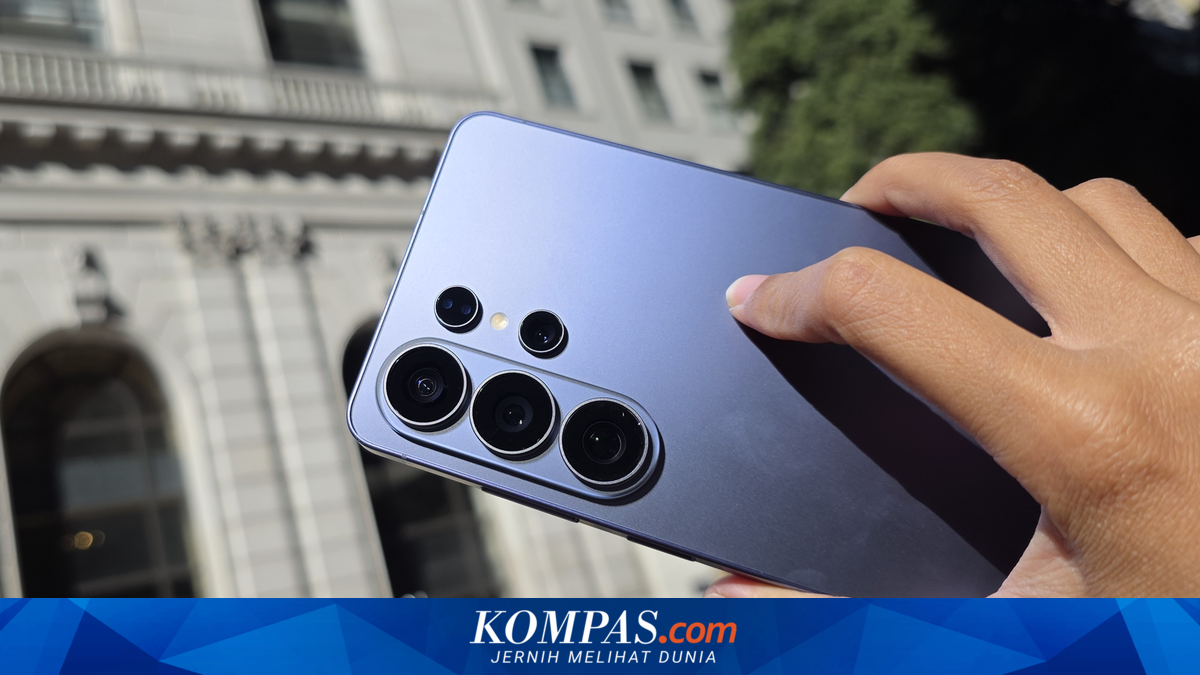
Samsung Galaxy S26 Ultra was officially introduced as the successor to the Galaxy S25 Ultra at the Galaxy Unpacked event last week. The smartphone brings camera improvements, notably in the aperture, letting the device capture more light in low-light photography. The S26 Ultra features four cameras: a 200 MP main camera with OIS, a 50 MP telephoto with 5x optical zoom, a 10 MP telephoto with 3x optical zoom, and a 50 MP ultrawide (f/1.9). The main camera uses an aperture of f/1.4, up from f/1.7 on the Galaxy S25 Ultra. Samsung claims this upgrade can enable the phone to capture up to 47% more light, and that the S26 Ultra offers the brightest images ever. In low-light conditions, the S26 Ultra captures more light, resulting in less noise and significantly better low-light video quality, according to Sungdae Joshua Cho, Head of Visual Solution Team at Samsung Electronics, in an interview with KOMPAS.com during Galaxy Unpacked at the JW Marriott hotel in San Francisco on Tuesday, 24 February 2026. The improvement is supported by Pro Visual Engine, which effectively manages remaining noise to yield better results. Because the S26 Ultra has multiple sensors with varying noise characteristics, Samsung employs third-generation Pro Visual Engine to control it. “We added a dedicated block inside the AP ISP system to effectively control sensor noise. The result is smoother and more consistent video even when recording with different sensors,” Cho said. Samsung also developed an AI-based lighting system to manage lighting for the Galaxy S26 series. “Because we cannot control users who sometimes record against bright or dim backgrounds, we created an AI-based lighting system,” Cho said. To build this system, Cho and his team collected around 10,000 scenes in various conditions. The data was expanded to 1.3 million data points using augmented data technology and used to train the model to produce smooth lighting transitions between different lighting conditions. Additionally, Samsung incorporated gyroscope data to monitor user movement to determine whether filming is stable or moving, such as during panning. All of these measures enable the Galaxy S26 Ultra to produce video with minimal noise and smooth lighting even when switching sensors and capturing dynamic object lighting.