
Same Festivals, Different Atmospheres: Why Eid al-Fitr and Eid al-Adha Feel Distinct?
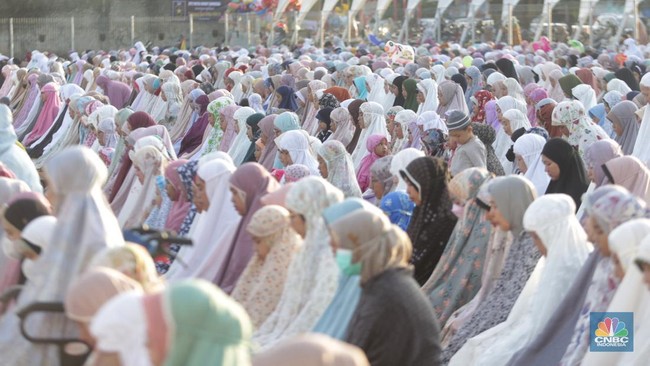
Jakarta, CNBC Indonesia - Eid al-Fitr and Eid al-Adha are the two largest celebrations for Muslims in Indonesia. However, they have vastly different festive atmospheres.
Eid al-Fitr is the biggest occasion not just for Muslims but for Indonesia as a whole. Eid al-Fitr marks the peak of consumption for the country, driving economic activity from urban centres to rural areas.
Leading up to Eid al-Fitr, Indonesia moves on a scale unmatched on regular days. The mudik ritual is at the heart of everything.
Highways are congested from early morning. Stations are packed with suitcases and gift boxes. Flight tickets sell out quickly. Major cities gradually empty as millions return to their hometowns.
For Eid al-Fitr 2026, the number of mudik travellers is estimated at 143-144 million. Money circulates along with the human flow. Household consumption rises, Eid holiday allowance (THR) is disbursed, and economic activity feels significantly livelier than usual months.
A few months later, the atmosphere changes.
When Eid al-Adha arrives, it is not people moving en masse, but sacrificial animals, meat distribution, and sharing activities at mosques. In 2025, the Ministry of Religious Affairs recorded over 1.85 million sacrificial animals nationwide.
Both are major Islamic holidays. Both filled with takbir chants. Both drive the economy and millions of people. But the emotional direction differs.
Eid al-Fitr feels deeply connected to home, family, and the tradition of returning. Eid al-Adha is more associated with sacrifice, sincerity, and giving to others.
Two Festivals, Two Atmospheres
Eid al-Fitr comes at the end of Ramadan, after a full month of fasting. Hence, the atmosphere is often warm and personal. People return, reunite with family, and seek forgiveness after being apart.
Eid al-Adha follows a different rhythm.
This holiday coincides with the Hajj season and the story of Prophet Ibrahim (AS) willing to sacrifice his son to obey Allah’s command. Thus, the core message is not about returning home, but about giving and willingly letting go for others.
If Eid al-Fitr is synonymous with reunion, Eid al-Adha is closer to sacrifice.
Eid al-Fitr and the Mass Return Movement
Leading up to Lebaran, human movement in Indonesia drastically changes.
Airports are full from dawn. Rest stops have long queues. People endure hours-long journeys to eat with family at home.
Mudik is no longer just an annual tradition. Its scale has become a national economic movement.
The Coordinating Ministry for Economic Affairs notes household consumption during Ramadan and Eid al-Fitr typically rises 15-20% compared to normal months. The government allocates around Rp55 trillion for THR and pensions in 2026.
The effects reach the regions.
Food stalls are busier. MSMEs see a surge in customers. Hotels and transport are fully booked. Money moves from big cities to smaller towns alongside millions of mudik travellers.
“Every mudik expenditure creates a multiplier effect for MSMEs, trade, and transport services,” said Coordinating Ministry for Economic Affairs spokesperson Haryo Limanseto.
But what makes Eid al-Fitr feel so significant isn’t just the economic figures.
There is something deeply personal at play.
People return with suitcases, THR, and gifts. But often, what they’re truly seeking is their old home, family dining tables, or the chance to seek forgiveness in person.
That is why Eid al-Fitr feels like a festival of returning.
Eid al-Adha and the Sharing Movement
If Eid al-Fitr is about returning, Eid al-Adha is about giving.
The atmosphere is typically calmer. There is no mass mudik like Lebaran. But from dawn, mosques and slaughter sites grow busy.
What moves this time is not millions of travellers, but the distribution of sacrificial animals and meat across regions.
In 2025, the Ministry of Religious Affairs recorded over 1.85 million sacrificial animals nationwide. Meanwhile, BAZNAS estimates Indonesia’s kurban economic potential at Rp34.85 trillion.
But like Eid al-Fitr, Eid al-Adha’s strength isn’t just in numbers.
This holiday stems from the stories of Prophets Ibrahim and Ismail (AS) — about sincere obedience and willingness to part with something precious.
The meaning resonates today.
Many save for months to buy sacrificial animals. Others wait decades to perform Hajj. Indonesia’s regular Hajj waiting period is now around 26.4 years.
In 2026, Indonesia’s Hajj quota will reach 221,000 pilgrims, the largest in the world. Yet behind the numbers, millions still await their turn.
That is why Eid al-Adha feels more reflective.
While Eid al-Fitr speaks of bringing things back home, Eid al-Adha speaks of what one is willing to give to others.
Why Do the Atmospheres Feel Different?
Despite both being major Islamic festivals, their emotional centres feel almost opposite.
Eid al-Fitr feels domestic and personal. The core atmosphere is at home, family dining tables, and the tradition of mutual forgiveness.
Eid al-Adha feels more spiritual and collective.
The focal points are Arafah, Prophet Ibrahim’s story, long Hajj queues, and distributed sacrificial meat to many homes.
How money moves also differs.
During Lebaran, consumption rises as people buy tickets, new clothes, food, and gifts.
During Eid al-Adha, money is more for distribution. This may explain why the atmospheres feel different, despite both being celebrated on a large scale.
One is about returning. The other about giving.
Two Festivals Driving the Economy
Beyond their spiritual meaning, Eid al-Fitr and Eid al-Adha both generate significant economic circulation.
The difference lies in the direction of movement.
Eid al-Fitr drives consumption economy. Retail is bustling, transport tickets…