
Saiful Mujani Case: Burhanuddin Muhtadi Reveals Current Social Conditions
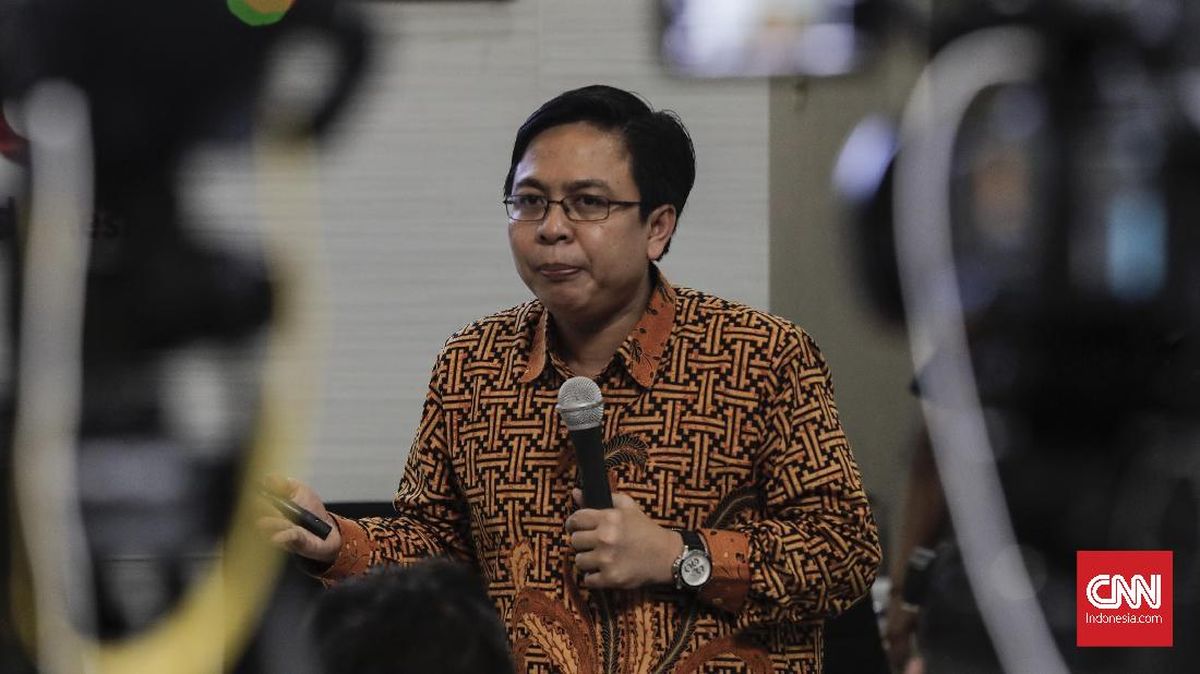
A group of alumni from UIN Syarif Hidayatullah are defending senior political analyst Saiful Mujani regarding discussions about toppling President Prabowo Subianto.
Director of Indikator Politik Indonesia (IP), Burhanuddin Muhtadi, views Mujani’s statement as an indicator of whether democracy in Indonesia is healthy or not.
He stated that democracy facilitates all opinions and views expressed.
“No opinion, no matter how poor it is, should be repressed. So if someone expresses an opinion but is repressed, it shows that our democracy is not healthy,” said Burhanuddin at the Halal bi halal of the Ciputat Community in South Tangerang, Thursday (16/4).
This Professor of Political Science at UIN then touched on survey results depicting public satisfaction with democracy still above 70 percent. On the other hand, he mentioned incidents like the one experienced by Mujani.
Quoting thinker Slavoj Zizek, Burhanuddin described the situation as one where society enjoys conditions that are actually problematic.
“70 percent of our citizens feel satisfied with what is happening now. According to Zizek, this is more dangerous than repression. If people experience repression, the cure is actually easy. But if people feel they are enjoying it when the objective conditions are actually hurting them, that is far more dangerous,” said Burhanuddin.
“So there are people like Mas Saiful expressing an opinion that is actually normal in a democratic climate, but instead experiences repression, yet more than 70 percent of people say they are satisfied with the democratic conditions,” he added.
At the same opportunity, human rights activist Yati Andriyani assessed Saiful’s statement as part of freedom of expression and legitimate civic politics in democracy.
“But I want to make one point: what Bang Saiful said in the context of civic politics is actually a very minimal statement or public participation. It’s still minimal in my opinion,” said Yati.
Yati stated that Saiful’s statement was not about overthrowing, but inviting more advanced and sharp thinking.
“From what I understand, Bang Saiful is inviting us to think more advanced and sharp. The options are three: first, with the system, meaning we follow all existing legal rules. But are we sure now that it is still functioning?” said Yati.
“Second, with extra-legal, or third, we look for other ways out of the system. That discourse, those choices, are not treason; they are civic politics that we should indeed do,” she added.
Saiful Mujani stated that his call for consolidation to topple President Prabowo Subianto was not a form of treason, but part of a political stance.
“The question is, can my statement be called treason? I emphasise that it is not treason, but political engagement, namely a political stance or stance expressed on political issues in front of many people. The politics in that event mainly relates to President Prabowo’s performance,” said Mujani in a written statement.
He explained that a political stance is one level below political participation or political action. Political participation, he said, is the core of democracy. Mujani stated there is no democracy without political participation.
Mujani has recently been reported to Polda Metro Jaya regarding his statement. Other analysts like Ubdedilah Badrun and Islah Bahrawi have experienced similar fates.
Presidential Staff Office (KSP) Senior Expert Anthony Winza Prabowo, in a separate opportunity, said the government is not anti-criticism. According to him, the government guarantees citizens’ freedom of expression, but will also protect other people’s human rights to feel safe.
“Freedom of expression is in Article 28, but don’t forget Article 28 J, that in exercising their freedom, everyone must be subject to restrictions set by law, to guarantee respect for others’ rights. Whose rights are protected? Article 28 G, there is the right for everyone to feel safe,” said Anthony at the Prime With Bram Herlambang event on CNN Indonesia.
“When someone makes a statement that harms other people’s human rights, the right to feel safe, if he recalls, for example, there is an incident of ‘treason crime’. If that is done and there is fear, then there is a human right, the right to feel safe that needs to be protected by the state,” he added.
Anthony stated that President Prabowo considers criticism as a vitamin. However, he reminded again that freedom has limits regulated by law.
“Freedom of expression is like driving on the highway. There is freedom, people can go forward, backward, turn around, U-turn, and so on. They can honk as loud as they want, ‘criticise as loud as they want’. But that doesn’t mean there are no boundaries at all. No signs at all,” he said.
“If there are no signs at all, it can crash, it can be extraordinary chaos,” said Anthony.