
Said Abdullah Responds to Proposals for Budget Deficit Above 3 Per Cent of GDP
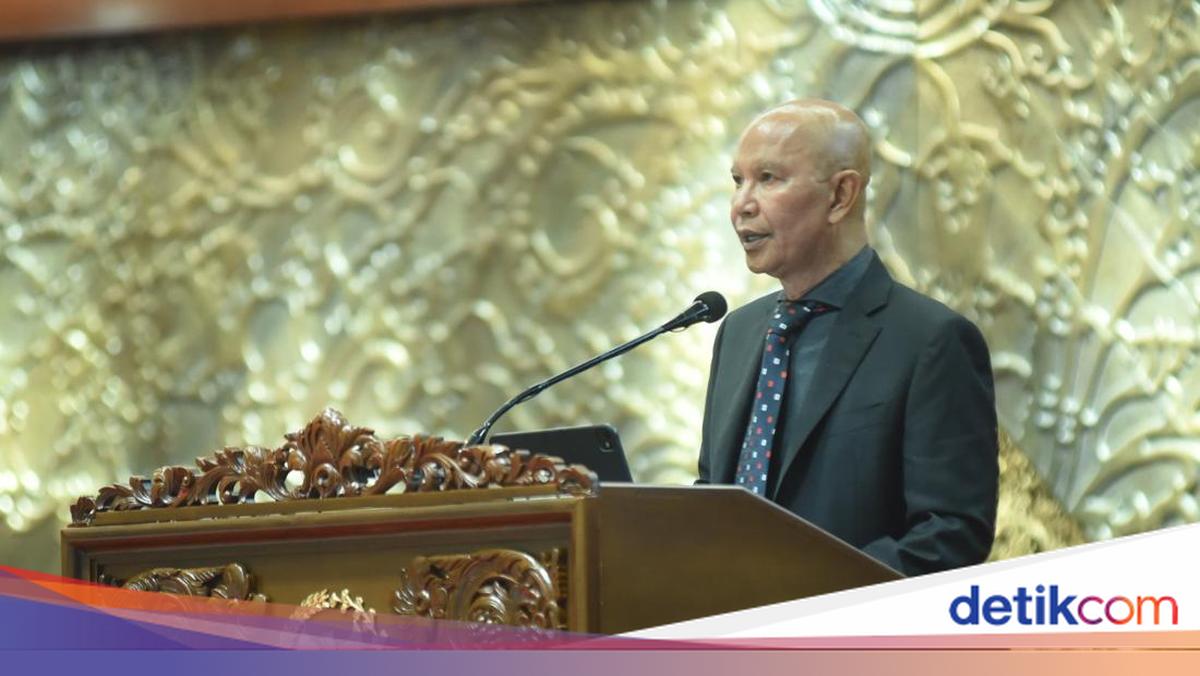
The head of the Parliamentary Budget Committee (Banggar) of the House of Representatives, Said Abdullah, responded to proposals for widening the budget deficit above 3 per cent of Gross Domestic Product (GDP) and quantitative easing (QE) policies. He stated that the government has yet to initiate preliminary discussions with parliament regarding such plans.
“To my knowledge at the Parliamentary Budget Committee, there has been no preliminary discussion conveyed by the government, namely the Ministry of Finance, regarding widening the deficit beyond 3 per cent of GDP and the Quantitative Easing policy,” Said said in a written statement on Friday (13 March 2026).
Said was unable to provide further perspective on the policy owing to the absence of preliminary communication from the government. However, he emphasised that every economic policy must have a clear foundation.
“Because there has been no preliminary communication from the government, naturally I cannot yet offer a more detailed opinion. However, what is certain is that every policy pursued must have a basis, objectives, and strategy,” he said.
According to him, the current government still has fiscal space to maintain the deficit below 3 per cent of GDP. Several measures have been taken to achieve such fiscal discipline.
From the perspective of state revenue, the government needs to ensure that revenue targets are achieved, including through improving the tax system.
Said assessed that the implementation of the core tax system is expected to increase tax collection. Additionally, increases in commodity export prices such as crude oil and coal also have the potential to increase non-tax state revenue (PNBP).
Furthermore, controlling state expenditure is also an important factor. The government is deemed necessary to conduct efficiency by prioritising truly essential programmes.
“From the expenditure side, the government must conduct efficiency. Focus efficiency on various non-priority programmes, and we have experience with this. If expenditure levels can be controlled, balancing with revenue realisation, then the target deficit below 3 per cent can, God willing, be maintained,” he said.
On the other hand, financing management also needs attention. He assessed that the trend of negative credit ratings can be a challenge in seeking financing through State Securities (SBN).
“The government also needs to ensure that the financing target can be managed well. Amid the onslaught of negative credit ratings, it is indeed not easy to obtain financing through SBN. The Ministry of Finance and all its ranks must be able to convince foreign buyers to resume accepting SBN, and expand SBN to the retail portion,” he said.
Regarding the proposal to widen the deficit above 3 per cent of GDP, he assessed that such policy has consequences that need careful consideration.
“If the government pursues a deficit policy of more than 3 per cent of GDP, of course there are pros and cons. On the positive side, in the short term fiscal space is wider, but in the medium term it will shift the current fiscal burden to the future because widening the deficit is financed by debt,” he said.
Similar principles apply if the government considers a QE policy. According to him, the capacity of Bank Indonesia (BI) must be carefully calculated, particularly because the central bank has the responsibility to maintain exchange rate stability and control inflation.
“Because BI has the responsibility to control the exchange rate and inflation. Both of these are not easy; they require vigilance and a mix of work and ammunition from BI itself that must be strong. It must be calculated carefully, so that when BI absorbs SBN in the secondary market, it does not collapse in exchange rates and inflation control that become its primary responsibility,” he said.
Said also warned of other risks that might emerge if monetary printing policies are pursued. According to him, such measures must be carefully analysed to avoid causing greater economic impact.
“The same applies to money printing; the risk of stagflation must be analysed clearly. We cannot arbitrarily print money. Because the current condition of people’s purchasing power is not yet good; if more money is circulating at the same time, we could face stagflation,” he said.
Therefore, he hoped that every economic policy is based on comprehensive analysis involving economists so that risks and mitigation steps can be well mapped.
“I hope there is analysis involving economists; in this way every economic policy can have adequate technocratic support, so that all its risks can be mapped including its mitigation,” he said.
Said emphasised that what is important now is to maintain Indonesia’s fiscal condition to remain healthy, stable, and sustainable.
“What I want to emphasise is that our fiscal situation is healthy, stable and sustainable,” he said.