
Said Abdullah Optimistic that 2026 State Budget Remains Under Control
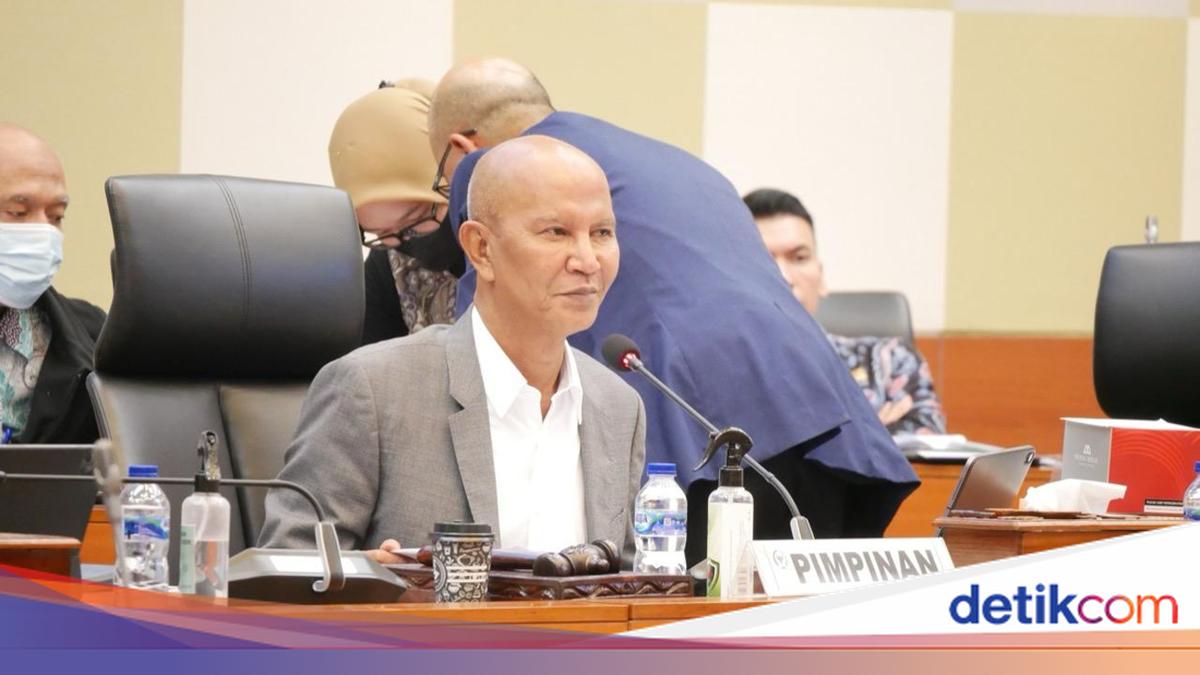
He assesses that criticisms and warnings from observers and academics should instead be appreciated as a form of concern for the state's fiscal condition.
"We should appreciate and respond wisely to various criticisms and cautionary alarms from observers and academics. I view this as a form of care and affection. What is truly worrisome is if the public becomes apathetic and reluctant to voice opinions. Such a situation is what we do not want," Said stated in his remarks on Monday (11/5/2026).
Said explained that amid these various concerns, Indonesia's economy recorded growth of 5.6%. According to him, this growth was driven by seasonal factors of Ramadan and Eid al-Fitr, which boosted household consumption and stimulated the industrial, trade, transportation, hotel, and restaurant sectors.
In addition, the faster-than-usual realisation of government spending also supported economic growth. In the first quarter of 2026, government spending grew 21.81% year-on-year and contributed 1.26% to economic growth.
"This strategy deserves our appreciation," he said.
He also highlighted several economic indicators that still show considerable resilience. The trade balance, he said, still recorded a surplus of $5.5 billion and has been positive for 71 consecutive months. Banking credit growth is also moving positively.
On the fiscal side, state revenues in the first quarter of 2026 reached Rp 574.9 trillion, or grew 10.5% compared to the same period last year. Tax receipts were recorded at Rp 394.8 trillion, growing 20.7% year-on-year.
"There is indeed a difference between underpayments and overpayments, but from that difference, the government actually obtained an underpayment surplus of Rp 13.38 trillion. Thus, the government still has 'tax savings'," Said explained.
According to him, the main challenge currently lies in Non-Tax State Revenues (PNBP), particularly due to the decline in oil and gas lifting and low Indonesian Crude Price (ICP). Nevertheless, he believes the situation will improve in the second quarter of 2026 along with rising oil prices and recovery in upstream oil and gas activities.
Said added that the realisation of state spending up to the first quarter of 2026 reached Rp 815 trillion, or grew 31.4% year-on-year. Most of it came from central government spending of Rp 610.3 trillion, used to finance various priority programmes.
"That in the governance of priority programmes improvements are needed, that certainly must be a note for the ministries and technical agencies, especially the National Nutrition Agency, the Ministry of Cooperatives, and the Ministry of Villages," he continued.
He acknowledged that the accelerated spending strategy has impacted the widening of the APBN deficit. However, a deficit of Rp 240.1 trillion, or equivalent to 0.93% of Gross Domestic Product (GDP), is still considered safe.
"However, I assess this portion as still within a controlled range," he emphasised.
In the 2026 APBN, the deficit is planned at Rp 689.1 trillion or 2.68% of GDP. According to Said, with budget refocusing policies and prudent fiscal management, the deficit has the potential to be lower than the target, around 2.56% of GDP or equivalent to Rp 658.3 trillion.
Said also clarified reports claiming that the 2026 APBN balance is only Rp 120 trillion remaining. He affirmed that the Budget Surplus Balance (SAL) of Rp 420 trillion remains intact.
"Those funds are still intact. Rp 300 trillion was only transferred from Bank Indonesia to Himbara banks. This means SAL remains at Rp 420 trillion, and even the government obtains returns from that placement," he clarified.
Nevertheless, Said warned that economic challenges in the second quarter of 2026 will be heavier. Rising commodity prices, the end of the Eid seasonal effect, and the absence of a low base effect are factors that need to be anticipated.
Therefore, he supports the safe mode steps taken by Finance Minister Purbaya Yudhi Sadewa and Bank Indonesia Governor Perry Warjiyo through several policies such as budget refocusing, dollar transaction restrictions, the formation of the Bond Stabiliser Fund, and the issuance of panda bonds.
With these steps, Said assesses that financing needs can be curbed and the government can avoid excessively high funding costs.
Furthermore, he emphasised the importance of strengthening productive sectors such as manufacturing, trade, agriculture, construction, and mining. These five sectors contribute 63.52% to GDP and absorb 66.37% of the national workforce.
According to Said, fiscal policies need to be directed to provide incentives and improve the business ecosystem so that investment in these sectors grows more expansively.
"For that, the government needs measured quick win programmes to revive industry, trade, agriculture, construction, and mining. Shortcut programmes whose results can be reaped with multiplier effects this year, yet still part of long-term development milestones," he said.
Next, he reminded that without support for these productive sectors, Indonesia will struggle to obtain more inclusive sources of economic growth.
"Because without this support, we will find it difficult to gain additional drivers of inclusive economic growth that can absorb more formal sector jobs, while external pressures are uncertain, without certainty of time and situation," he concluded.