
Sagara Kreti: A Symbolic Giant Insect Figure Born from Three Balinese Texts
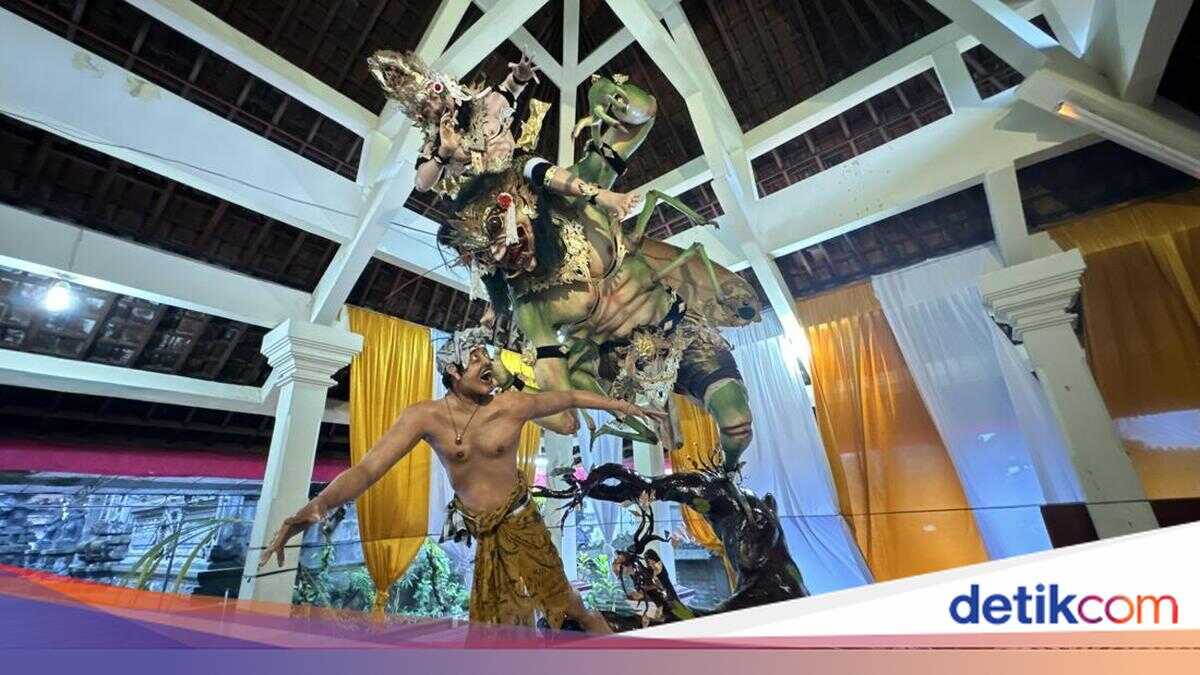
Few would have anticipated that a small insect called walang sangit (stink bug) could be transformed into a towering figure laden with profound meaning. Yet in the hands of the young people of Banjar Jaba Tengah, this creature—often regarded as a pest—has been elevated to symbolise a warning to careless stewards of nature.
The ogoh-ogoh ‘Sagara Kreti’ emerged from the convergence of three lontar texts: Kutara Kanda Dewa Purana Bangsul, Dharma Pemajulan, and Purana Yama Tattwa. From these three, a singular thread was woven concerning the relationship between humanity and the rulers of the ocean.
The narrative depicted illustrates humanity’s failure to protect nature, leading to its destruction. The warning comes from Sang Hyang Sandhijaya, the ocean’s ruler, who appears riding the figure of a walang sangit.
Conceptual work on this creation began in January, with the ideation process spanning approximately two days. The team engaged I Putu Gede Budi Danaswara, a respected dalang (master puppeteer), to strengthen the narrative being presented.
“We sought a dalang, and fortunately he found a story related to honouring water and Pura Sekanan (a temple). So Sang Hyang Sandhijaya resides at Pura Sekanan. As guardians of Pura Sekanan, we visit there every Kuningan (a Balinese ceremonial day), and we wanted people to know of this story,” explained Gede Mahindra Suastika, the conceptor of the ogoh-ogoh ‘Sagara Kreti’, during an interview.
Making the walang sangit the primary character presented no small challenge. Limited visual references forced the team to experiment with the appropriate form, merging the physique of a giant with the details of an insect.
“The details come from its legs—walang sangits don’t have spines. For the grasshopper eyes, we bought foam balls, painted them, and designed everything ourselves,” said Suastika. Antennae and wings were also added to emphasise the character as a giant being.
This choice differed from other water-creature-themed ogoh-ogoh figures that aligned with the official theme of the 2026 Kasanga Festival, Jala Sidhi Shuvita—honouring water for prosperity. However, the lontar texts serving as reference did specifically mention the walang sangit figure.
On the other hand, the weight of expectations cast a shadow. STT. Putra Dharma Canthi of Banjar Jaba Tengah, South Denpasar, had previously achieved second place in the Ogoh-Ogoh Competition at the 2025 Kasanga Festival. This achievement caused the younger generation to hesitate about returning to participate. They only officially registered for the 2026 Kasanga Festival in January.
“At first, we felt burdened because this is our first year leading the effort. Previously, we were only assistants, just tagging along. We felt pressured, worried we wouldn’t meet people’s expectations,” explained Suastika.
“The entire production team is new. This is our first work. But with the crew, we were able to finish quickly—by two days before judging, everything was completed,” Suastika stated.
Regarding the theme requirement, Suastika acknowledged encountering some difficulty. However, he believed that using the prescribed theme actually made the competition more balanced.
“For the common good, themes are better because it levels the playing field for judging the ogoh-ogoh figures,” said Suastika.
The Kasanga Festival culminates on 6-8 March at Lapangan Puputan Badung I Gusti Ngurah Made Agung. Sixteen of the best ogoh-ogoh will be displayed before determining the first, second, and third-place winners, as well as three finalist prizes.