
Safeguarding Natural Wealth, Especially Sumatra Elephants: Way Kambas National Park to Install Barriers
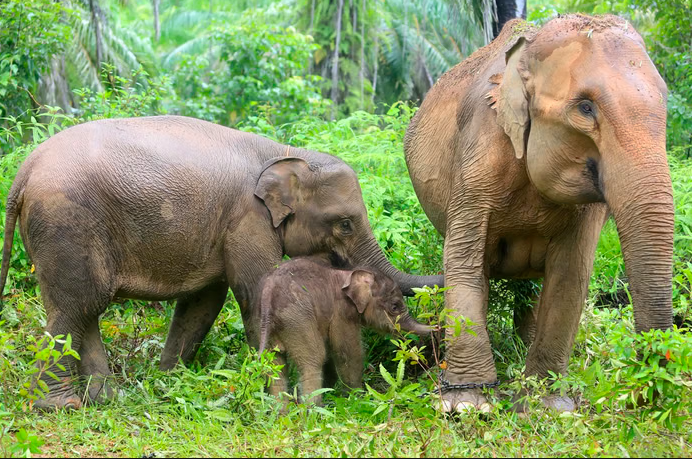
The Forestry Minister Raja Juli Antoni held an Eid al-Fitr silaturahmi event with village heads from the buffer villages of Way Kambas National Park (TNWK), accompanied by Lampung Governor Rahmat Mirzani Djausal, Pangdam XXI Radin Inten Major General Kristomei Sianturi, Lampung Police Chief Inspector General Helfi Assegaf, East Lampung Regent Ela Siti Nuryamah, and local Forkopimda officials.
The Minister socialised plans for a pilot sustainable financing project at TNWK, expected to empower local communities and enhance positive impacts from conservation. This step forms part of strategic efforts to strengthen national biodiversity protection. He also conducted a soft launch of barriers at TNWK, prepared as a manifestation of President Prabowo Subianto’s commitment to protecting communities from human-elephant conflicts.
Forestry Minister Raja Antoni stated that President Prabowo Subianto places special attention on Way Kambas National Park in preserving habitats and populations of Sumatra elephants, up to handling human-elephant conflicts. Moreover, it is known that elephants are one of the animals most beloved by President Prabowo.
“As we know, President Prabowo Subianto gives special attention to Way Kambas National Park. Elephants are one of his favourite animals. President Prabowo’s commitment in maintaining elephant populations and permanently ending human-elephant conflicts,” said Raja Antoni.
During the event, Forestry Minister Raja Juli Antoni explained that for decades, most of Indonesia’s 57 national parks have relied on state budget allocations (APBN) that often fall short of operational and ecosystem restoration needs.
Threats such as forest encroachment, poaching, fires, and human-wildlife conflicts continue to occur, while monitoring and management capacities are not yet fully ideal. This situation prompted President Prabowo Subianto to form the National Park Financing and Management Innovation Task Force, with Forestry Minister Raja Juli Antoni as Deputy Chair, and National Economic Council Deputy Chair Mari Pangestu as Co-Chair, as announced last week at Merdeka Palace.
TNWK was selected as the first pilot project for implementing innovative climate financing mechanisms such as biodiversity bonds, carbon credits through international voluntary carbon markets, and strengthening conservation tourism (ecotourism) reaching various visitor segments. This pilot project marks a shift in conservation area management approaches. From a model fully reliant on the state and non-governmental organisations, towards a blended finance model involving the private sector and green capital markets, with the primary goal of preserving forests and biodiversity in national parks.
TNWK is an important habitat for critically endangered Sumatra elephants, Sumatra rhinos, and Sumatra tigers according to the IUCN. Currently, TNWK faces various challenges, such as invasive species, recurrent forest fires, habitat fragmentation, illegal hunting, and human-elephant conflicts.
Through carbon schemes, companies wishing to offset emissions can purchase carbon credits generated from conservation and forest restoration efforts at TNWK. The funds collected will be reinvested to support sustainable operations and ecosystem restoration. Forestry Minister Regulation Number 27 of 2025 has been issued to enable voluntary carbon market projects in national parks.
Forestry Minister Raja Juli explained that in accordance with Law 32 of 2024, the utilisation of carbon environmental services in conservation areas can only be carried out in utilisation zones. Therefore, zoning adjustments must be made to allow carbon activities in the most appropriate areas. However, he emphasised that zoning adjustments are temporary and aimed at strengthening wildlife habitats at TNWK, and will be returned to the original zones after special restoration and protection activities are completed.
“In designing this project, we target improvements in local community welfare and the invaluable biodiversity of TNWK,” explained Forestry Minister Raja Juli. For critically endangered wildlife, we will collaborate with private partners to replant endemic trees as their habitat, prevent forest fires, increase food source availability for wildlife, and control invasive species that disrupt wildlife welfare.
This sustainable financing programme is expected to enhance conservation performance while driving local development through partnerships with the private sector. Carbon activities will involve local communities in replanting and forest guarding, as well as benefiting from each carbon credit generated.
This pilot project also includes developing sustainable conservation tourism, both world-class and community-based. This approach is intended to create jobs and increase income for surrounding communities while mobilising resources to better preserve TNWK’s natural environment.
Lampung Governor Rahmat Mirzani Djausal expressed his support for this initiative. “If we want conservation results to improve, national parks must provide real benefits to surrounding communities. Of course, this is an honour and pride for us regarding the President’s extraordinary attention to communities around TNWK, and it is hoped to serve as an example for other national parks.”
The success of this model is expected to be replicated in other national parks across Indonesia. “We hope that communities around Way Kambas will be the first to feel the benefits of this innovation.”