
Safeguarding Honour Behind the Screen
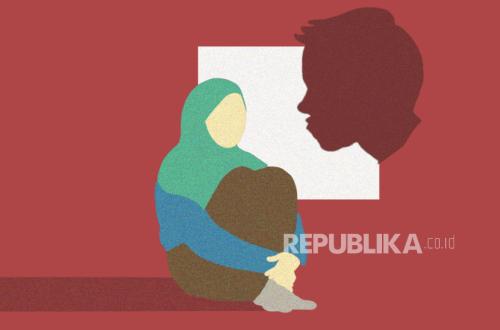
The university campus should truly be constructed as the womb of civilisation; a crucible where intellect is honed and noble character is forged. However, these days, we are forced to witness a heart-wrenching irony. There is a “silent plague” gnawing at the essence of our education from within: the proliferation of electronic-based sexual harassment phenomena that hide behind digital screens.
Digitalisation without manners has created an “illusion of anonymity” where many feel safe hurling vulgar comments, sharing inappropriate images, or turning a woman’s honour into a joke. Yet, in the scales of Sharia and humanity, such jokes are a real form of dehumanisation, an effort to demean the dignity of humans who are truly exalted by the Creator.
The Collapse of Masculine Ego
Often, when a harassment case surfaces, the public’s finger reflexively points to the woman’s clothing. Islam does indeed require every Muslim woman to cover her aurat to preserve her nobility.
However, a deeper analysis of Quranic texts, particularly Surah An-Nur, provides a fairer and more balanced perspective. Before Allah SWT commands women to cover their aurat in verse 31, Allah first gives a stern command to men in verse 30 to restrain their gaze (Ghadul Bashar) and guard their chastity: “Tell the believing men to lower their gaze and guard their private parts; that is purer for them…”
The word ghadd etymologically means to reduce, lower, or restrain. In the context of the digital era, this command not only means lowering one’s head on the physical street but also exercising visual discipline on gadget screens. This is affirmed as a path that is “purer” (azka) for men’s souls, because the eyes are the first gateway for heart diseases that can lead to indecent actions.
This verse is actually a hard slap to our masculine ego, that absolute responsibility in safeguarding social honour lies in men’s ability to control their desires, not merely in the length or shortness of women’s clothing. No matter how badly someone dresses, it can never be used as a sociological excuse or legal justification for sexual harassment.
Sadd Dzariah as a Principle of Caution
Nevertheless, Islam is a very balanced system of teachings. In the discipline of Ushul Fiqh, we know the principle of Sadd ad-Dzara’i, which means tightly closing doors and paths that could lead to evil. This concept is present not to shackle women’s freedom, but as a manifestation of the principle of Ihtiyath (caution).
Like driving on a highway full of reckless drivers; wearing a seatbelt is not a form of consent or justification for others to crash into us. Wearing a seatbelt is purely a smart effort to minimise the fatality of impacts.
In the midst of the current visual onslaught era, the Quran has provided a sharp psychological diagnosis through Surah Al-Ahzab verse 32: “… so that the disease in his heart may arise…” (thus arousing the lust of those in whose hearts is disease). In the social media era, this ethic is translated into professional behaviour in communicating via text messages and not flaunting privacy that could be misinterpreted by others.
Therefore, when a Muslim woman decides to cover her aurat perfectly, she is actually performing two deeds: proclaiming an intellectual declaration that she is present on campus to be valued for the sharpness of her mind and character, not to be consumed physically. On the other hand, she is fulfilling “social charity” through her clothing, which indirectly helps her male siblings to more easily lower their gaze (Ghadhul Bashar).
O Youth… Fast
For the young generation whose fingers are so light in typing vulgar sentences, pause for a moment and ask your deepest conscience: “What if the woman whose honour is being stripped is your mother? Your sister or younger sister? Or in the future, your own daughter?”
Our blood would surely boil in intolerance. Then, why do we become so numb and consider the trauma tears of other people’s daughters as ‘pub banter’? Know that the woman made into a laughing stock is the heart’s gem of a father who toils day and night, and a mother who cries every night on her prayer mat for her daughter’s safety in a foreign land.
Allah’s law of causality never sleeps. The Arabic proverb firmly reminds: “Kama tadinu, tudan” (As you judge others, so you will be judged).
For young men whose desires peak but are not yet able to bear the responsibility of marriage, the Prophet Muhammad SAW has given a very rational solution: “O young people, whoever among you can afford it, then marry, for it lowers the gaze more and guards chastity better. And whoever cannot afford it, let him fast, for fasting is a shield for him” (HR. Bukhari and Muslim).
Make fasting a shield (wijaa’). Channel that biological and intellectual energy into spaces of research, organisations, and real works.
Home: The First Madrasah of Masculinity
In the end, this digital moral crisis forces us to look back at the smallest space called the family. The young people who today lose their moral compass in digital chat rooms did not emerge from a vacuum. Their character is slowly sculpted at our family dinner tables.
Fathers (Qawwam