
Safeguarding Energy Security, Indonesia Strengthens Collaboration
Jakarta, CNBC Indonesia — Amid the current geopolitical and geo-economic conditions, the Indonesian government and Pertamina continue to strengthen their commitment to collaborate in order to safeguard national energy security.
Energy and Mineral Resources Minister (ESDM) Bahlil Lahadalia said that geopolitical and geo-economic challenges and global political tensions have given rise to uncertainty. The outlook of almost every country is becoming less clear about where it is headed.
‘The impact is not only felt by countries that are at odds with each other, but almost all countries, even almost all people in the world, including Indonesia. But I must say that from the unsettled geopolitical-geoeconomic conditions, the economy grew in the first quarter,’ he said in a written statement, quoted on Thursday (21/5/2026).
He added that almost all countries now think to protect their own nations. This is being done by both countries that have oil resources and those that do not.
‘However we are grateful that in this situation, under the President’s direction, we must immediately seek alternative energy sources that do not prioritise fossil-fuel-based fuels alone. When our lifting is not achieved, there must be other ways we must take,’ he clarified.
Along with this, Pertamina also reaffirmed its commitment to continue strengthening national energy resilience amid the dynamic global energy industry that is becoming more complex as the era of easy energy ends, geopolitical tensions rise, and global supply chains are disrupted.
To meet these challenges, Pertamina remains optimistic. Strengthening strategic collaboration, accelerating technology deployment, and optimising domestic energy production are key to sustaining national energy supply.
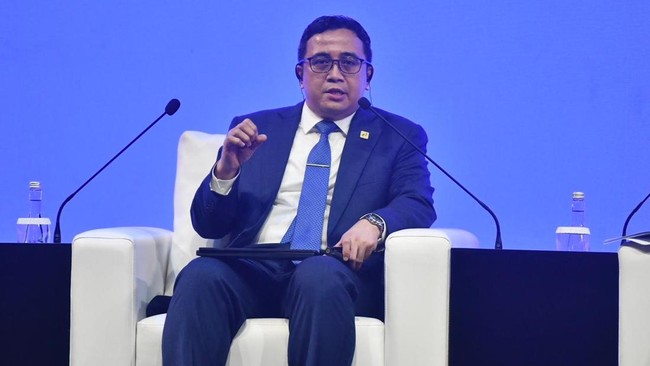
These were conveyed by Pertamina’s Deputy President Director Oki Muraza in a Global Executive Talk session titled ‘The End of Easy Energy: The New Reality of Oil and Gas’ at the same event.
‘Basically, the era of easy energy has passed. But looking further, especially in Indonesia, we still have very large opportunities. So, for investors, energy industry practitioners, and regulators, Indonesia offers so many opportunities that can be developed,’ he said.
Additionally, Oki highlighted the increasing risk of global energy supply disruptions, particularly due to geopolitical tensions in the Strait of Hormuz, which is one of the world’s major energy trade routes. The situation is seen as potentially triggering volatility in energy prices and affecting global energy supply stability.
According to Oki, Pertamina has a strategic role in maintaining national energy resilience by ensuring availability, affordability, and sustainability of energy across Indonesia. Therefore, Indonesia’s strategic response cannot rely solely on diversifying imports and managing short-term supply, but must also be supported by increasing domestic oil and gas production.
‘The first thing we are doing is increasing and maximising domestic oil and gas production,’ he said.
In addition to strengthening national production, Pertamina also places collaboration as a main strategy to face the increasingly complex and high-risk energy industry.
He said partnerships enable companies to share expertise and knowledge to reduce business risks. At present, Pertamina also has strategic partnerships with various global energy companies. ‘We need partnerships. We have many partner companies that are very reliable,’ he said.
On the other hand, coordination with the government is seen as an important factor in maintaining energy investment sustainability. When the rate of return on investment is still limited, support is needed through contract extensions, adjustments to revenue-sharing schemes, and fiscal incentives.
Utilising technology is also seen as increasingly important to improve efficiency and reduce operational risks. He cited the use of supercomputers and artificial intelligence (AI) by global energy companies to support exploration and decision-making processes more accurately.
Amid these challenges, Indonesia is still regarded as having great potential to develop the energy sector, including unconventional oil and gas resources and enhanced oil recovery (EOR). To optimise this potential, Pertamina is driving the development of production technologies and optimisation of existing fields through various approaches, including chemical enhanced oil recovery (EOR) and well production optimisation.
‘Indonesia has enormous opportunities. So, for investors, engineers, and regulators, Indonesia offers so many opportunities that can be developed,’ he concluded.