
S&P Highlights Indonesia's State Budget Condition, Purbaya Responds
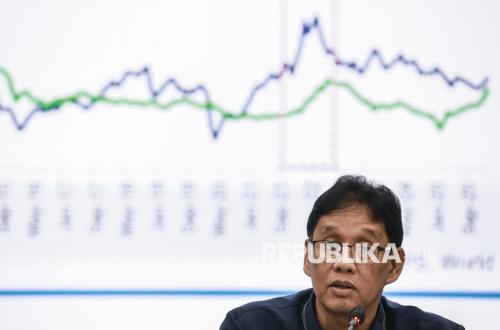
Finance Minister Purbaya Yudhi Sadewa revealed the outcomes of his meeting with the international rating agency Standard & Poor’s (S&P) in Washington DC. During the meeting, S&P confirmed that Indonesia’s credit rating remains at the triple-B (BBB) level with a stable outlook.
This decision is viewed as a strong signal that Indonesia’s economic resilience remains intact amid global economic dynamics still overshadowed by slowing growth, high global interest rates, and geopolitical uncertainties.
The BBB rating is an investment-grade category, indicating that Indonesia is assessed to have relatively low default risk and remains a viable destination for international investment. This status is crucial for maintaining investor confidence, reducing borrowing costs, and strengthening capital inflows into the country.
Purbaya explained that S&P highlighted the government’s consistency in maintaining fiscal discipline, particularly the budget deficit kept below 3 per cent of Gross Domestic Product (GDP). “They asked in detail about our fiscal condition, including this year’s and last year’s deficits. Primarily, they wanted to see if we are consistent in keeping it below 3 per cent of GDP,” said the Finance Minister on Friday (17 April 2026).
He emphasised that President Prabowo has directed that the state budget deficit be maintained prudently. According to him, this commitment forms an important foundation for preserving national economic stability.
In addition to healthy finances, Indonesia’s economic resilience is also reflected in improving state revenues. Purbaya noted that tax growth in the first two months of this year reached 30 per cent, while the January–March period grew by around 20 per cent compared to last year.
This performance indicates that domestic economic activity continues to recover and the state revenue base is strengthening. The government has also restructured the Directorate General of Taxes and Customs to enhance the effectiveness of revenue collection.
“When we informed them that tax growth in the first two months of this year was 30 per cent and January–March compared to last year grew 20 per cent, they seemed quite satisfied,” said the State Treasurer.
According to him, S&P also noted the improvement in Indonesia’s economic growth in the fourth quarter of last year. Moreover, various macro and micro indicators are assessed to show positive trends at the beginning of President Prabowo’s administration.
This signifies that Indonesia’s economy has strong resilience, supported by large domestic consumption, sustainable fiscal reforms, and maintained investment prospects.
Nevertheless, the government remains wary of the debt interest payment ratio to state revenues. The Finance Minister assured that this condition will continue to be monitored to avoid disrupting future fiscal space.
“I said we will continue to monitor it and ensure the economic situation remains good and the fiscal position will be maintained,” said Purbaya.
The maintenance of Indonesia’s rating at the BBB level with a stable outlook serves as an important message to global markets that the national economic fundamentals remain solid. Amid external pressures, Indonesia is deemed capable of balancing economic growth, fiscal discipline, and national financial stability.