
Rwanda's Success in Gorilla Conservation Boosts Foreign Exchange
The government faces a policy dilemma with no truly comfortable option.
Indonesia’s Minister of Forestry, Raja Juli Antoni, attended the 32nd Kwibuka commemoration, an annual remembrance of the 1994 genocide against the Tutsi ethnic group in the Republic of Rwanda, Central Africa. Minister Antoni highlighted Rwanda’s success in environmental conservation as a vital source of inspiration for sustainable natural resource management.
The 32nd Kwibuka commemoration serves not only as a moment for historical reflection but also as a global lesson in recovery and sustainable development.
“Rwanda’s extraordinary journey in recovery is reflected not only in its people but also in its strong commitment to environmental management,” said Minister Antoni at the 32nd Kwibuka event in Jakarta on Tuesday (7/4/2026).
Minister Antoni’s attendance at the 32nd Kwibuka commemoration was as a representative of the Indonesian government, under the direction of President Prabowo Subianto. Also present were the Rwandan Ambassador Sheikh Abdul Karim Harelimana, the Dean of the African Diplomatic Corps and Tanzanian Ambassador Macocha Moshe Tembele, and 1994 genocide survivor Liliane Murangwayire.
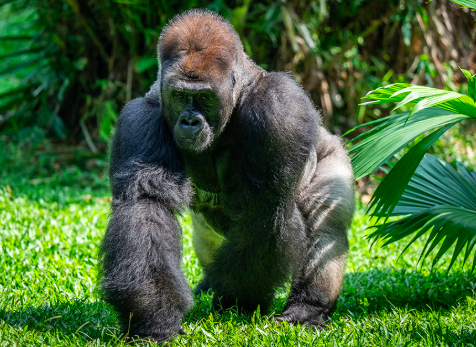
Minister Antoni spotlighted one concrete example: the success of mountain gorilla conservation in Volcanoes National Park. This effort is regarded as a global model for preserving biodiversity through consistent policies and strong area protection.
“Through consistent conservation policies and active involvement of local communities, the gorilla population has increased significantly and become an icon of global conservation success,” he stated.
He noted that this success impacts not only ecological aspects but also makes a real contribution to Rwanda’s national economy. Conservation-based tourism, particularly gorilla trekking, has become one of the country’s main sources of foreign exchange.
“This shows that conservation and economic development can go hand in hand,” he emphasised.
Furthermore, the Minister of Forestry highlighted the importance of collaborative governance in managing conservation areas. The ecosystem services approach is also seen as key to Rwanda’s success. Forests are not viewed merely as protected zones but as providers of tangible benefits such as water, carbon absorption, and sources of livelihood for communities.
“With this approach, conservation becomes relevant both ecologically and economically valuable. National parks are no longer seen as limits on living space but as sources of shared welfare,” he concluded.