
Russia's Tactics to Recruit Students into the Military
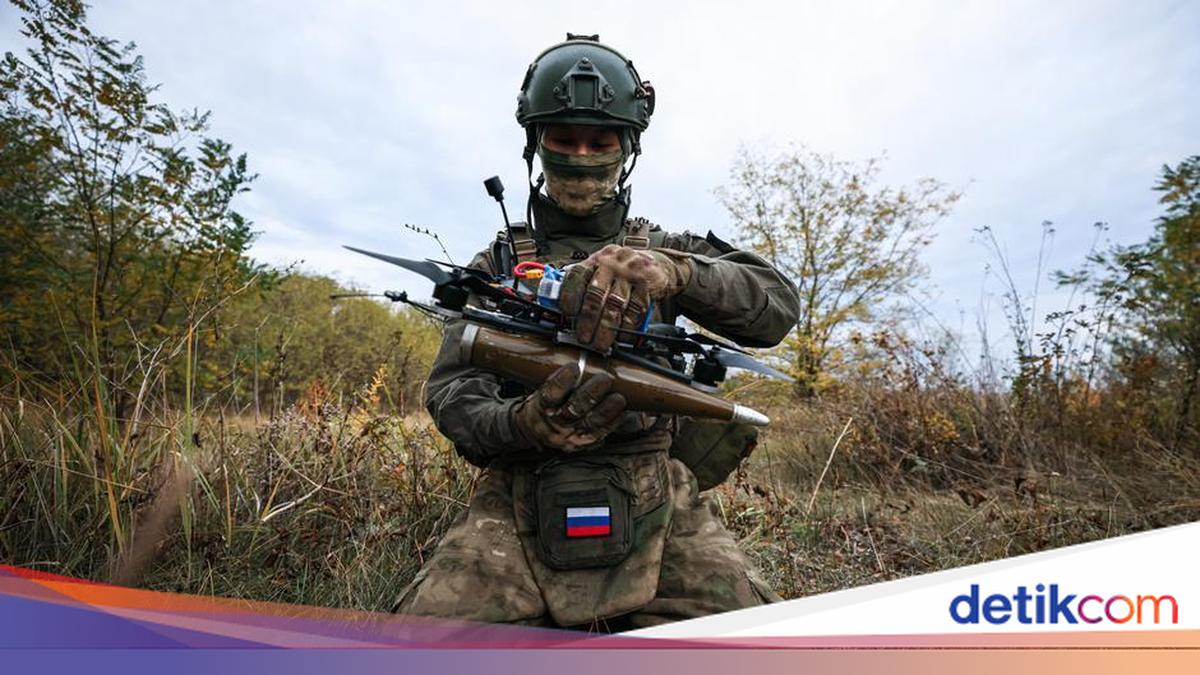
Russia’s Ministry of Defence is recruiting students to join the drone force directly on university campuses. The students are promised a one-year contract, assignments in safe locations far from the front lines of the war, around five million roubles (approximately 925 million rupiah), and free education after completing their military service.
Observers warn that students are often deceived: the recruitment ends with an indefinite contract. In the worst cases, students are sent to the front lines of the war, risking injury or death.
The Russian-language portal Echo reports that at least 70 educational institutions in 23 regions of Russia, including the annexed Crimean Peninsula from Ukraine, are conducting this recruitment process. Nearly half of these institutions are in St. Petersburg and Moscow, with the rest scattered across various regions of Russia.
Orders to influence students
A Moscow university staff member using the pseudonym Yurij told DW that leaders of various universities were called to a meeting with Russian Deputy Prime Minister Dmitry Chernyshenko, who handles education and science. They were ordered to organise the promotion of drone force recruitment to students on their respective campuses.
“There is no specific scheme to influence students; each university has its own way,” said Yurij. According to him, representatives from military enlistment offices, representatives of veterans from the “special military operation” (Russia’s term for the war in Ukraine), and university staff discuss with groups of students.
In some regions, local education ministries send guidelines on how universities should organise recruitment. Additionally, university administrations send emails offering students to sign contracts with the Ministry of Defence, according to a report from the Russian investigative portal The Insider in February.
According to the independent media platform T-invariant, promotions for the drone force are taking place in many universities, even those not related to drone development or use. Initially, the focus was only on major technical universities and defence universities, but since January, students at other universities have also become targets, particularly those at risk of expulsion due to low academic performance.
“From my observations, every university has a recruitment quota—between 0.5 and 2 percent of all students,” said Yurij. He added that university leaders who fail to meet these quotas could be suspected of disloyalty to the government. “In this case, the rector or vice-rector risks their position,” Yurij emphasised.
Meanwhile, the failure rate at his university has risen dramatically. “Something that didn’t happen much before. Many students are failing their studies. Previously, lecturers could help students pass exams; now there are two invigilators,” he explained. Students at risk of expulsion are now faced with a choice: sign a contract with the military and join the drone force or undergo mandatory military service.
Have students been deceived?
Promotional materials at universities claim that students can sign a one-year contract and then return to civilian life. However, Artjom Klyga, a lawyer from the “Anti-Conscription Movement,” emphasises that talk of short-term contracts does not align with the applicable law.
The lawyer explained that the actual contracts signed by students have no specific time limit, stating only: until President Vladimir Putin ends the partial mobilisation. Courts have also confirmed that the contracts are indefinite, said Klyga.
Duma member Andrey Kartapolov also told the Russian portal Daily Storm that students sign full contracts. Therefore, contracts with the drone force are not a part-time programme for students, but general employment contracts.
Furthermore, Russian law does not guarantee exclusive assignments. New assignments are determined after the contract is signed. “If someone signs a contract and does not meet the requirements, the contract is not cancelled or they are not released from military service. The person is simply transferred to another military unit or position based on their commander’s orders,” Klyga explained.
What do students say about this recruitment?
In student Telegram channels, government promises are viewed sceptically. In one chat, an audio recording was shared in which a representative from a military training centre at a Moscow university advised low-performing students or those with health issues to take academic leave and sign a one-year contract with the Ministry of Defence, as a way to “take a break” while studying 20 kilometres from the front line.
“I don’t really believe the promises that there are special military units. The representative cannot be held accountable if someone is transferred from their unit,” wrote one chat participant. Another participant recalled the story of two contract soldiers and drone pilots with nicknames “Goodwin” (Sergey Grizay) and “Ernest” (Dmitry Lysakovsky).
After an internal dispute with the unit command, their drone unit was disbanded, and both were sent to the front line, where they were killed shortly afterwards. Yurij also warns against trusting promotional materials and adds that women are also being recruited: “They are likely to be placed as military nurses.”
Students on the front lines of the war
The Idite Lesom movement documents broken recruitment promises. This Georgia-based organisation helps Russian deserters. In their report, students from Petrovsky College in St. Petersburg recounted their contracts with Russia’s Ministry of Defence. They were initially promised to work with military equipment at a military facility in St. Petersburg, but later had to become drone pilots on the front line.